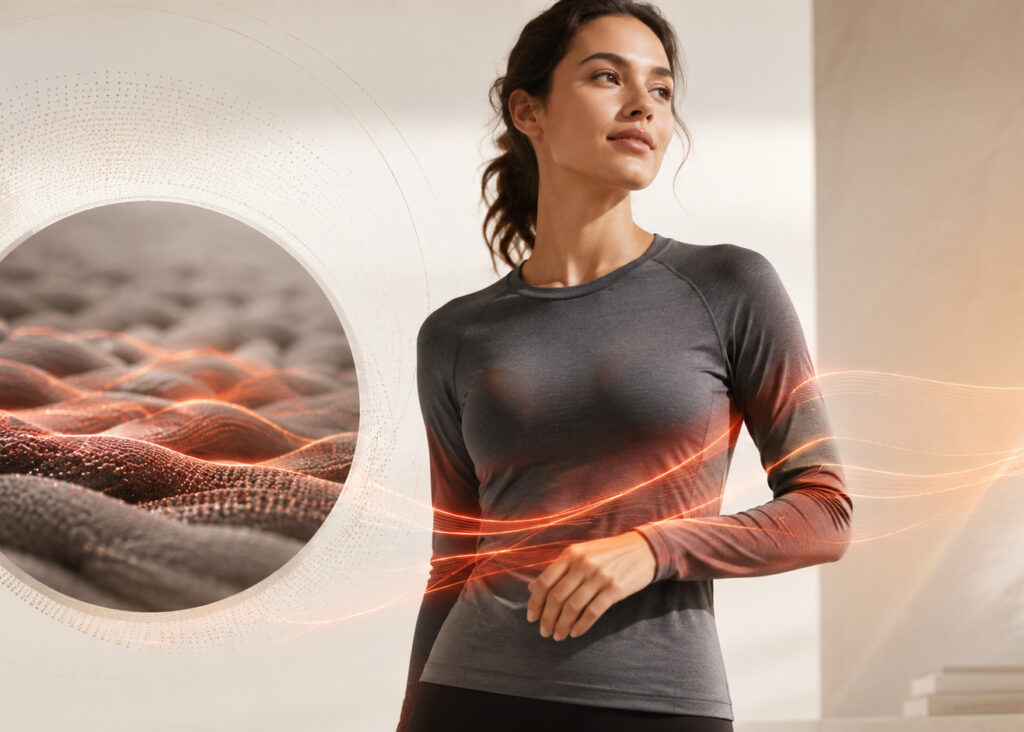
Real twist yarn retains turns inserted during spinning or twisting. In staple yarns, these turns help hold fibers together and influence strength, compactness and fabric feel. This guide compares retained twist, high twist and false-twist texturing to explain their roles in fabric development.
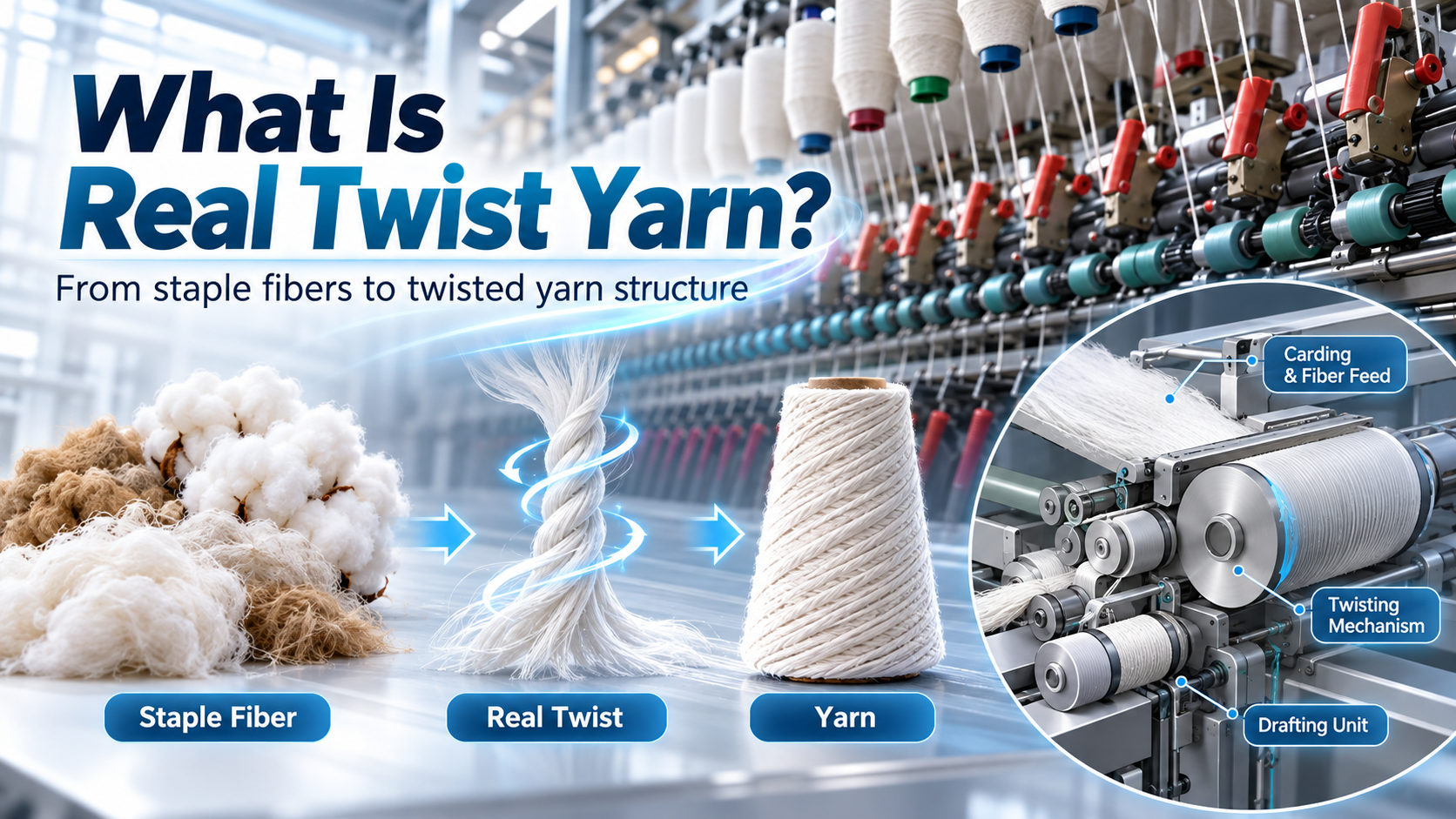
What Is Real Twist Yarn?
Permanent turns help staple fibers grip one another and form a cohesive yarn. This twisting method can also be applied to filament yarns; it is not exclusive to staple spinning.
Twist direction is commonly described as S or Z. Twist level is usually specified in turns per meter (TPM) or turns per inch (TPI).
Why Is Twist Used?
Twist helps staple fibers hold together. Increasing twist can improve yarn strength up to an optimum level, but excessive twist may reduce strength and create a firmer hand with greater torque.
The appropriate twist level depends on fiber properties, yarn count, spinning system and intended end use. More twist does not automatically mean a better yarn.
Retained Twist vs. High Twist
The distinction is between retained turns and their amount. High twist describes a relatively high twist level for a given yarn and application; a permanently twisted yarn is not necessarily highly twisted.
Higher twist levels may create a dry touch, crisp feel or crepe-like effects. Results depend on yarn properties, fabric construction, finishing and twist-setting conditions.
How Does It Differ from False-Twist Texturing?
Permanent turns remain in the finished strand. By comparison, false-twist texturing temporarily twists, heats, cools and untwists thermoplastic filament yarn. The process creates crimp and bulk without retaining the inserted turns as permanent net twist.
Simplified Process Comparison
Staple Fibers → Real Twist → Spun Yarn
False-Twist Texturing
Filament Yarn → False-Twist Texturing → Textured Yarn
These are two different production routes, not consecutive stages. The first route illustrates staple spinning; retained twist can also be introduced into filament yarns.
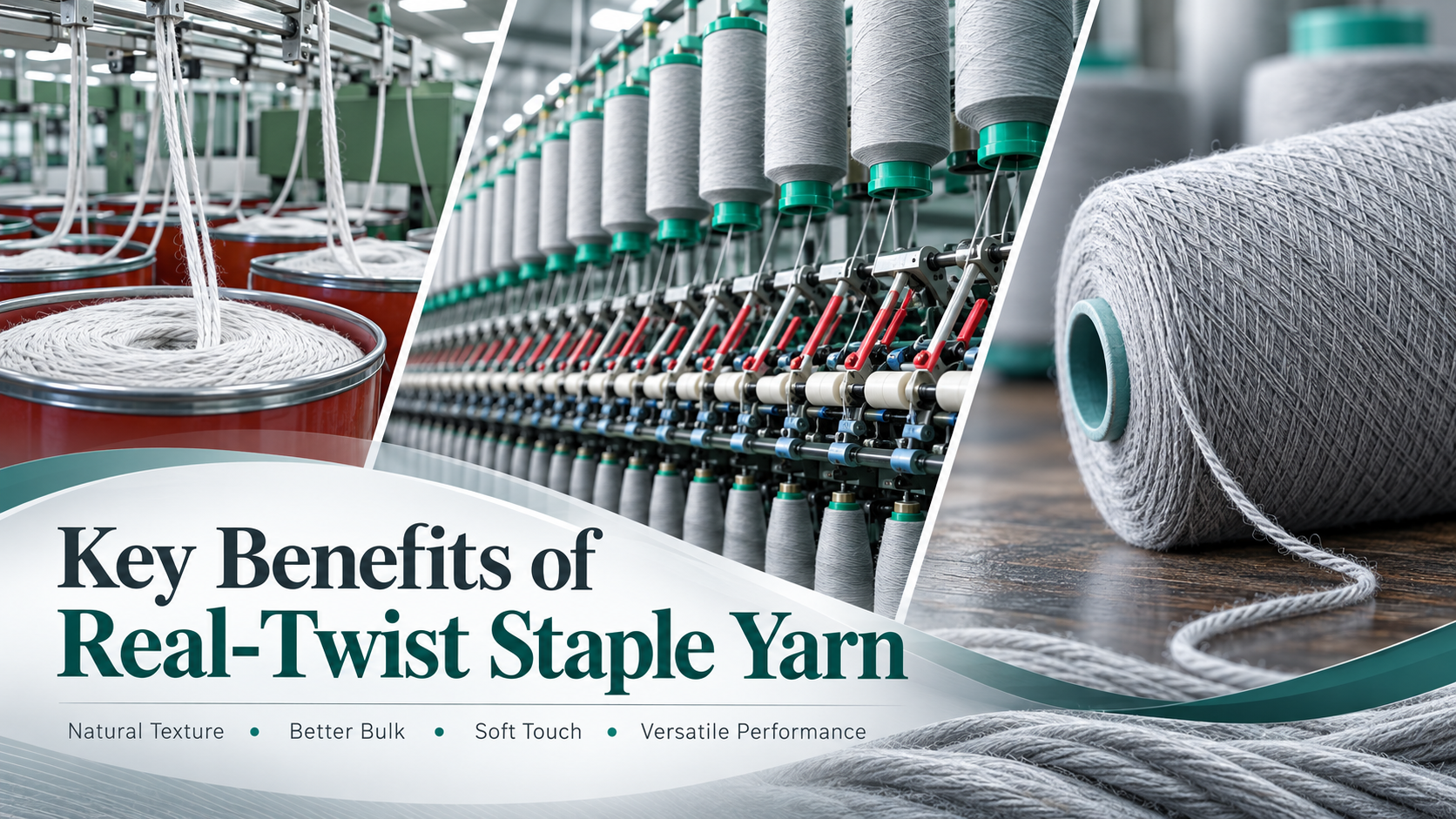
How Twist Influences Staple Yarn
- Fiber Cohesion: Twist helps hold staple fibers together.
- Yarn Character: Twist level influences compactness, firmness and torque.
- Fabric Development: Select twist according to the desired texture, hand feel and end use.
Choosing Twist for Fabric Development
Higher twist levels may produce a dry touch, crisp feel or crepe-like effects, while lower levels may create softer, fuller constructions. Final results also depend on fiber properties, yarn count, fabric structure and finishing. Evaluate fabric samples to select the right balance for your application.
Explore Knit Fabrics for Your Next Collection
Explore our knit fabrics to find suitable structures, textures and compositions for your collection.
Contact HITEK TEXTILE to discuss your fabric specifications, desired hand feel and development requirements.