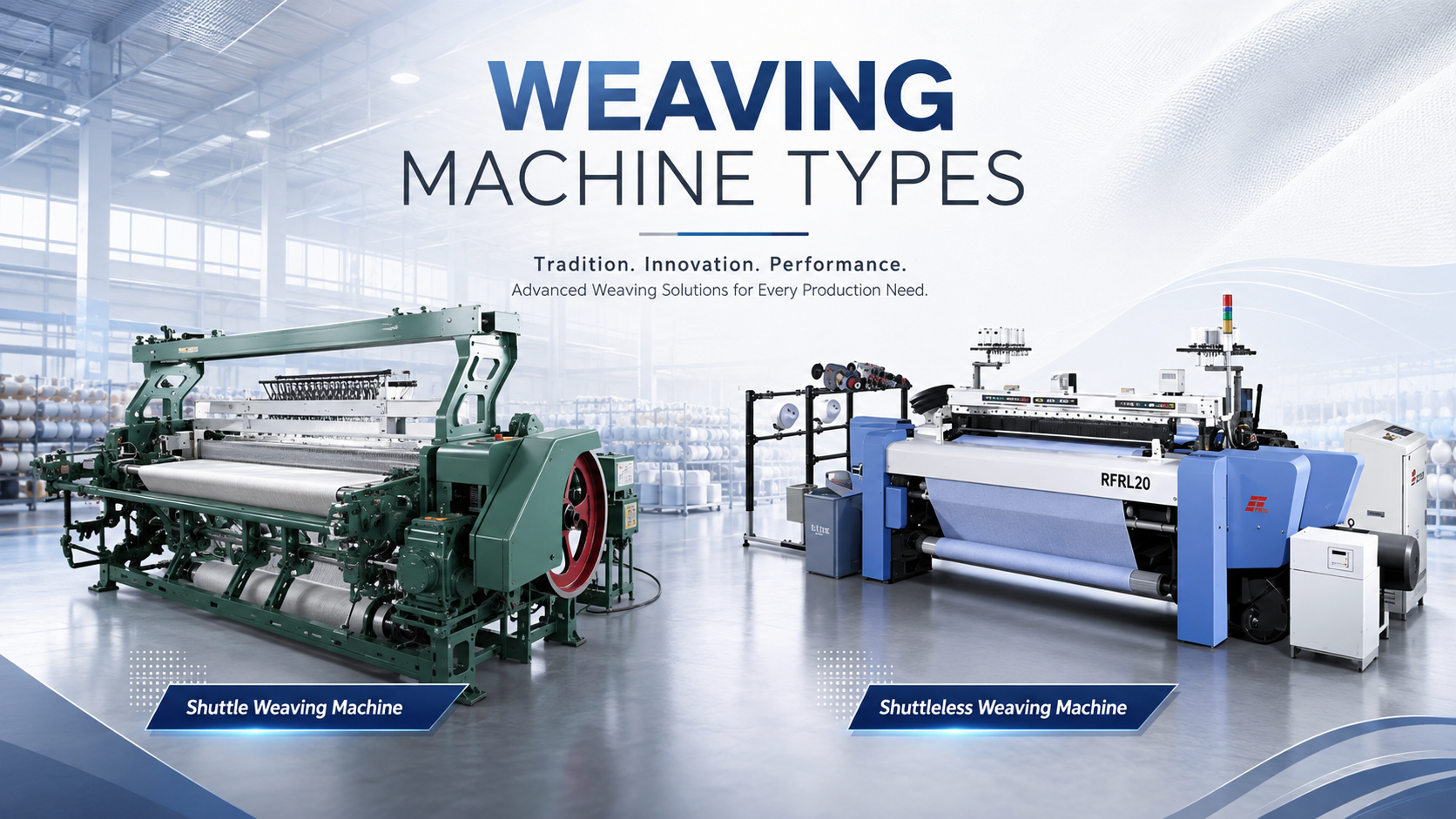
Weaving Machine Types
Understanding weaving machine types helps apparel brands and fabric buyers connect production methods with fabric requirements. This guide introduces shuttle and shuttleless looms, including rapier, projectile, air-jet and water-jet systems, and explains their weft insertion methods, typical applications and production considerations.
Shuttle Looms
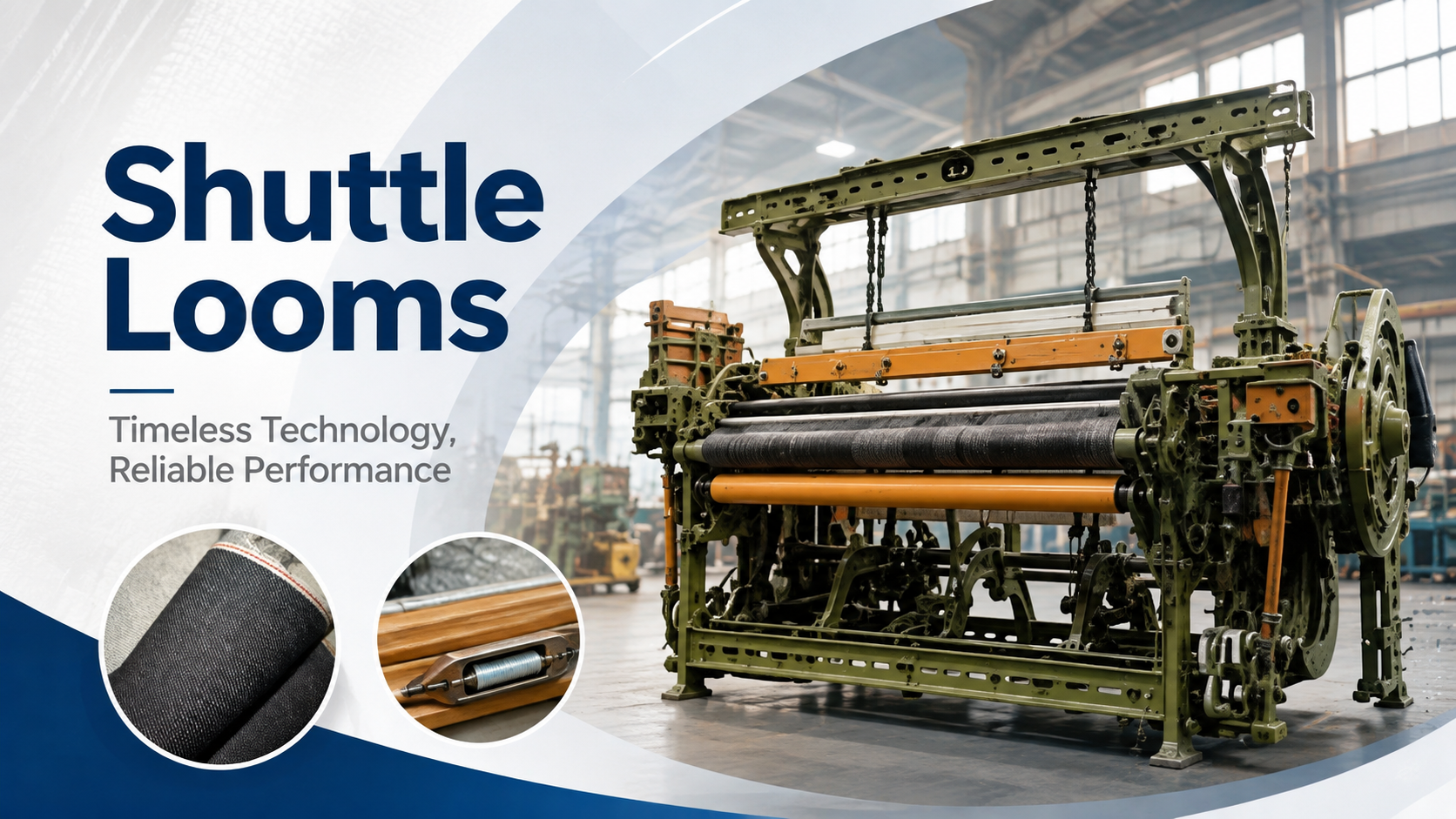
A shuttle loom carries the weft yarn across the shed with a traditional wooden or plastic shuttle. It is the classic foundation of weaving technology.
Production note: the shuttle is heavy, so mills may face stronger vibration, higher noise, more energy use, slower speed, and lower efficiency.
Shuttleless Looms
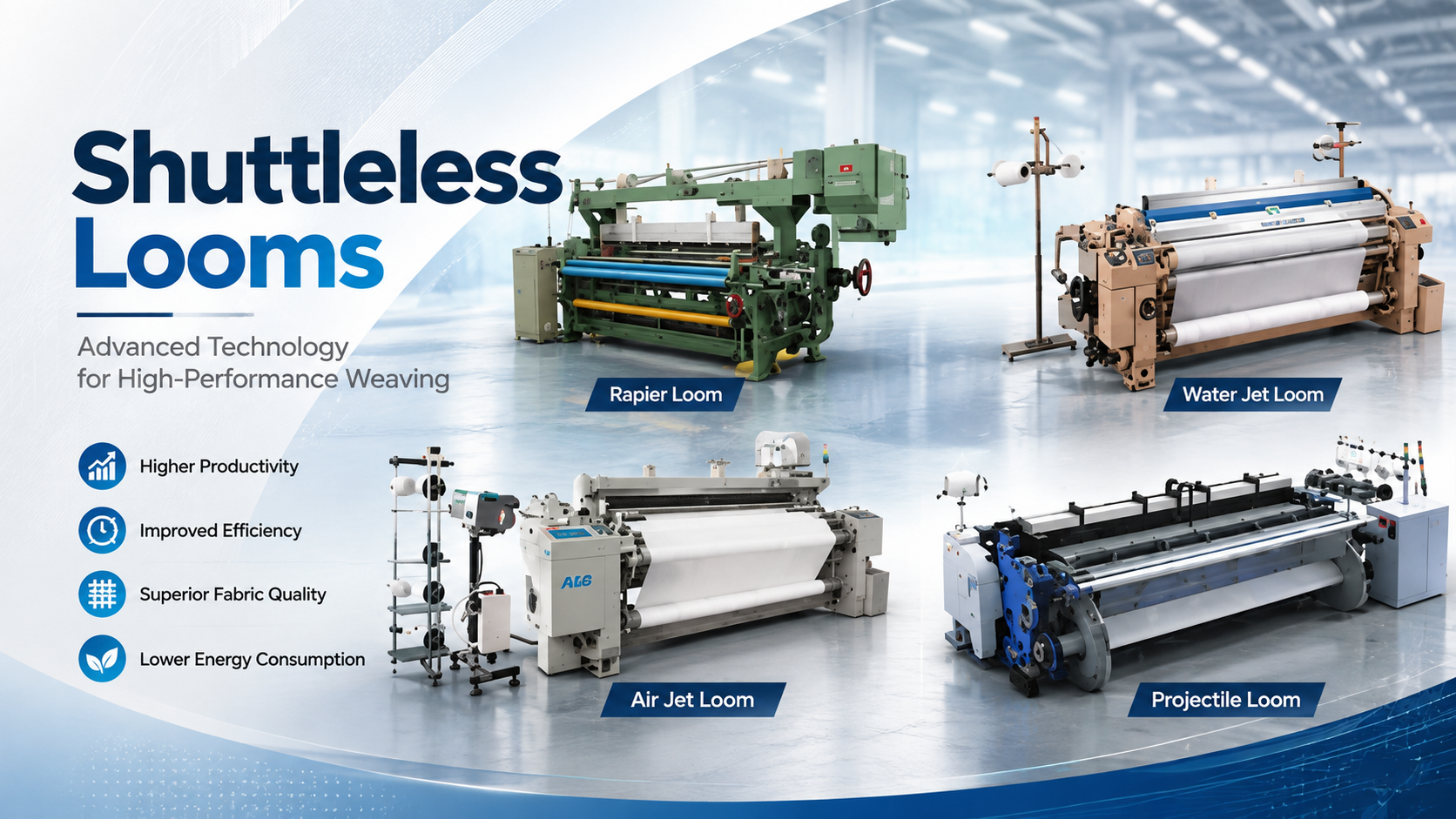
Shuttleless looms replace the heavy shuttle with a lighter weft insertion system and feed yarn directly from cones through a storage device.
Manufacturing value:
- Higher weaving speed
- Fewer fabric defects
- Better fabric quality
- Lower noise and energy use
- More flexible fabric development
Main systems include rapier, projectile, air-jet, water-jet, and multi-phase weaving.
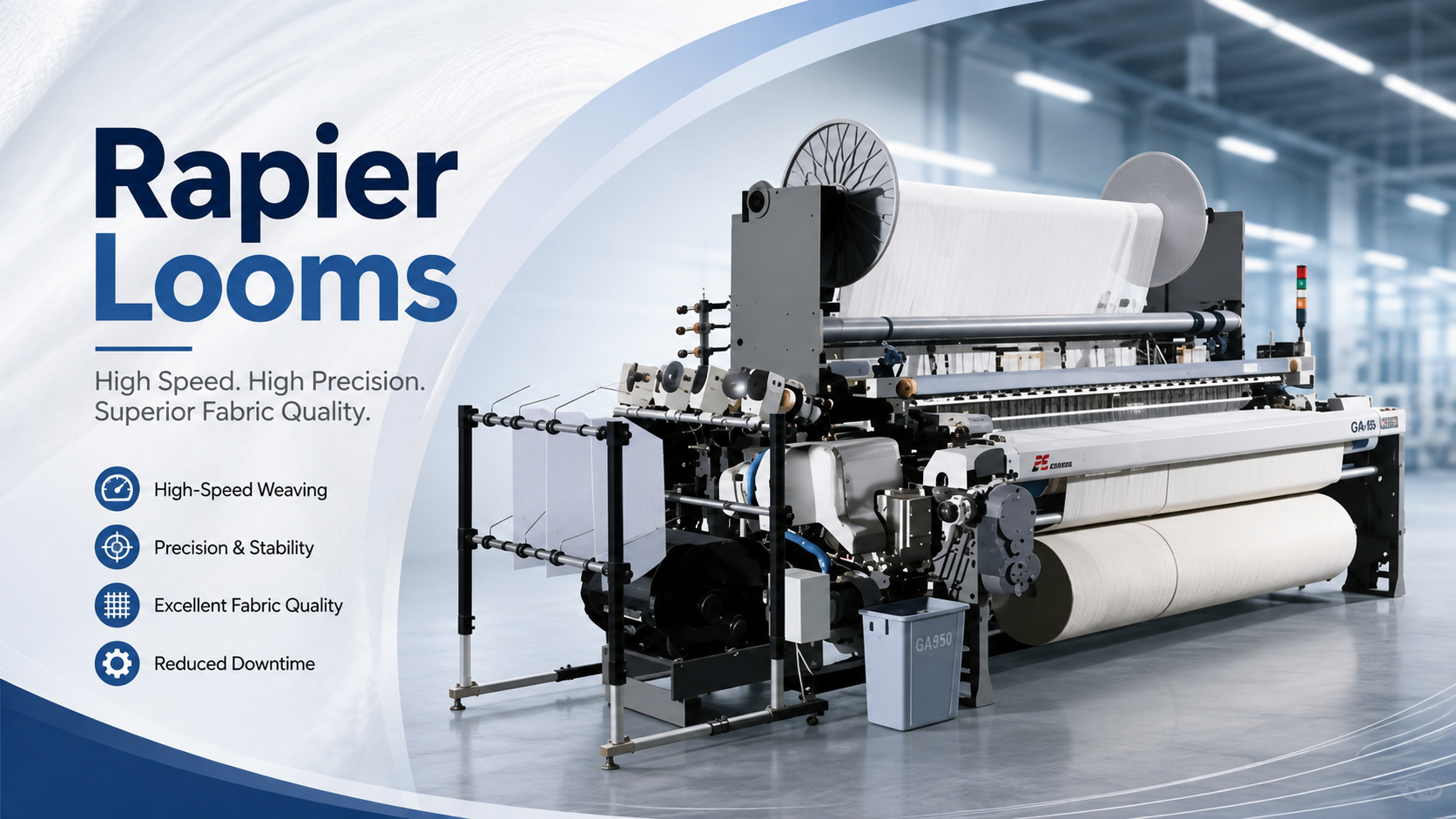
Rapier Looms
Rapier looms use reciprocating rapiers to grip or carry the weft into the shed. They are strong in yarn control, low-tension insertion, and fabric variety.
Best-fit applications:
- Natural fibers and man-made filaments
- Terry and decorative fabrics
- Wool and yarn-dyed cotton fabrics
- Double cloth, pile fabrics, velvet, carpet, silk, and rayon
- Selected technical textiles, including glass fiber fabrics
Business highlight: flexible weft color selection, often 8 colors and up to 16 colors on advanced systems.
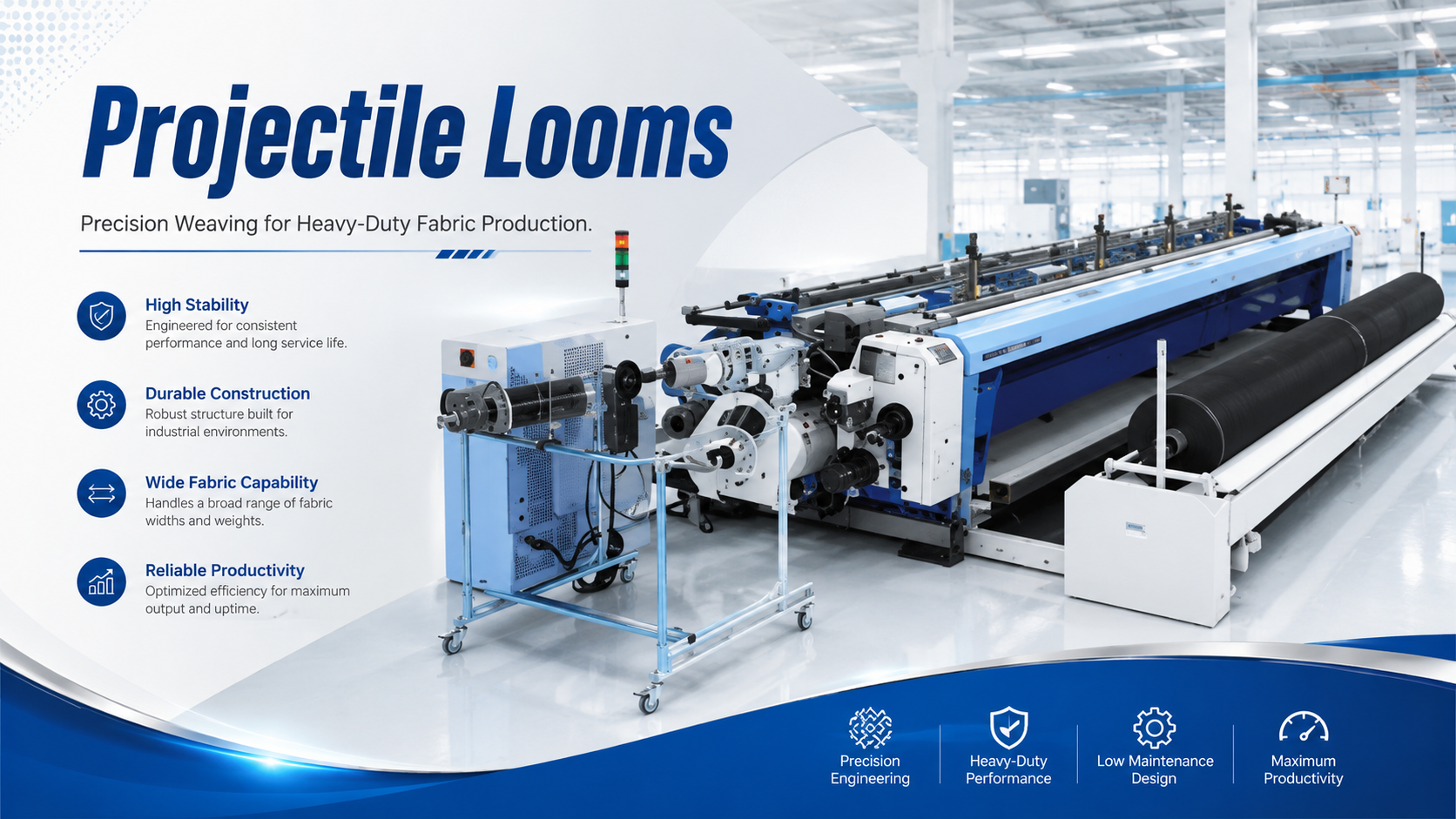
Projectile Looms
Projectile looms insert the weft with a small gripper projectile. The system offers stable weft control, precise tension, and reliable insertion quality.
Best-fit applications:
- Wide-width woven fabrics
- Screen fabrics
- Decorative textiles
- Premium wool fabrics
- Dobby and jacquard constructions
Production note: very weak, low-twist, or low-strength weft yarns may break more easily, so yarn testing is important during sampling.
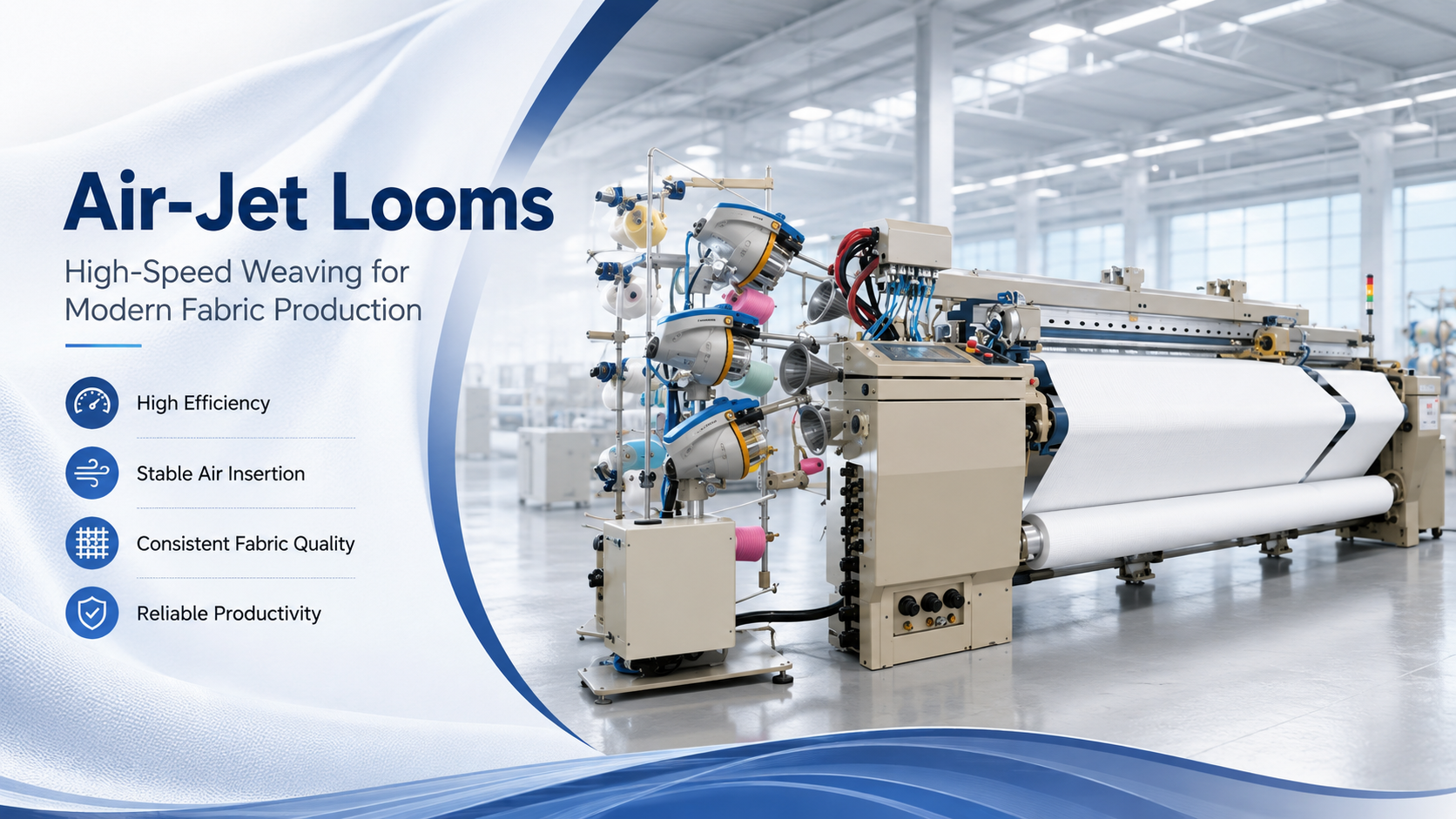
Air-Jet Looms
Air-jet looms use compressed air to carry the weft through the shed. They are popular for high-output, stable-quality, cost-efficient woven fabric production.
Best-fit applications:
- Fine and dense fabrics
- Large-volume single-color goods
- Staple fiber and synthetic filament fabrics
- Light to medium fabrics, with selected heavier constructions
Production note: because air flow gives less direct yarn control, some weft yarns require testing to avoid insertion defects.
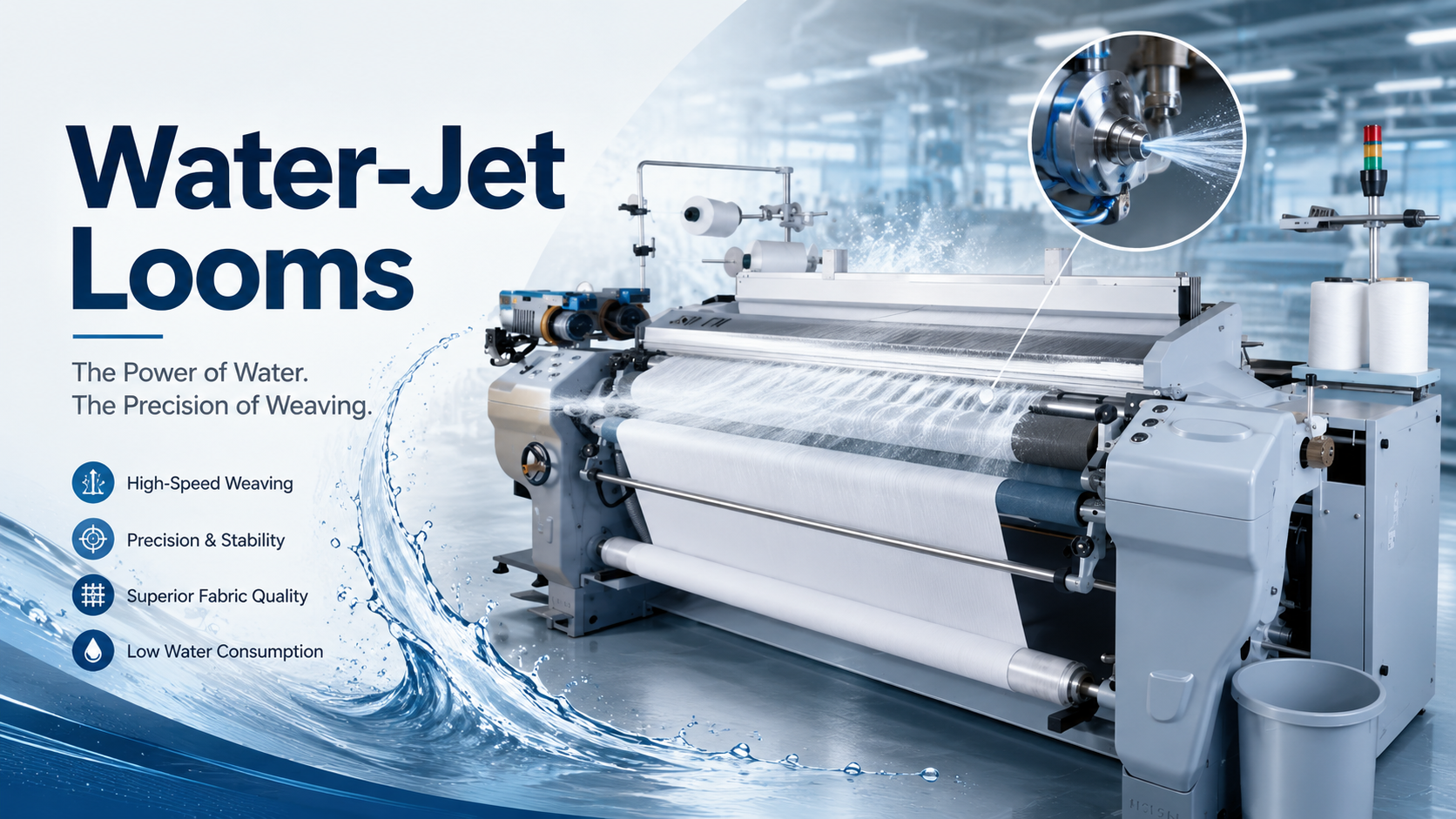
Water-Jet Looms
Water-jet looms use a high-speed water stream to carry the weft through the shed. They are known for very fast speed and cost-efficient mass production.
Best-fit applications:
- Hydrophobic fiber fabrics
- Narrow to medium-width goods
- High-density basic structures
- Small-pattern dobby fabrics
Production note: woven fabric usually needs drying after weaving, and color selection is more limited, often two to three weft colors.