Woven Fabric Types
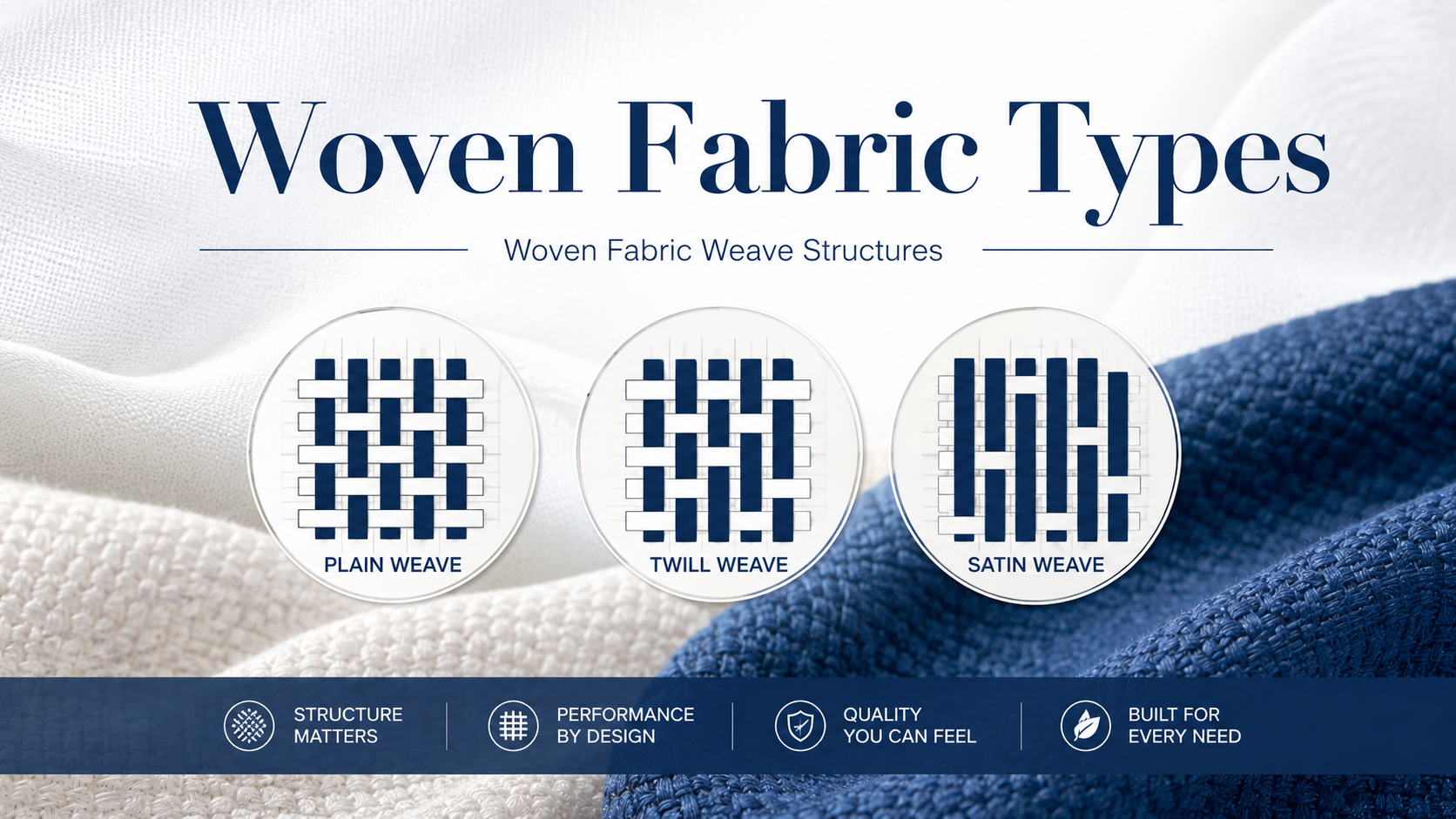
Woven fabric is built by interlacing warp yarns and weft yarns at right angles. For manufacturers and buyers, this structure is valued for dimensional stability, crisp hand feel, abrasion resistance, and consistent sewing performance.
Woven Fabric Weave Structures
- Plain weave: clean, stable, breathable everyday construction
- Twill weave: diagonal texture with strength and drape
- Satin weave: smooth, lustrous surface for elevated products
Plain Weave: The Everyday Workhorse
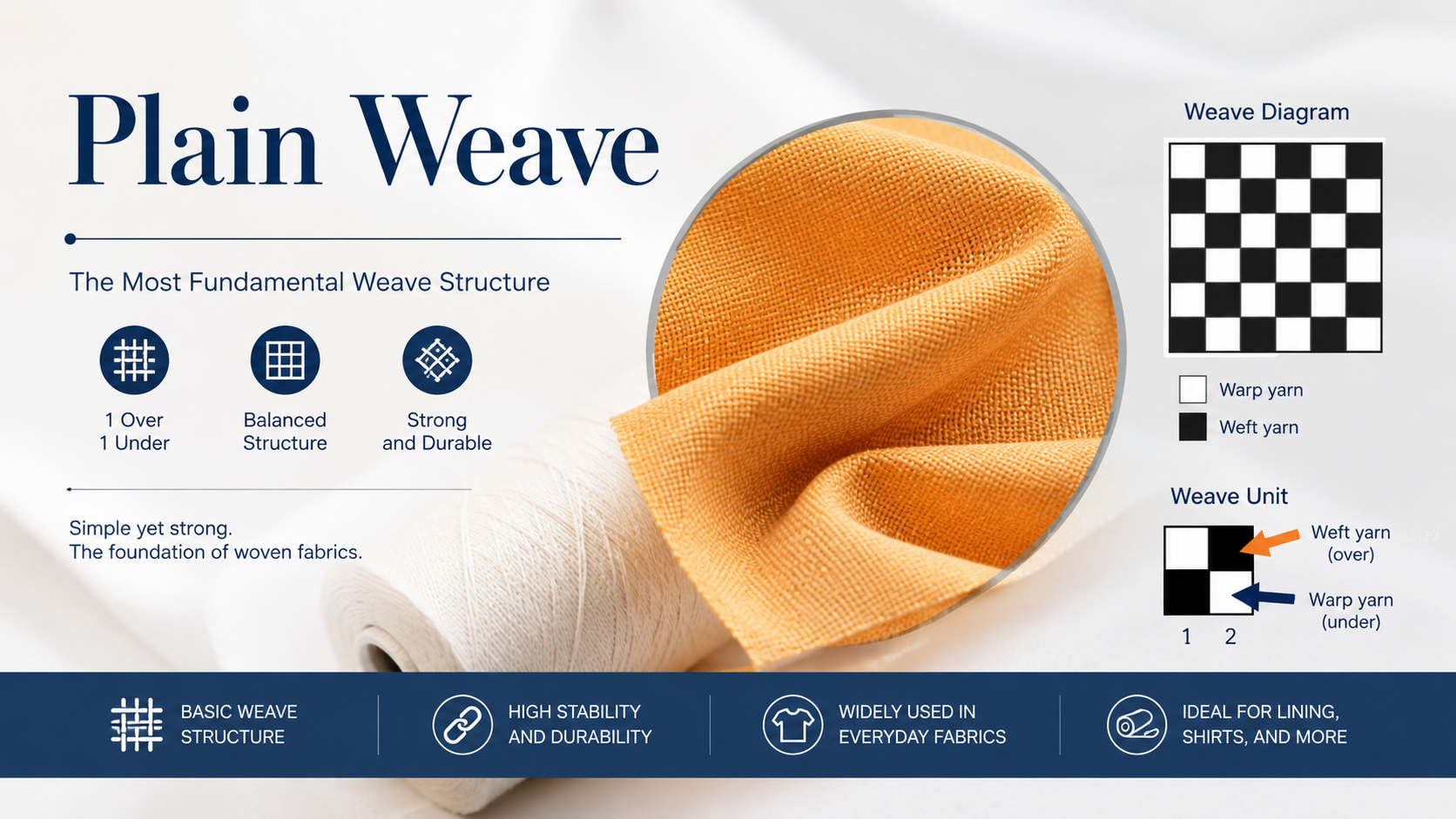
Plain weave is the most fundamental woven structure, where warp and weft yarns cross over and under one another in a simple rhythm. It creates a balanced fabric that is easy to cut, sew, finish, and scale for commercial production.
- Stable structure with good abrasion resistance
- Breathable hand feel for shirts and uniforms
- Reliable shape retention for workwear and bags
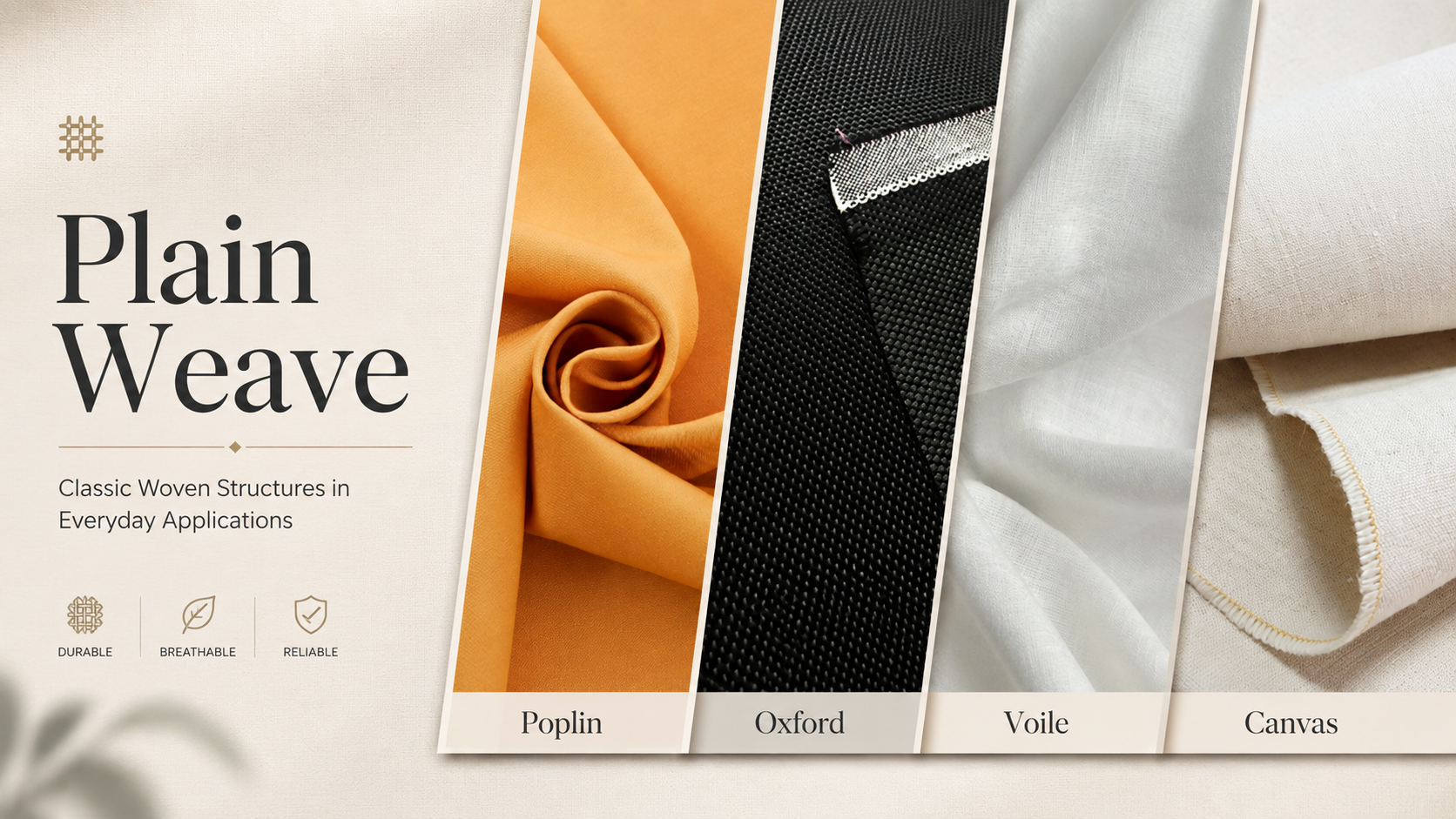
- Common fabrics: poplin, voile, oxford, canvas
Best for brands that need clean texture, practical durability, and predictable production performance.
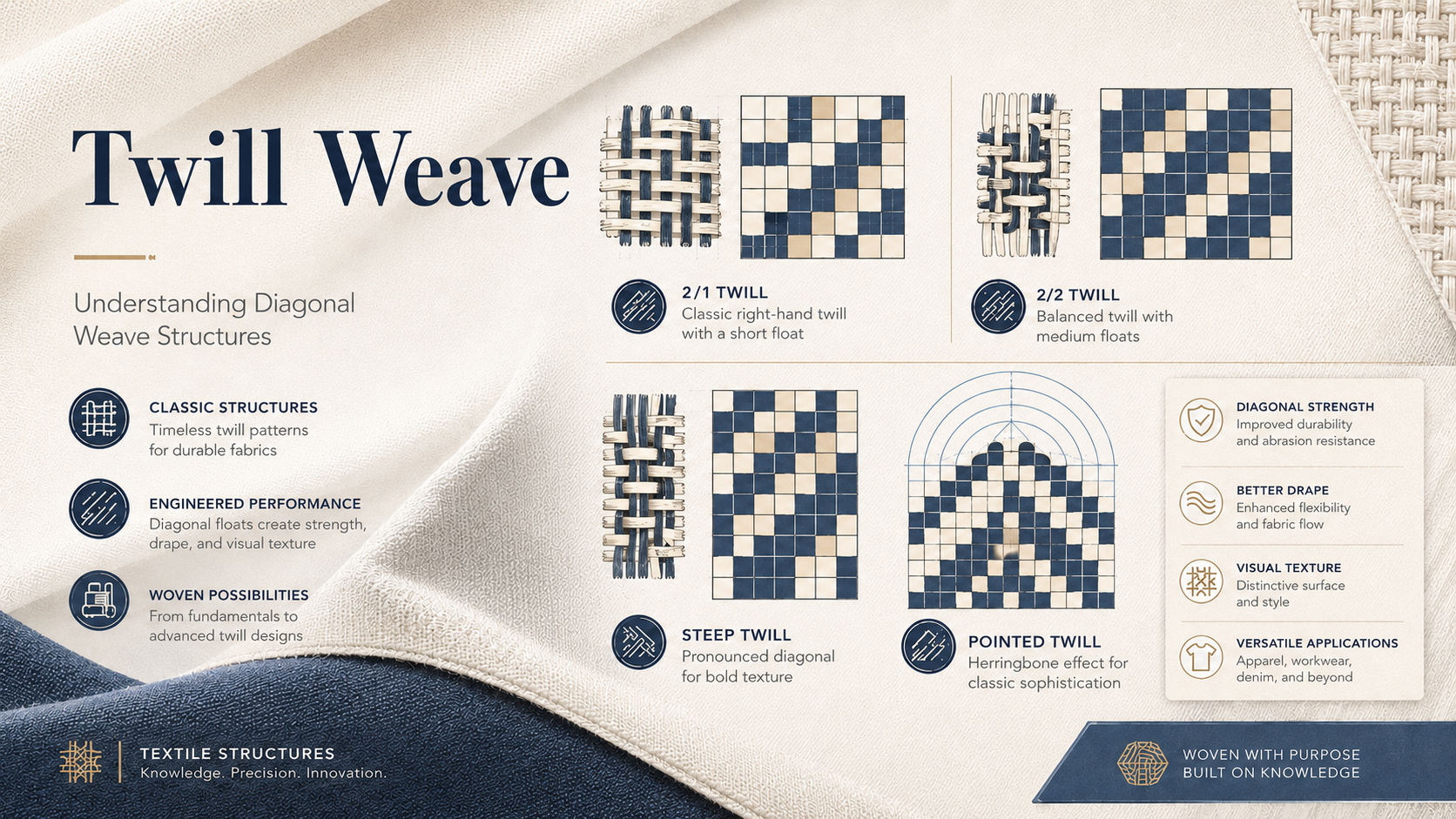
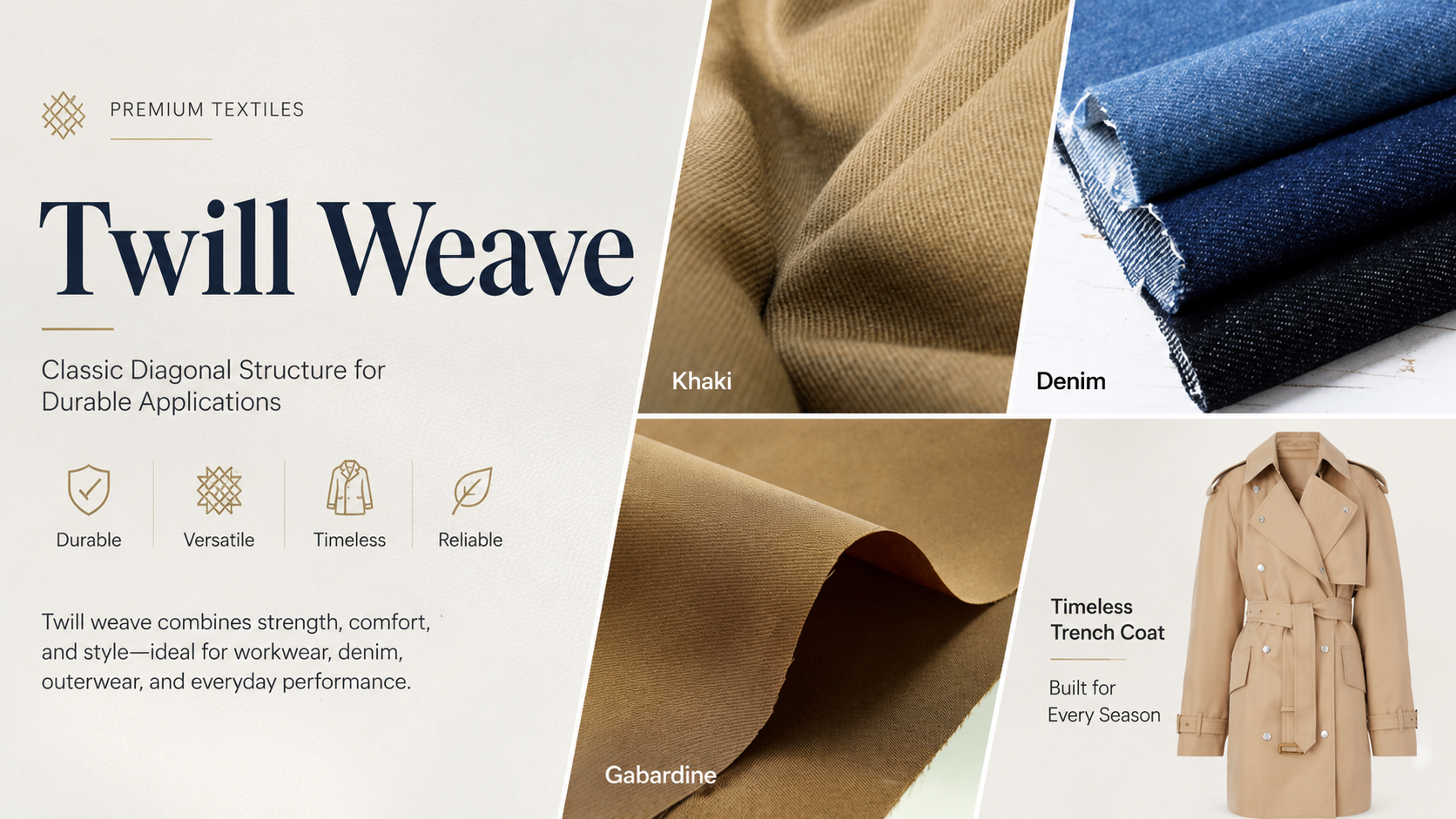
Twill Weave: Strength with Movement
Twill weave is recognized by its diagonal ribs. Because the yarns float over more than one yarn at a time, the fabric can feel softer while still delivering excellent strength and wrinkle resistance.
- Durable structure for pants, jackets, and uniforms
- Soft hand feel with better drape than basic plain weave
- Popular choices include khaki, denim, and gabardine
- Useful when products require both comfort and long wear
For apparel makers, twill is a smart choice when performance, structure, and a refined surface must work together.
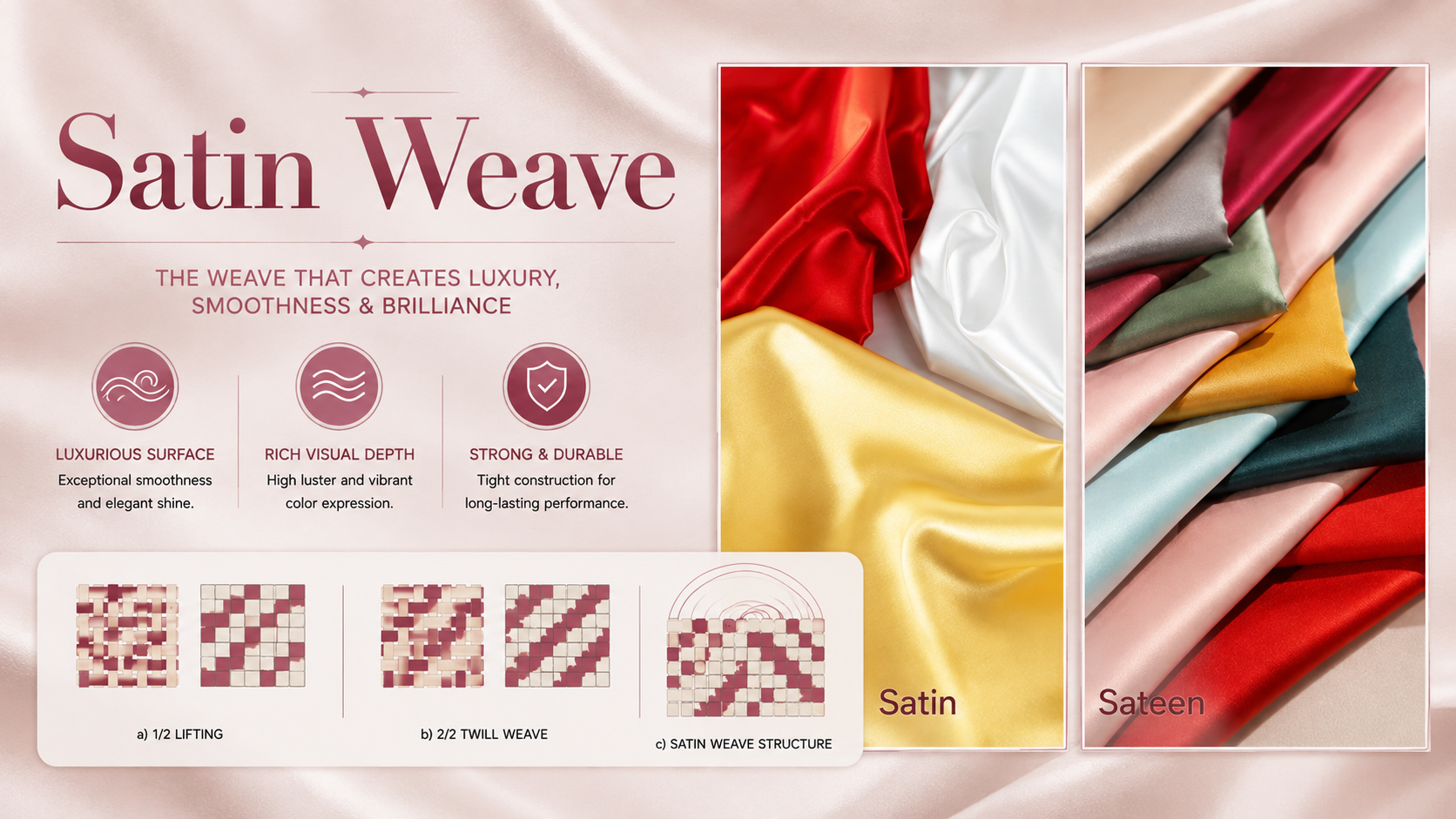
Satin Weave: Smooth Surface, Premium Appeal
Satin weave uses longer yarn floats to create a smooth, light-reflective surface. The result is a fabric with elegant shine, soft touch, and graceful drape, making it especially valuable for occasionwear and home textiles.
- Lustrous face with a silky hand feel
- Excellent drape for gowns, sleepwear, and bedding
- Works well for decorative and fashion-forward applications
- Common fabrics: satin and sateen
Satin structures help create a more luxurious visual identity while keeping the fabric fluid and comfortable.
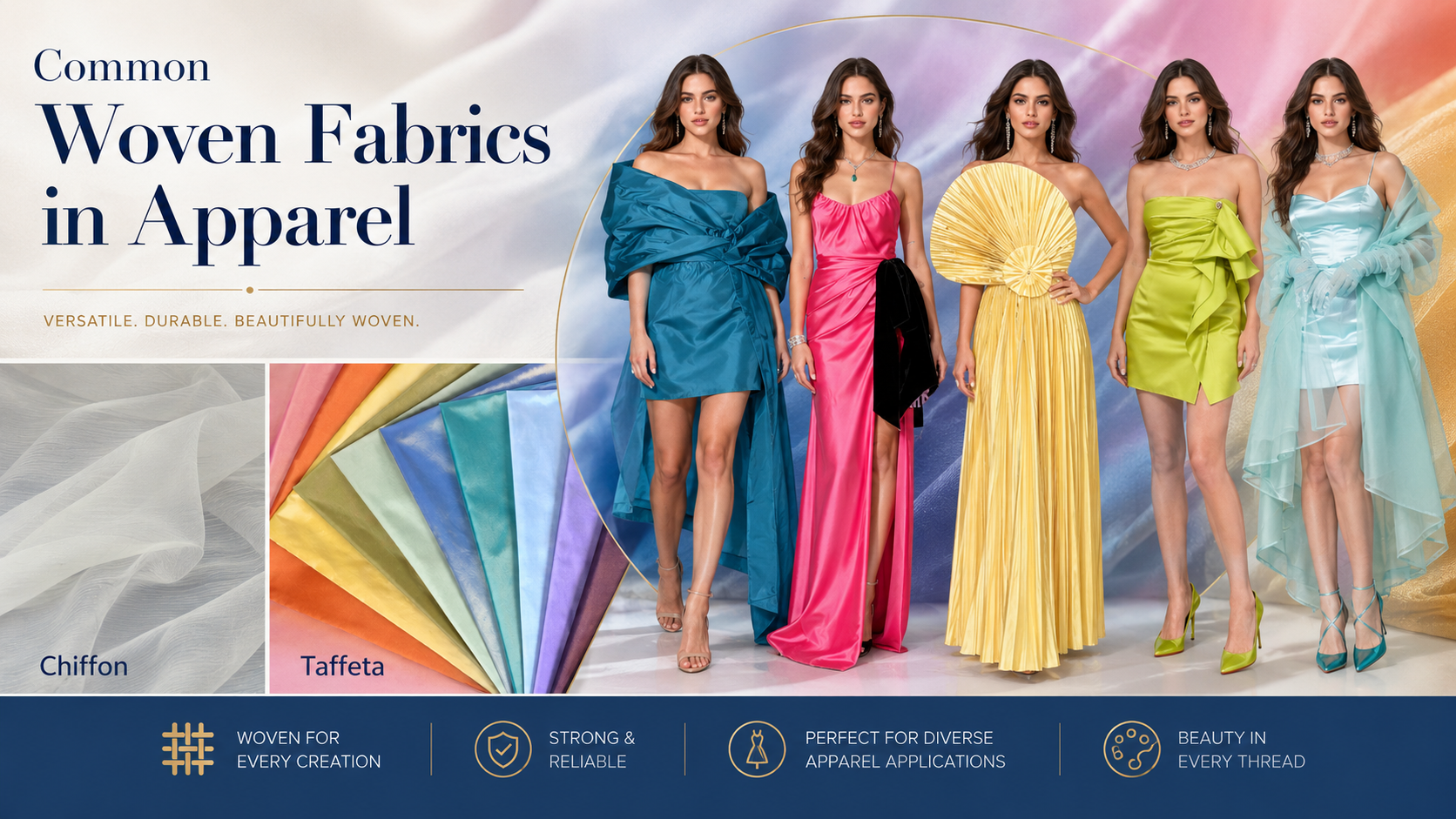
Common Woven Fabrics in Apparel
Plain Weave
- Poplin
– Characteristics: Fine, smooth surface with a clean appearance.
– Applications: Dress shirts, casual shirts and dresses. - Voile
– Characteristics: Lightweight and sheer with a soft hand.
– Applications: Blouses, dresses and lightweight curtains. - Oxford Cloth
– Characteristics: Basket-weave variation with a distinctive texture.
– Applications: Button-down shirts and casual shirts. - Canvas
– Characteristics: Typically substantial and sturdy.
– Applications: Bags, footwear uppers and workwear. - Chiffon
– Characteristics: Lightweight and sheer with a fine crepe-like texture.
– Applications: Blouses, dresses and overlays. - Taffeta
– Characteristics: Crisp hand with an often lustrous surface.
– Applications: Formal dresses, structured garments and linings.
Twill Weave
- Denim
– Characteristics: Typically warp-faced with visible diagonal ribs.
– Applications: Jeans, jackets and workwear. - Chino Twill
– Characteristics: Clean surface with a structured hand.
– Applications: Chinos, casual trousers and uniforms. - Gabardine
– Characteristics: Dense construction with pronounced diagonal ribs.
– Applications: Trench coats, tailored trousers and suits.
Satin Weave
- Satin
– Characteristics: Smooth, often lustrous surface; drape varies.
– Applications: Eveningwear, blouses, linings and accessories. - Sateen
– Characteristics: Typically weft-faced with a smooth surface and soft sheen.
– Applications: Bedding, dresses and trousers.
Fabric characteristics vary with fiber composition, yarn, density and finishing. Confirm the actual specifications and performance requirements before selecting a fabric for production.
Discuss Your Fabric Development Requirements
Choosing a fabric starts with understanding its structure, composition and intended use. Learn about our custom fabric development services or contact HITEK TEXTILE to discuss material selection and your next textile project.