
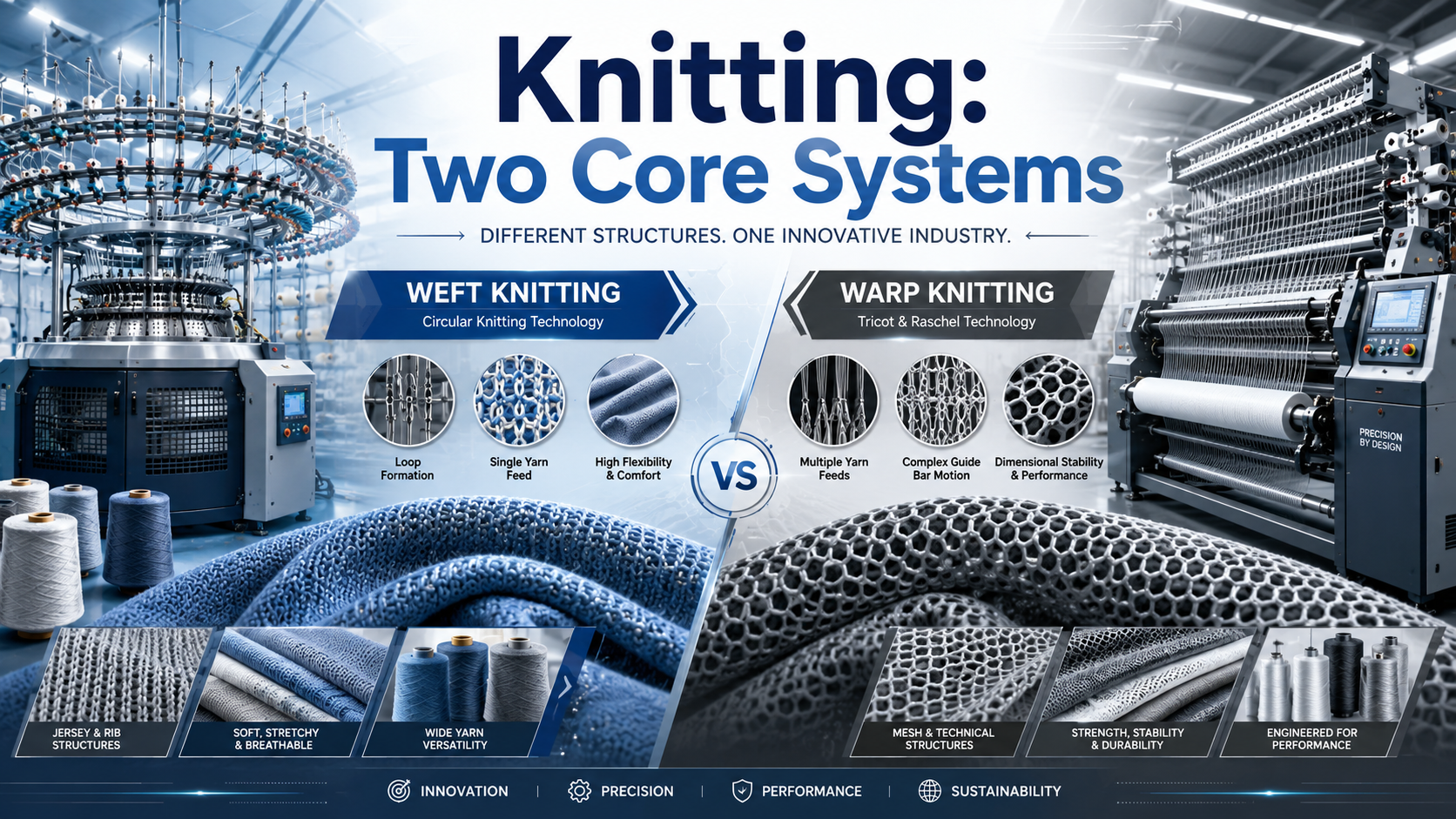
Knitting: Two Core Systems
In textile manufacturing, knitting is built on one simple idea: yarns are shaped into interlocking loops.
For product development, the first decision is usually the knitting system. Warp knitting supports stable, durable, and often performance-driven fabrics. Weft knitting is flexible, fast to sample, and widely used for apparel, socks, and everyday comfort textiles.
Understanding this choice helps brands balance hand feel, stretch, durability, cost, and production lead time.
(1) Warp Knitting
(2) Weft Knitting
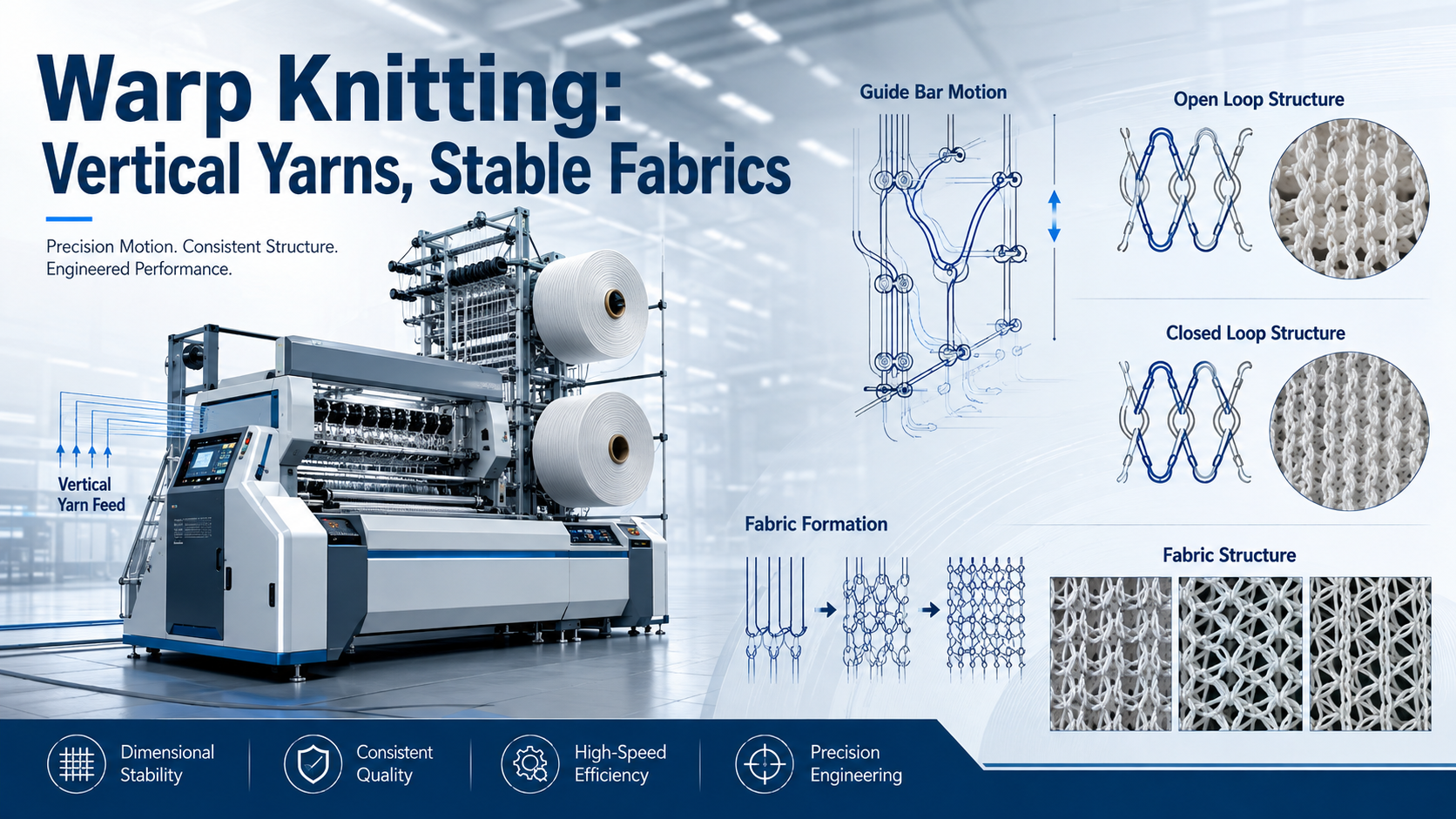
Warp Knitting: Vertical Yarns, Stable Fabrics
Warp knitting uses needle motion to bend vertically arranged yarns into loops. Newly formed loops connect with loops from neighboring courses, creating a stable textile structure.
Because the yarn direction generally follows the warp direction, this system is ideal when the fabric must deliver shape retention, durability, dimensional stability, and controlled stretch.
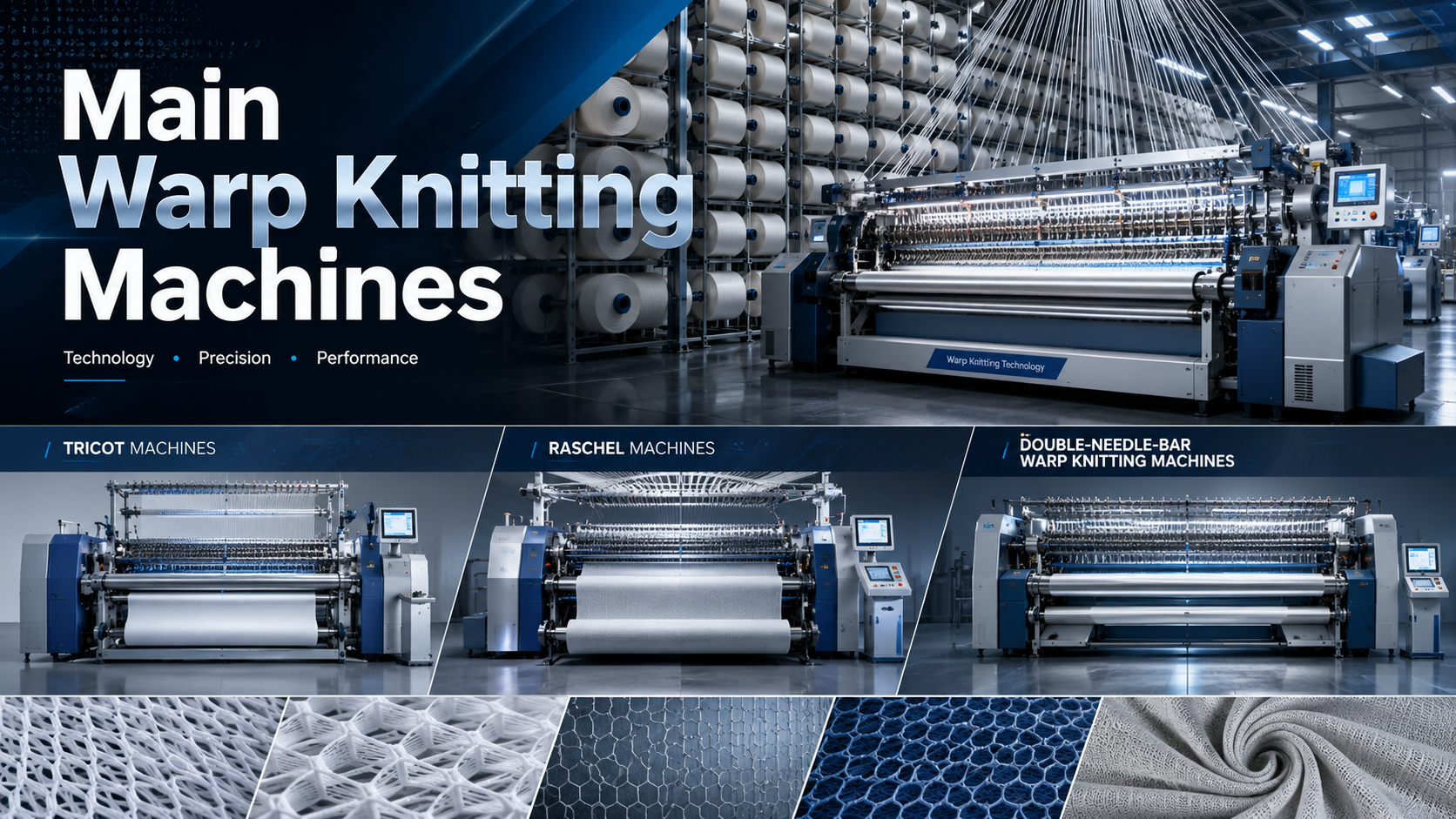
Main Warp Knitting Machines
Warp knitting is commonly discussed through two major machine families: Tricot and Raschel.
Tricot machines are often selected for relatively fine, lightweight, and smooth fabric structures such as mesh, brushed fabrics, swimwear, and intimate apparel.
Raschel machines provide more design flexibility for open structures, lace, elastic fabrics, jacquard effects, curtains, spacer fabrics, and garment textiles. Modern computer jacquard systems expand pattern capability even further.
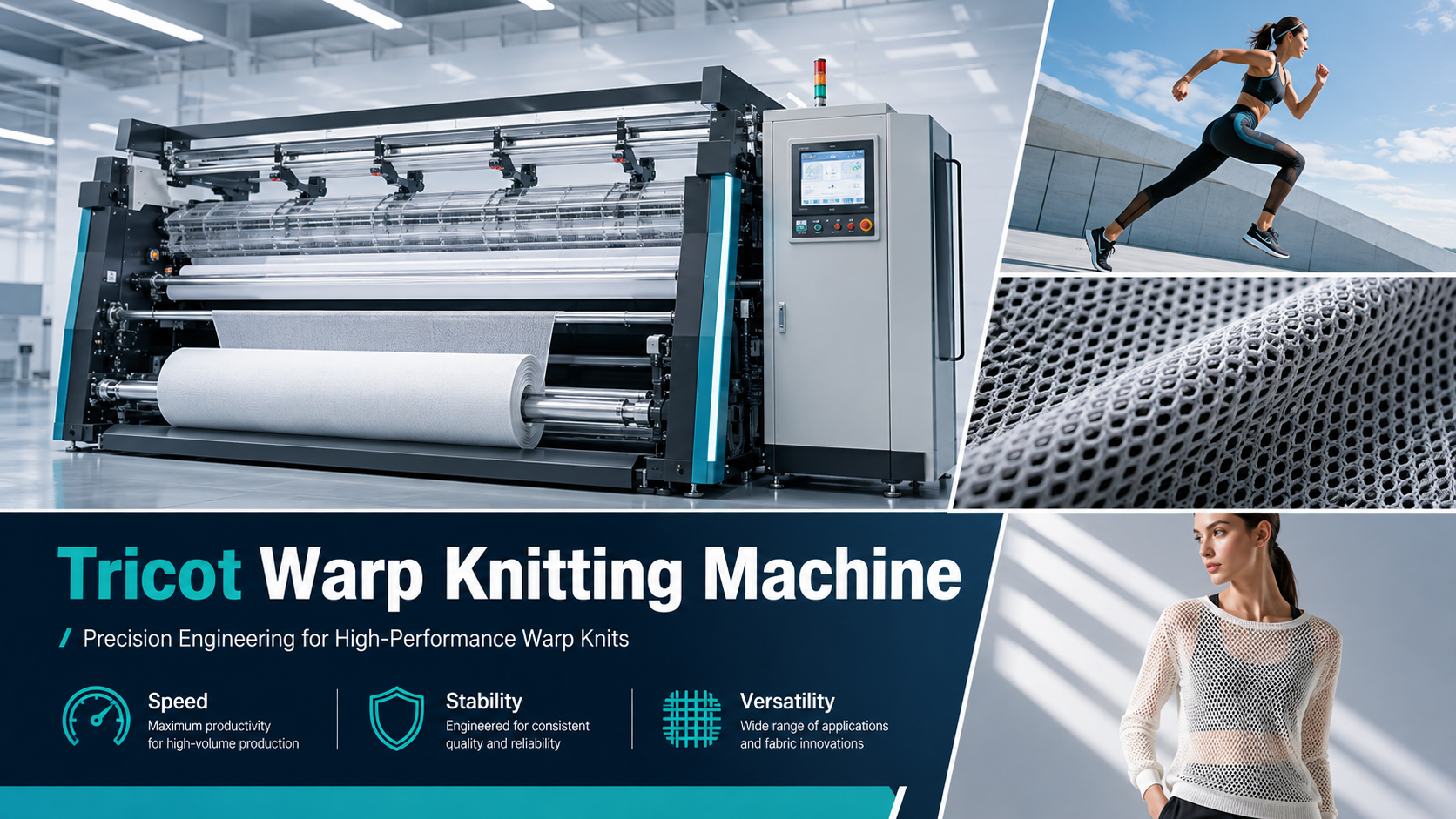
Tricot Warp Knitting Machine
Tricot knitting is valued for fast production and clean fabric surfaces. In product planning, it is a practical route for lightweight performance fabrics, lining materials, sportswear, mesh, swimwear, and intimate apparel.
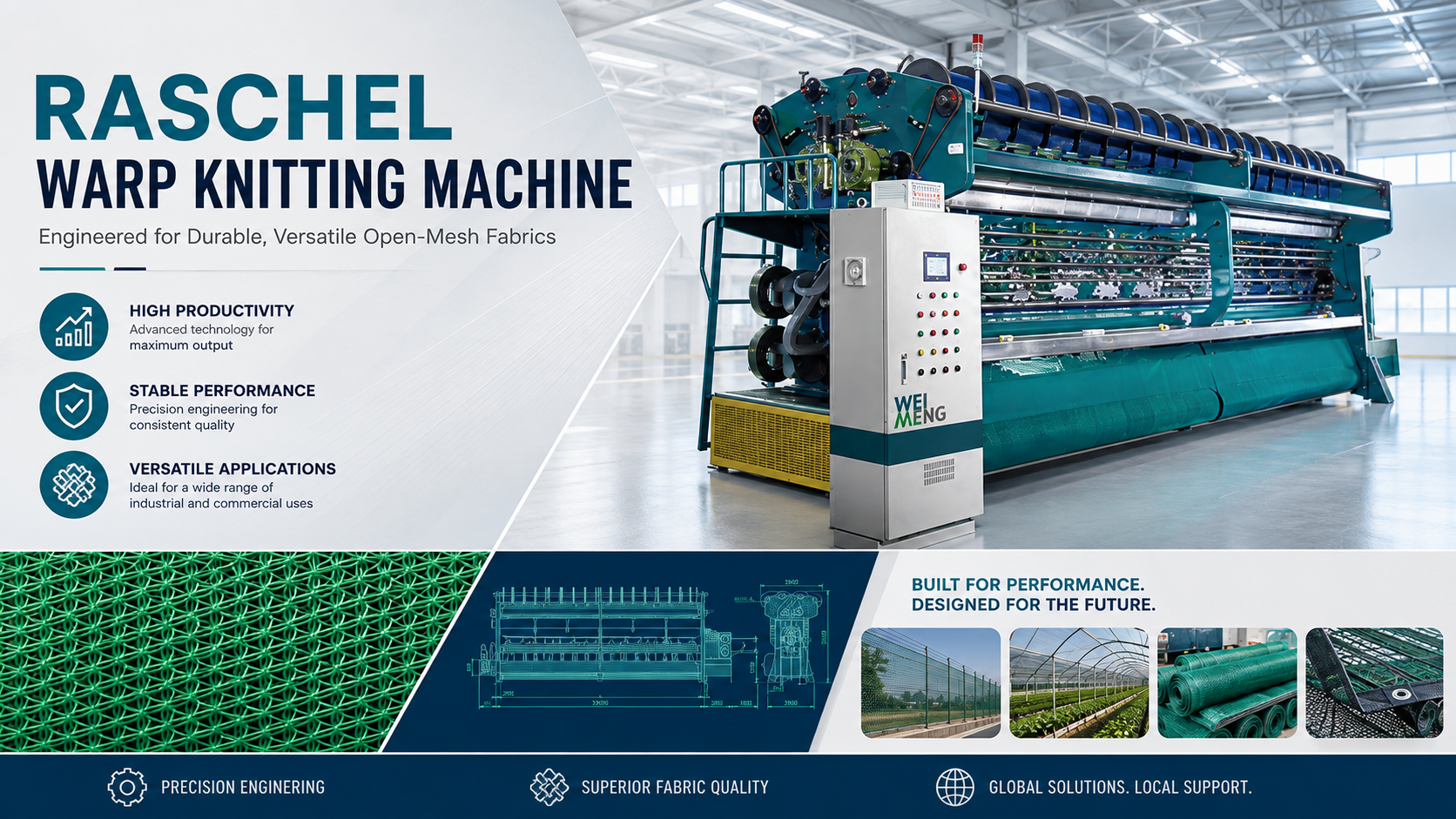
Raschel Warp Knitting Machine
Raschel machines are designed for structure and pattern diversity. They are especially useful when the fabric needs openwork, dimension, elasticity, or decorative value.
Typical applications include lace, netting, jacquard fabrics, elastic panels, curtains, and spacer-type textiles.
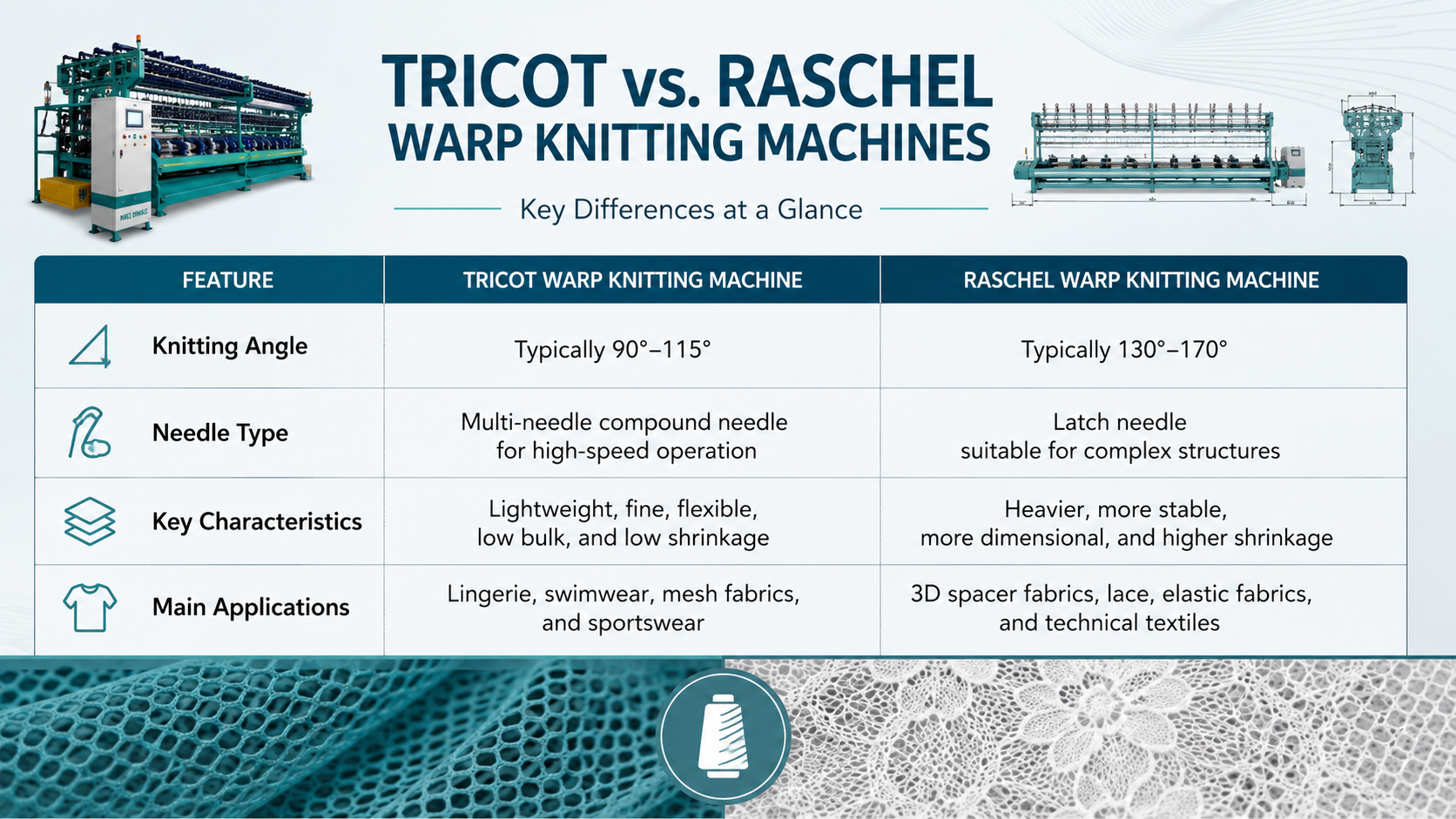
Tricot vs. Raschel: Choosing the Right Route
The choice between Tricot and Raschel depends on the target fabric. Tricot is generally associated with lighter, thinner, smoother, and faster structures. Raschel is commonly chosen for heavier, more three-dimensional, more pattern-rich, or elastic fabrics.
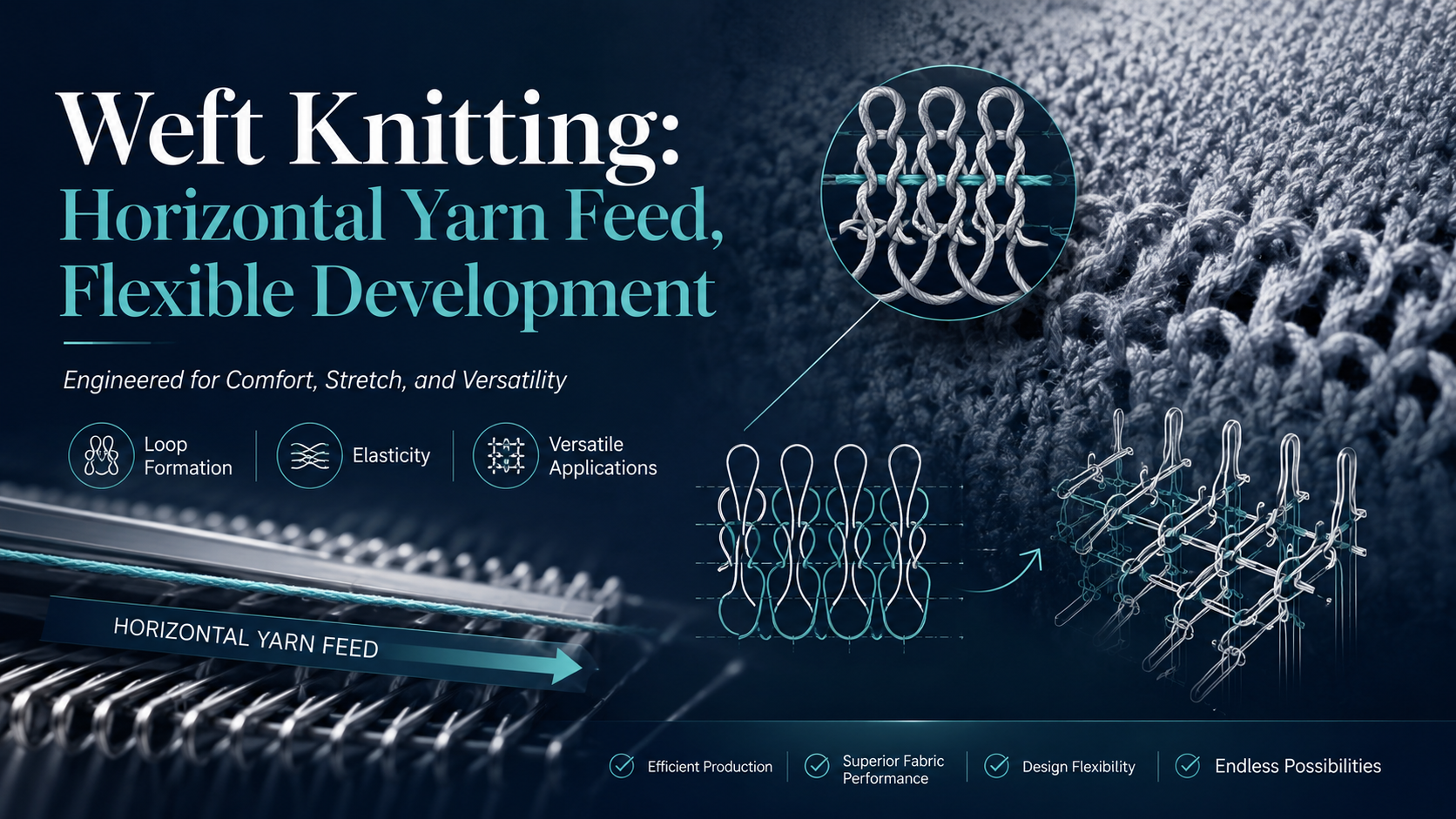
Weft Knitting: Horizontal Yarn Feed, Flexible Development
Weft knitting feeds one or several yarns from the weft direction. Needle motion bends the yarn into loops, then intermeshes those loops to form fabric.
This method is widely used because it is flexible, efficient, and suitable for fast sample development. Weft-knitted fabrics often provide comfortable stretch and soft hand feel, making them important for apparel, casualwear, socks, and many everyday textile products.
Common machines include
- flat knitting
- circular knitting
- hosiery machines.
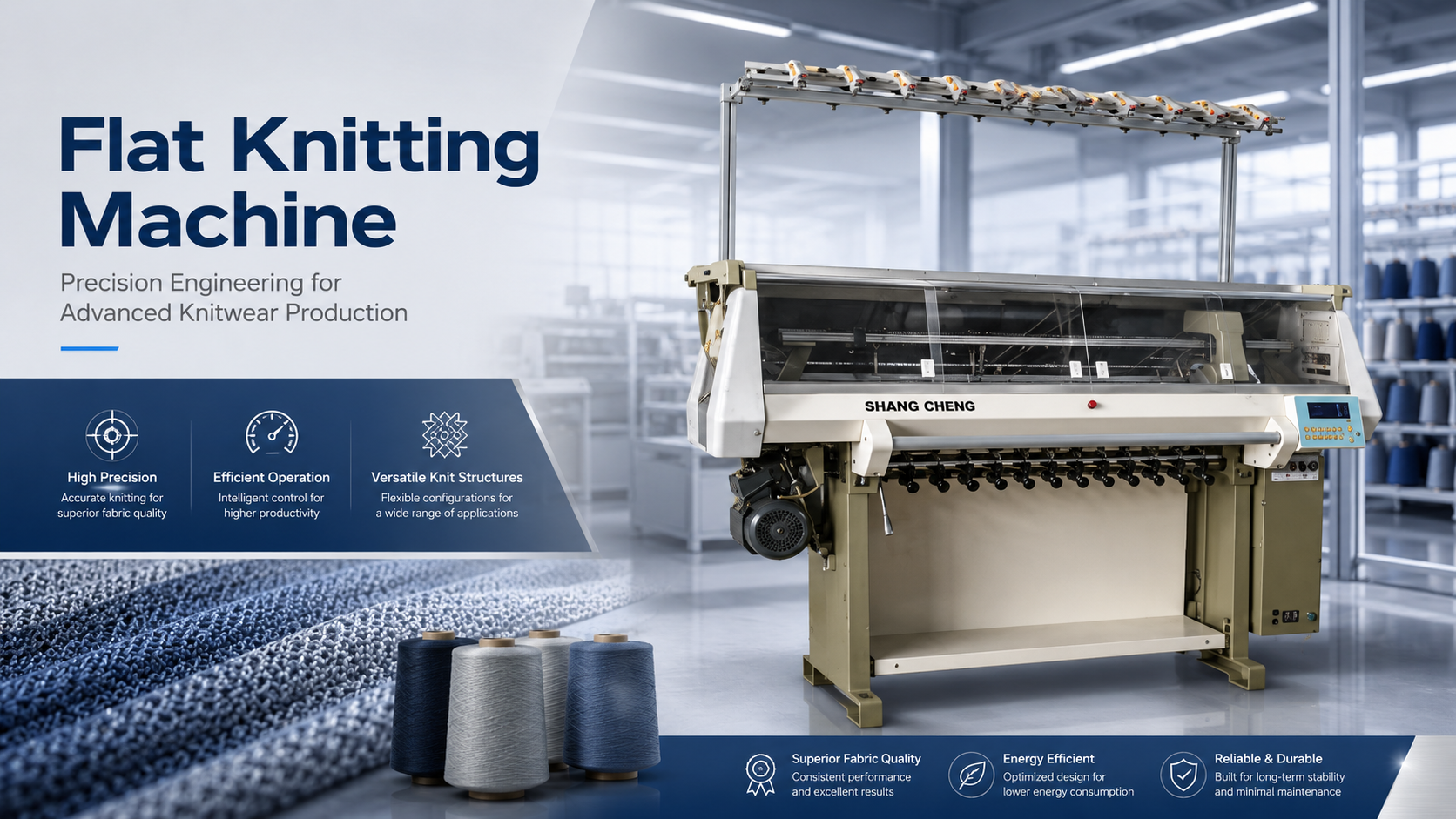
01. Flat Knitting Machine
Flat knitting is a flexible system for shaped panels, collars, ribs, sweater bodies, and engineered garment parts. It supports smaller-batch development and design adjustments, which makes it valuable for fashion sampling and customized knit structures.
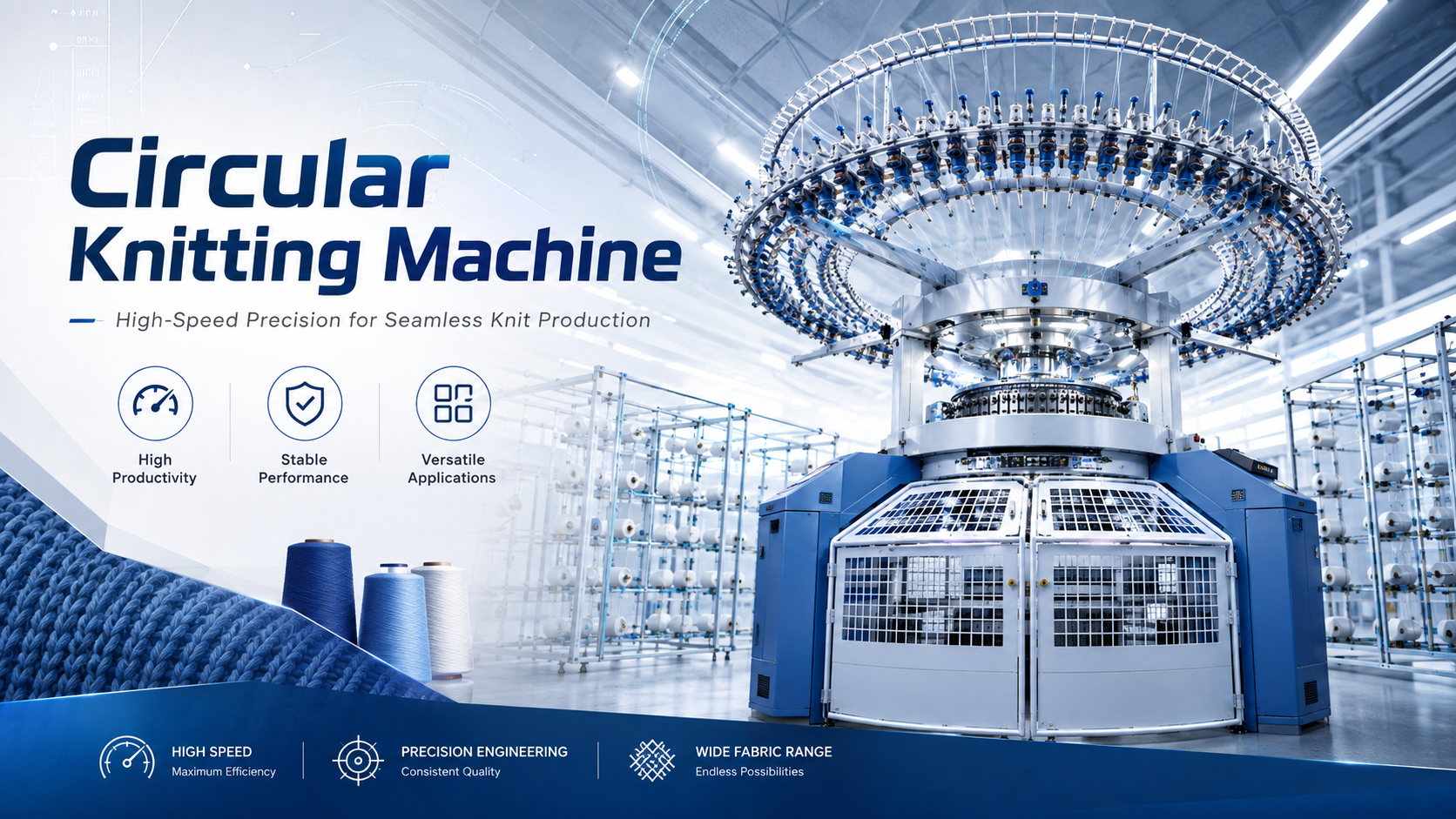
02. Circular Knitting Machine
Circular knitting machines produce continuous tubular or open-width knit fabrics with high efficiency. They are a core production choice for jersey, rib, interlock, mesh, activewear, underwear, and functional apparel fabrics.
For brands, circular knitting offers strong scalability: fast output, consistent fabric appearance, and broad compatibility with cotton, polyester, nylon, spandex, and blended yarns.
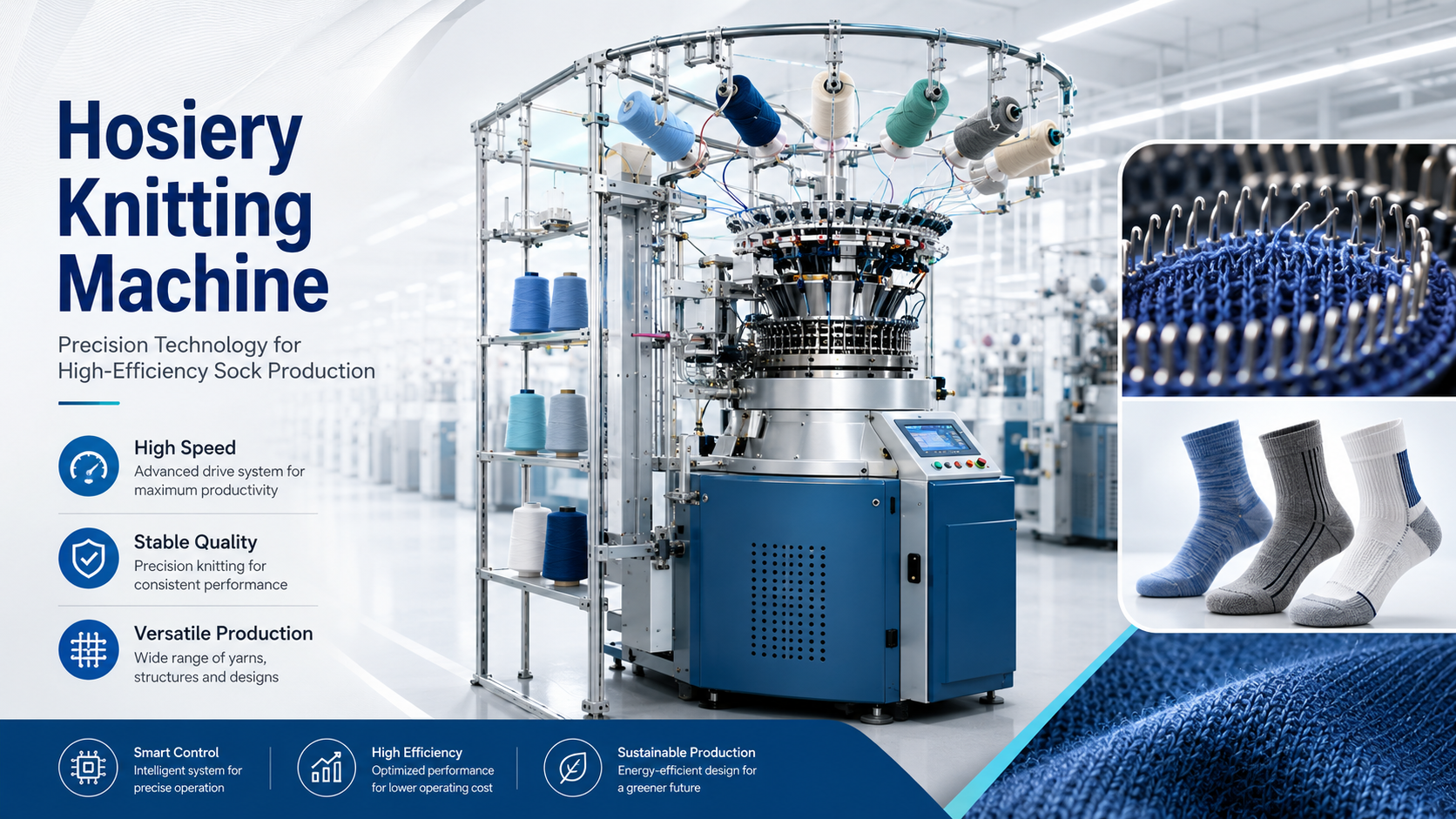
03. Hosiery Knitting Machine
Hosiery machines are specialized circular knitting systems for socks and sock-like products. They control stitch formation around a small cylinder to build structure, elasticity, cushioning, and fit.
This category is important for performance socks, compression concepts, sports hosiery, comfort socks, and functional yarn applications.
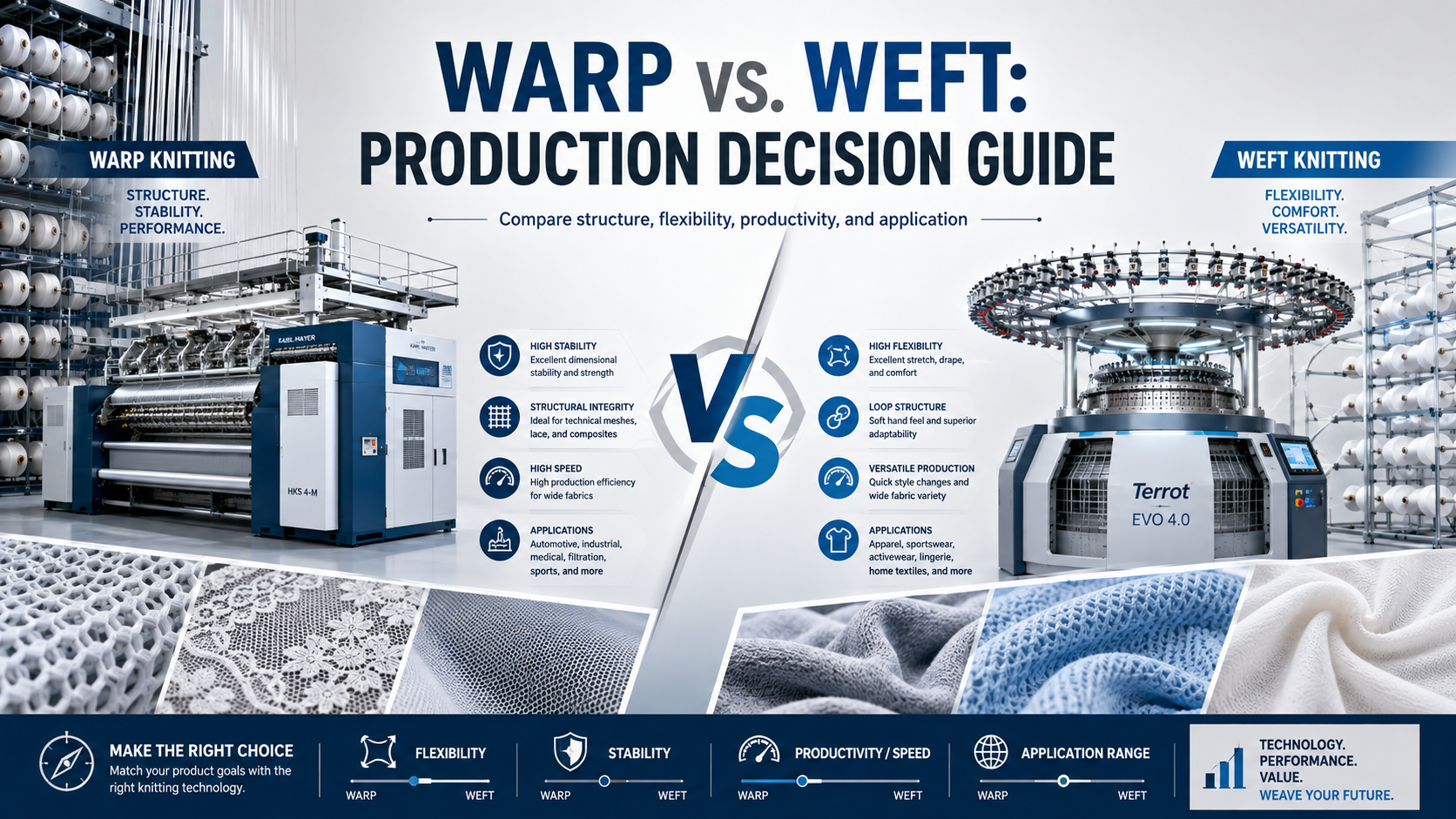
Warp vs. Weft: Production Decision Guide
In production planning, warp and weft knitting serve different business goals. Weft knitting is often faster for sampling because yarn cones can be placed on the creel and fed directly into loop formation. Warp knitting requires warping yarns onto beams before the fabric can be knitted, so preparation takes more time.
However, warp-knitted fabrics usually provide stronger dimensional stability and better resistance to tearing. Weft-knitted fabrics are more flexible and development-friendly, but they may be less durable depending on yarn, structure, and end use.
The best machine choice should always begin with the customer’s fabric requirements: stretch, durability, appearance, touch, lead time, and target cost.