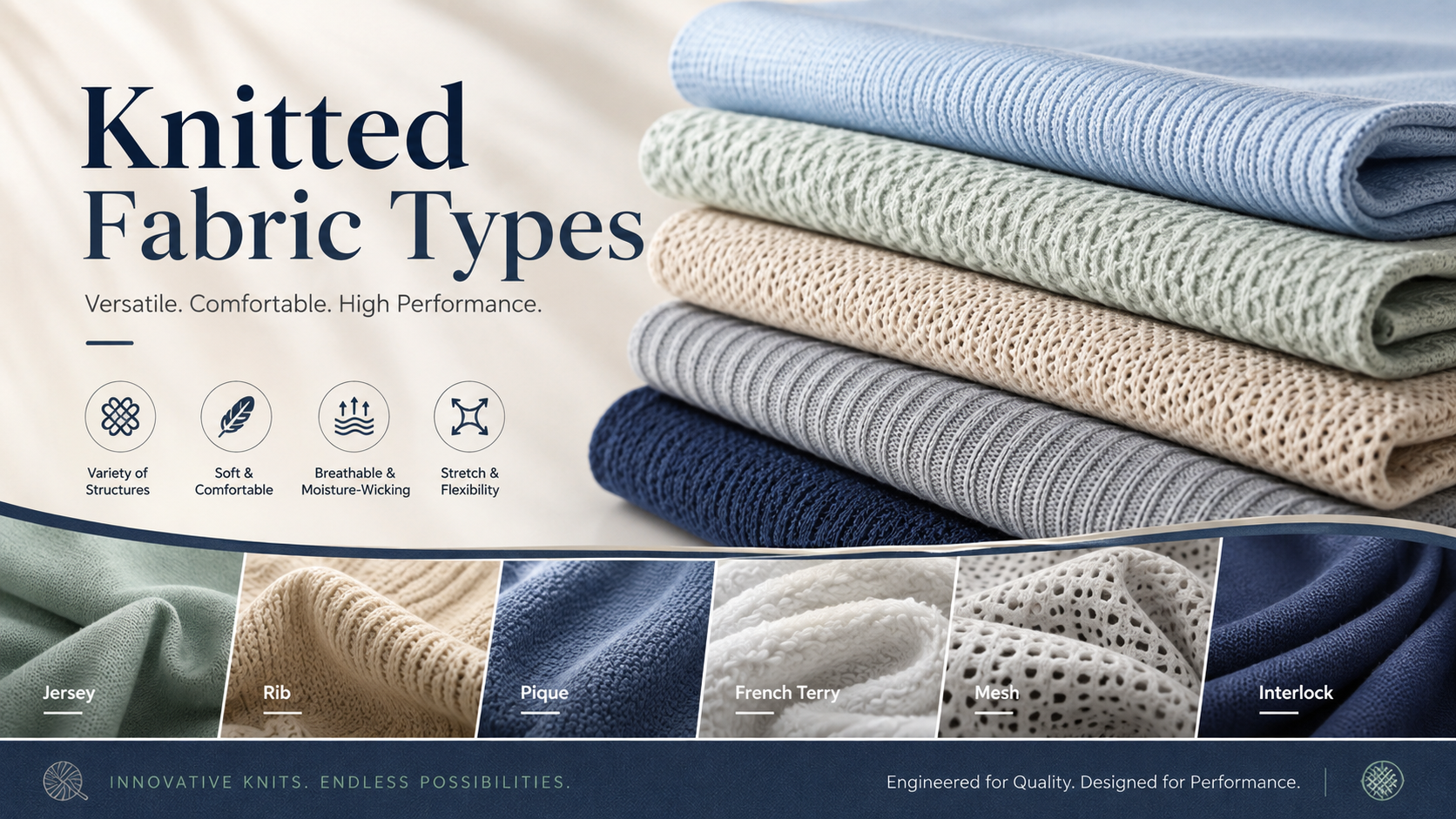
Understanding knitted fabric types helps apparel brands choose materials that match their design, comfort and production needs. This guide compares jersey, rib, interlock, French terry, pique, tricot, raschel and functional knit structures, explaining their features and common garment applications. HITEK TEXTILE develops knitted fabrics in Taiwan for international brands and garment manufacturers.
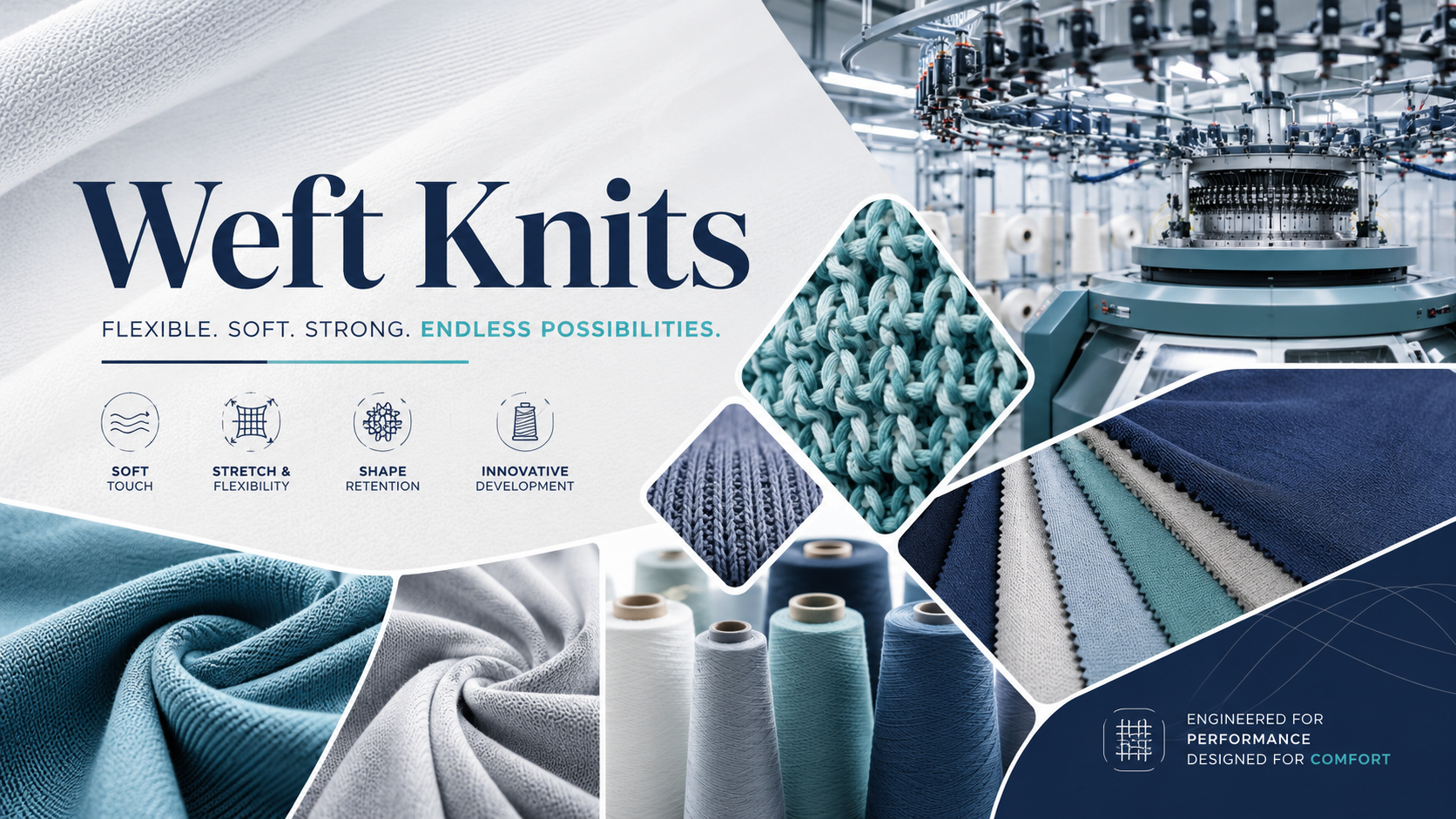
01.Weft Knits
Everyday stretch, comfort, and speed
Weft Knit: The Most Versatile Knitted Fabric Family
Weft knitting feeds yarn horizontally across the fabric, creating soft hand feel, natural stretch, and efficient production for everyday apparel.
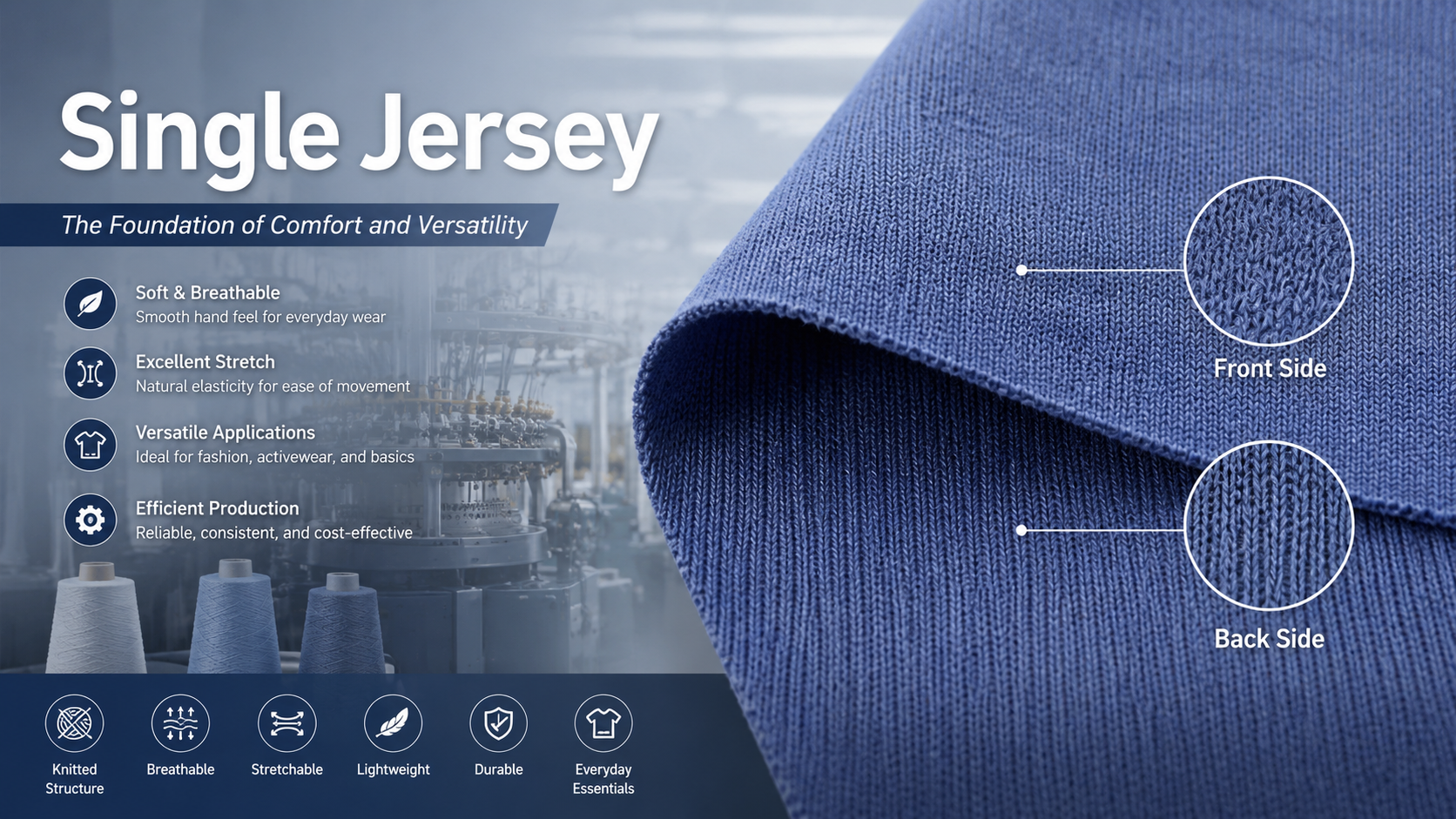
Single Jersey
Smooth face, looped back, lightweight and breathable. A go-to choice for T-shirts, underwear, activewear, and comfortable base layers.
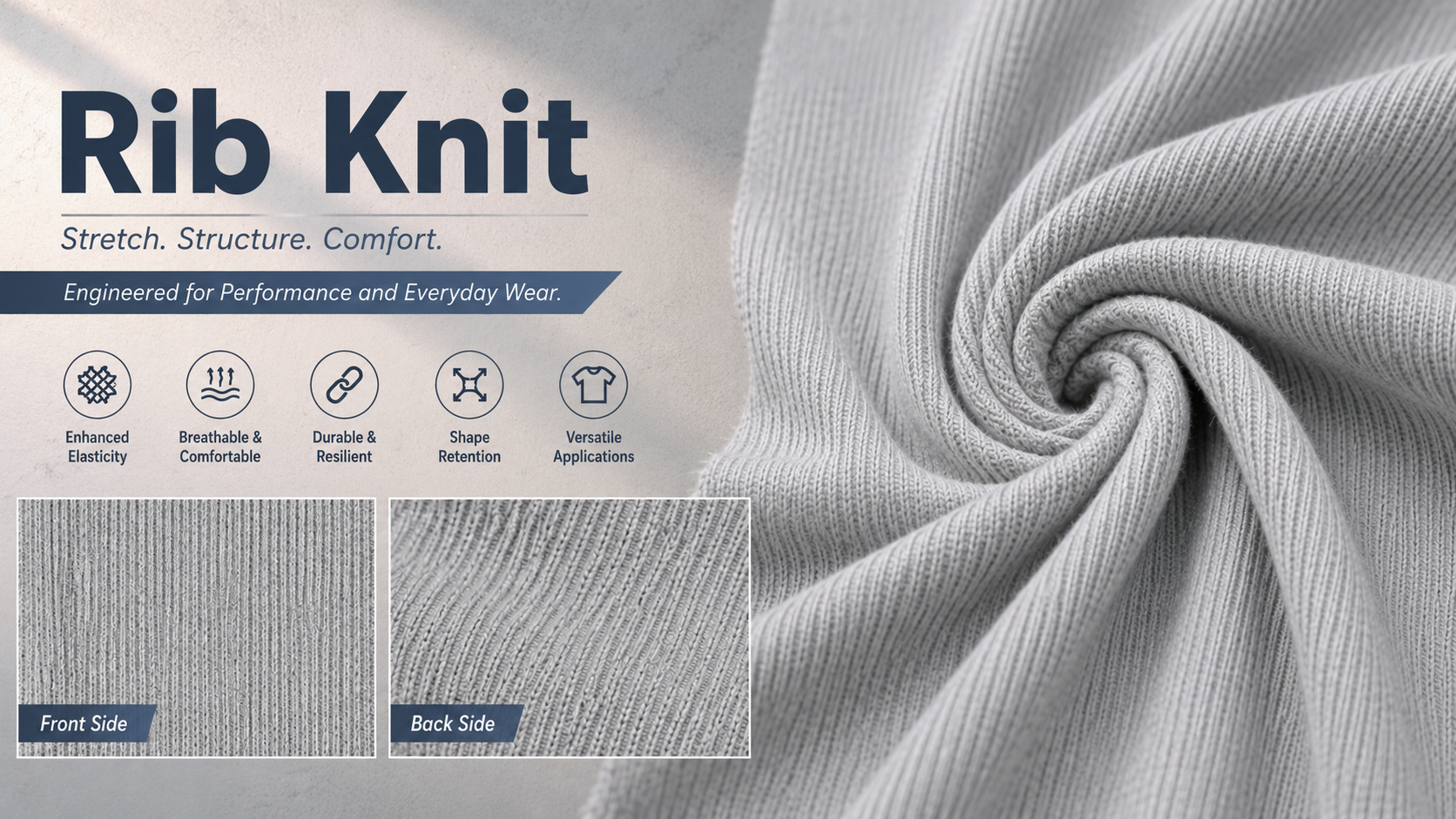
Rib Knit
Similar face and back appearance with excellent crosswise elasticity. Commonly used for collars, cuffs, hems, and recovery-focused trims.
Common specifications: 1×1 Rib and 2×2 Rib.
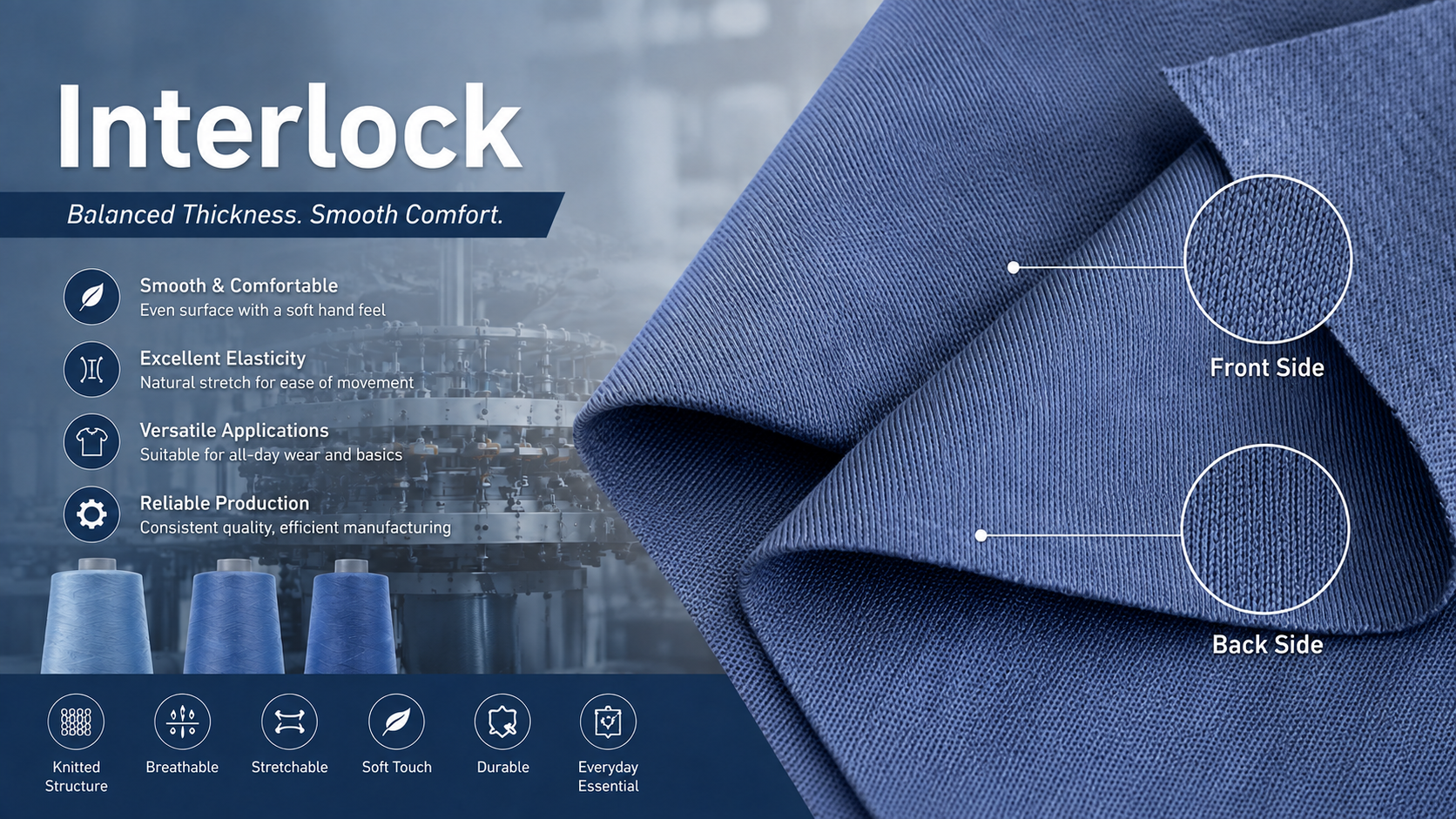
Interlock
Two jersey layers are interknitted to create a thicker, stable fabric with less edge curling. Ideal for polo shirts, childrenswear, and premium T-shirts.
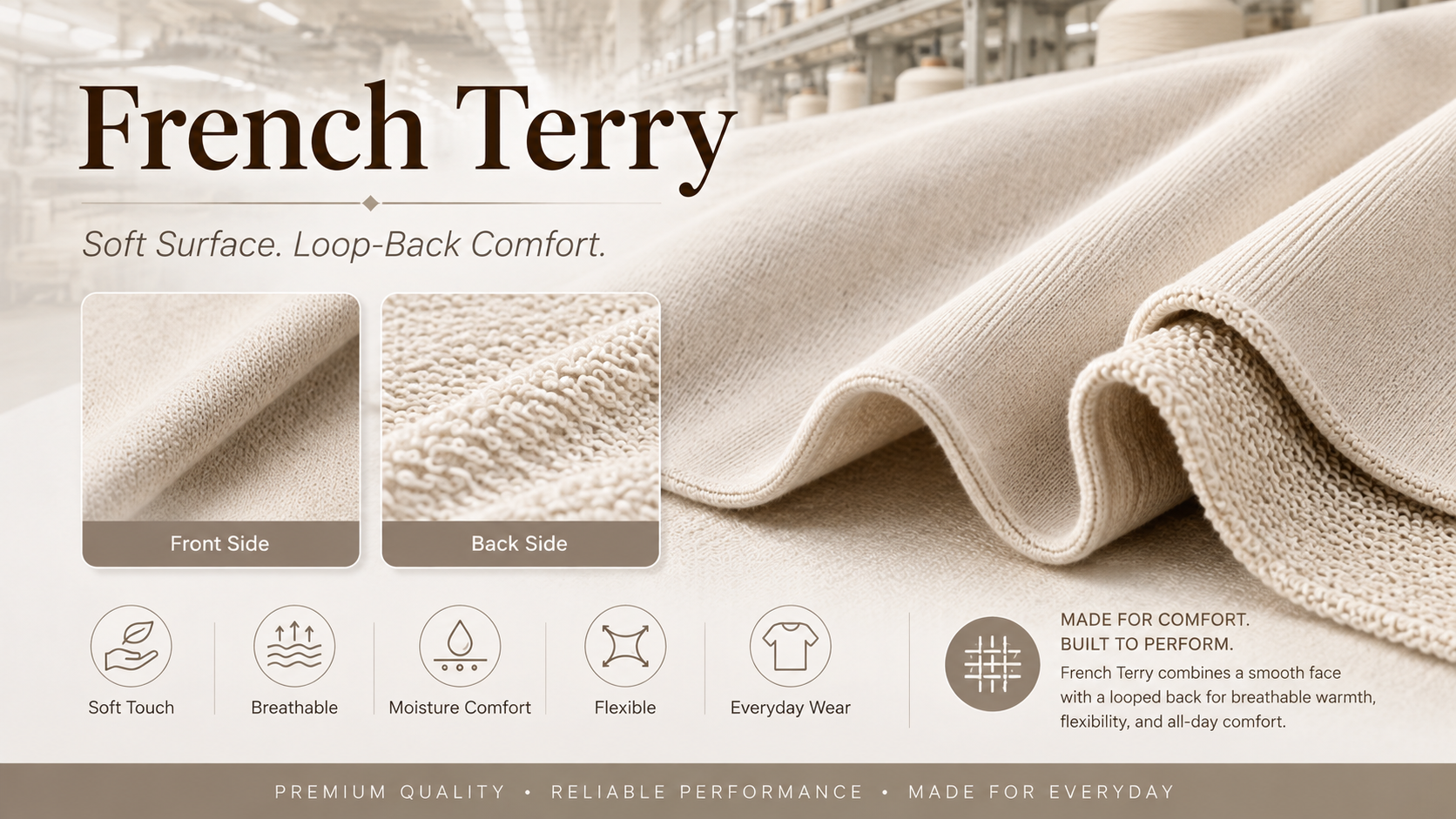
French Terry
A smooth face with looped yarns on the back provides absorbency and a casual hand feel. Frequently used for hoodies, joggers, and athleisure apparel.
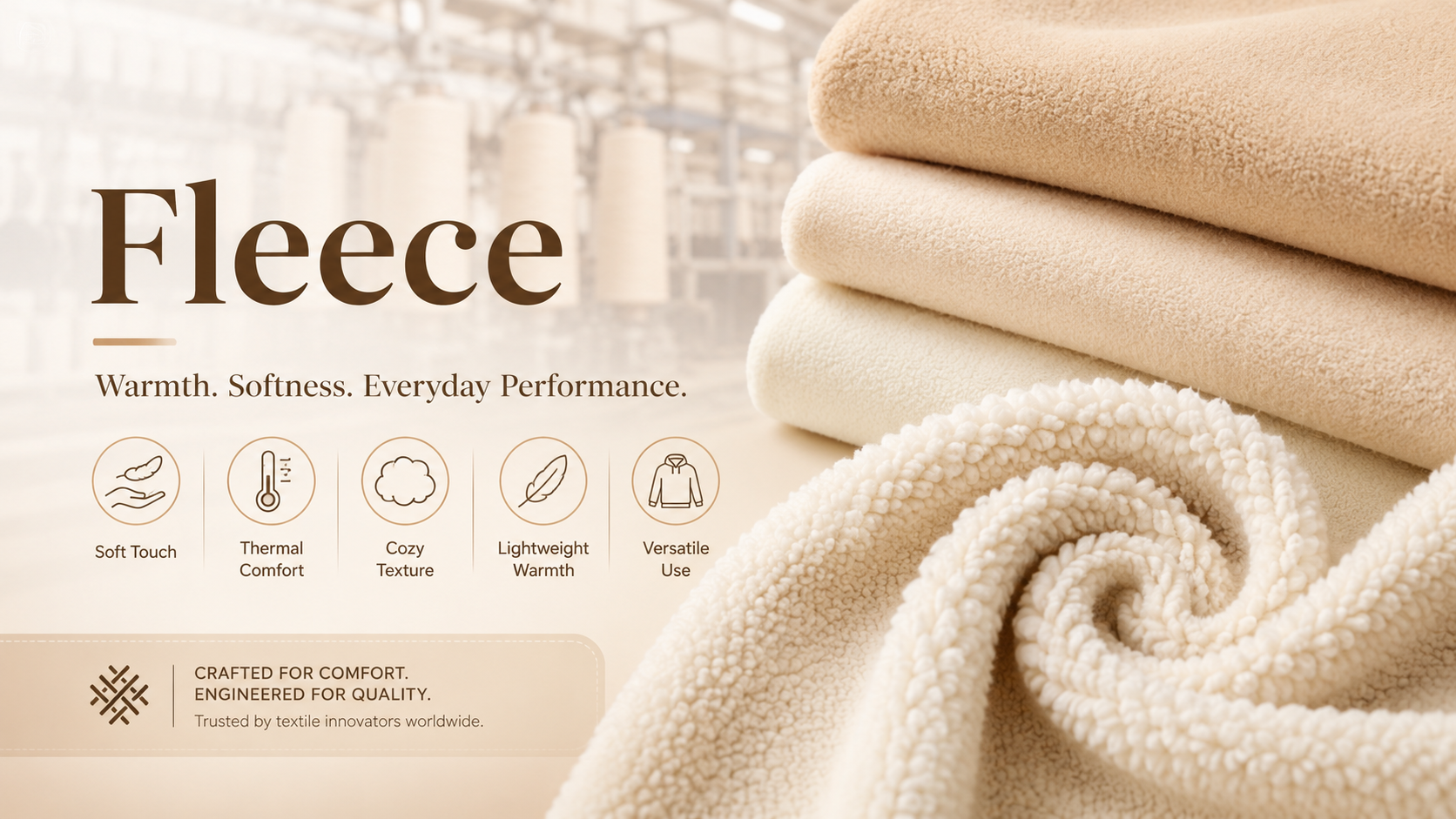
Fleece
Brushed loops create a soft, warm surface for autumn and winter products, including sweatshirts, thermal jackets, and cozy casualwear.
Interlock, French Terry, and Fleece: Building Comfort by Structure
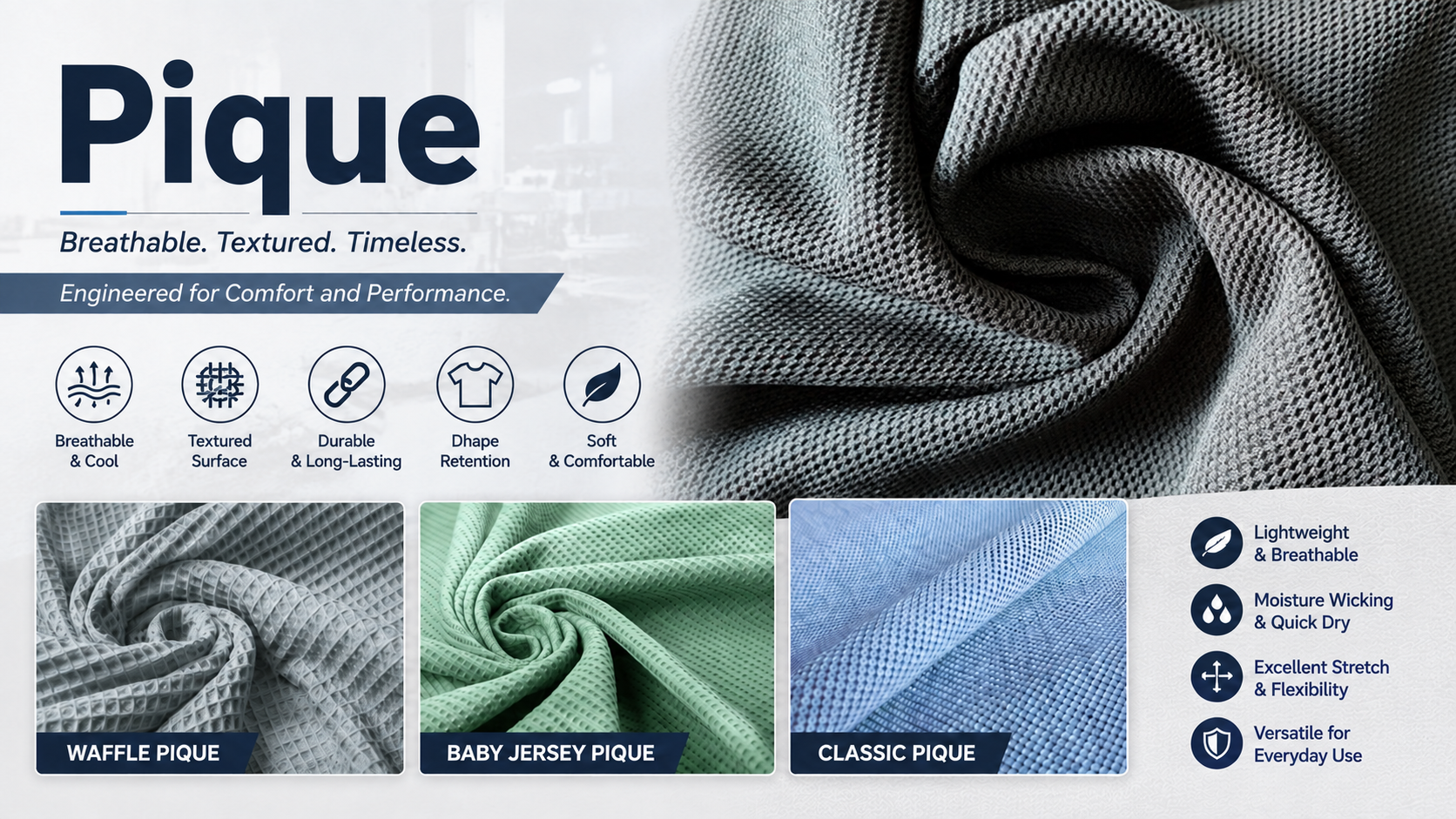
Pique
- Pique, also known as PK fabric or mesh-like polo fabric, is recognized by its raised, grainy surface texture.
- From a manufacturing viewpoint, pique helps balance airflow, moisture comfort, and a more structured appearance.
- Typical applications include polo shirts, golf apparel, uniforms, and smart-casual knitwear.
- Waffle pique variations add deeper texture and a more distinctive hand feel for babywear, sportswear, and lifestyle collections.2. Warp Knits
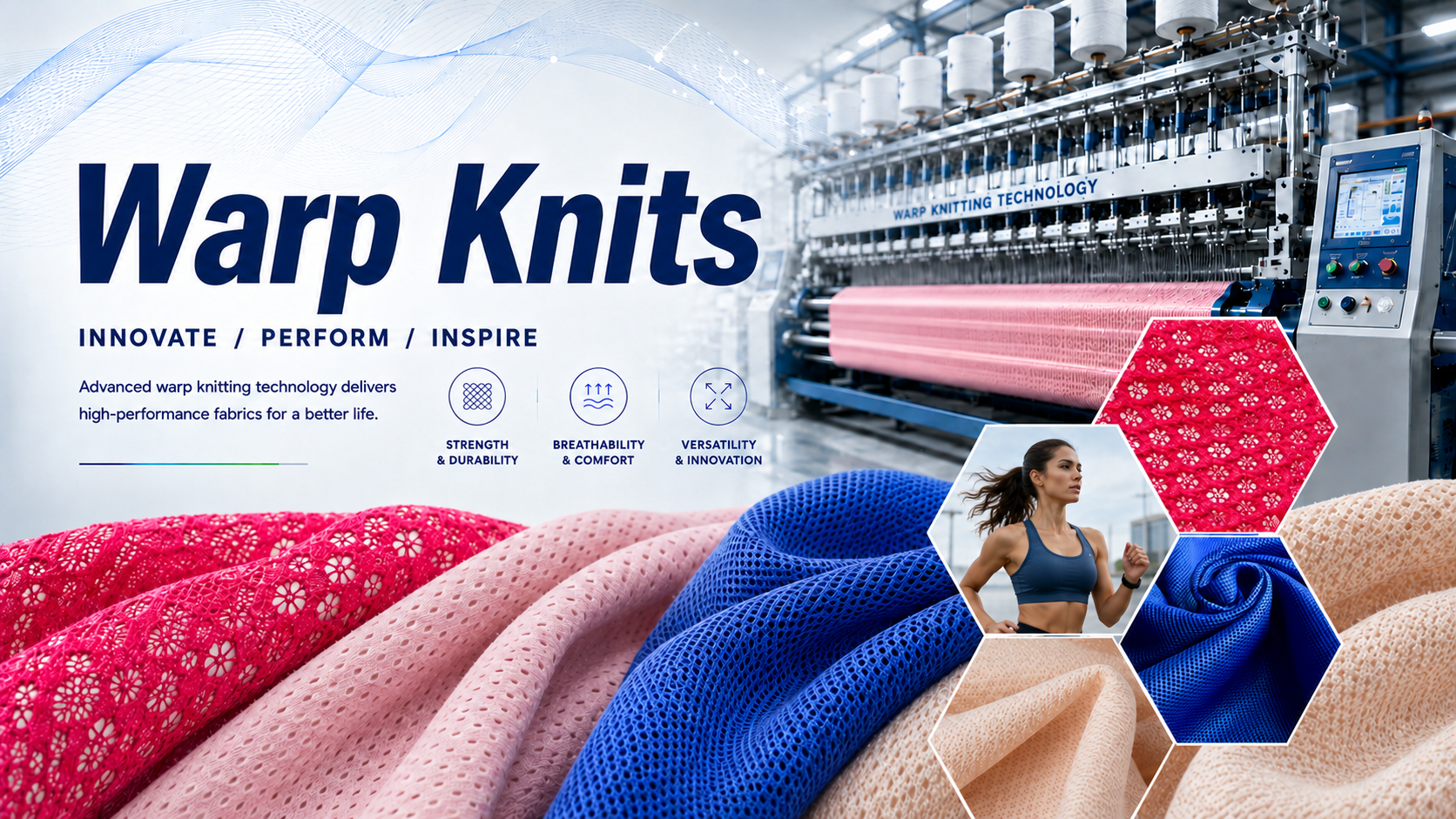
02.Warp Knits
Stable vertical yarn systems
Warp Knit: Stable Structures for Performance and Design
Warp knitting forms fabric with yarns running lengthwise, creating a more stable construction with excellent dimensional control.
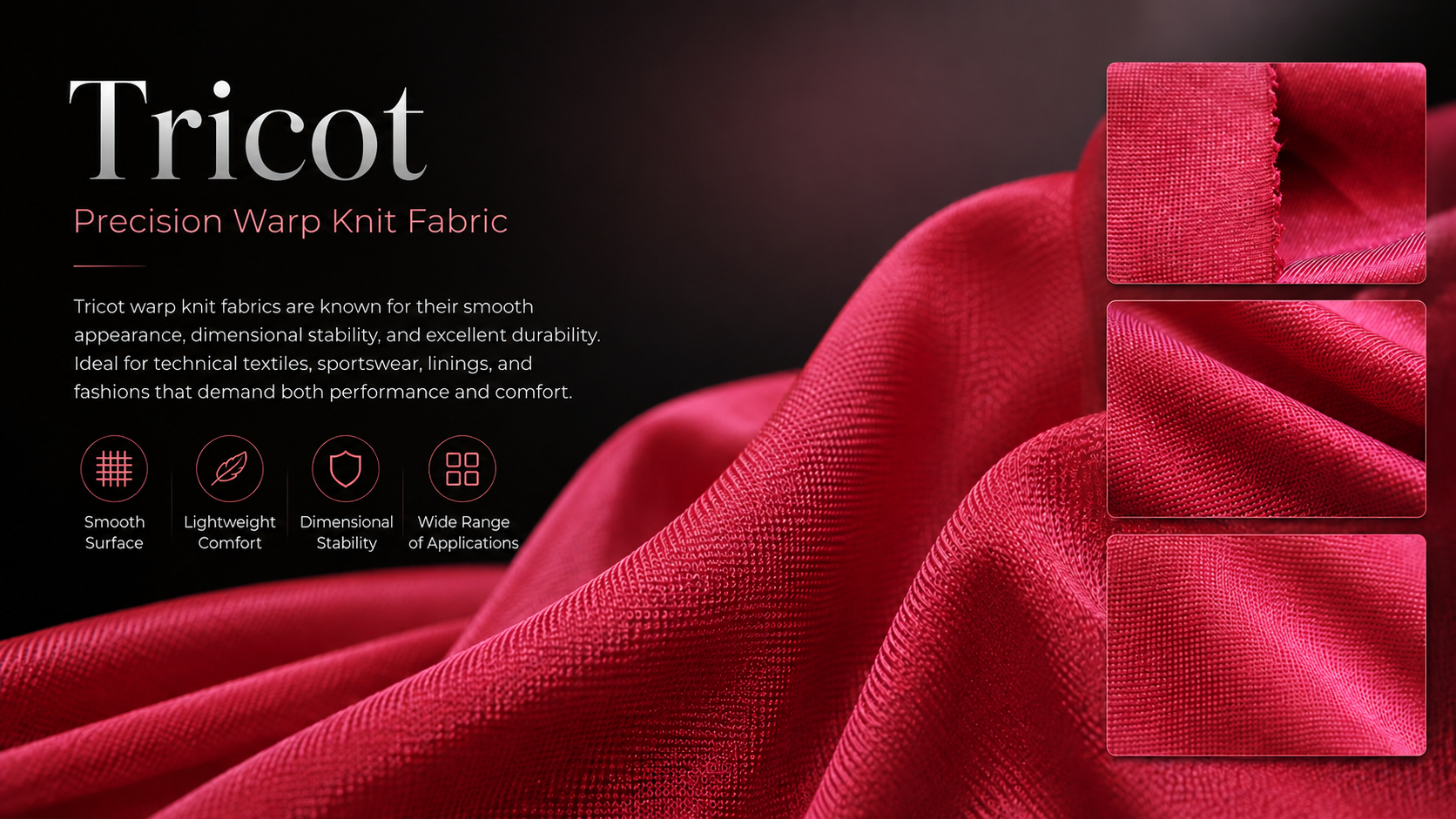
Tricot
Smooth surface, good stability, and low laddering risk. Often selected for lingerie, swimwear, linings, and lightweight performance layers.
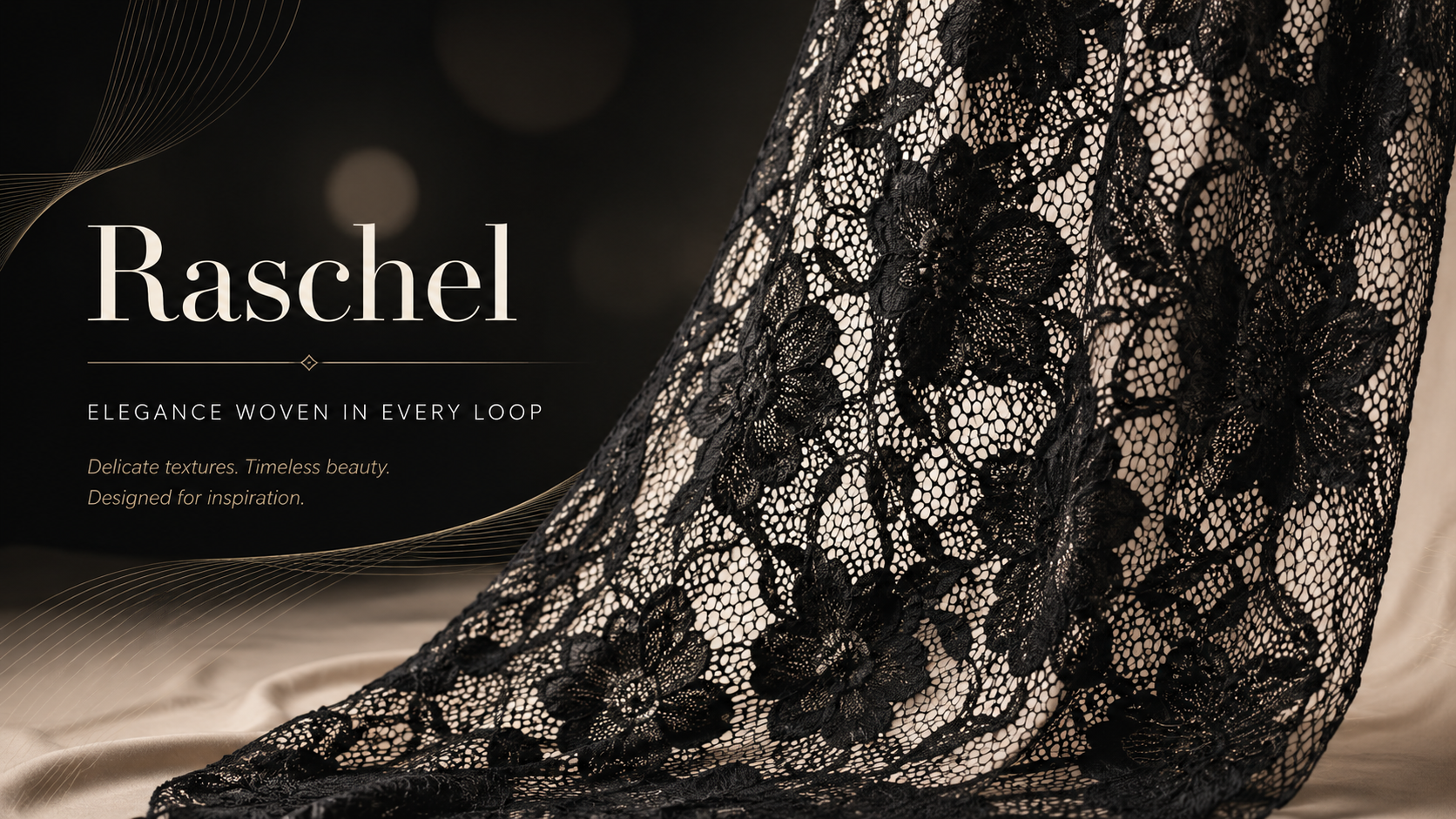
Raschel
Designed for rich structure variation, including mesh and lace effects. Suitable for lace fabric, net fabric, home textiles, and decorative technical materials.
For manufacturers, warp knitting is valuable.
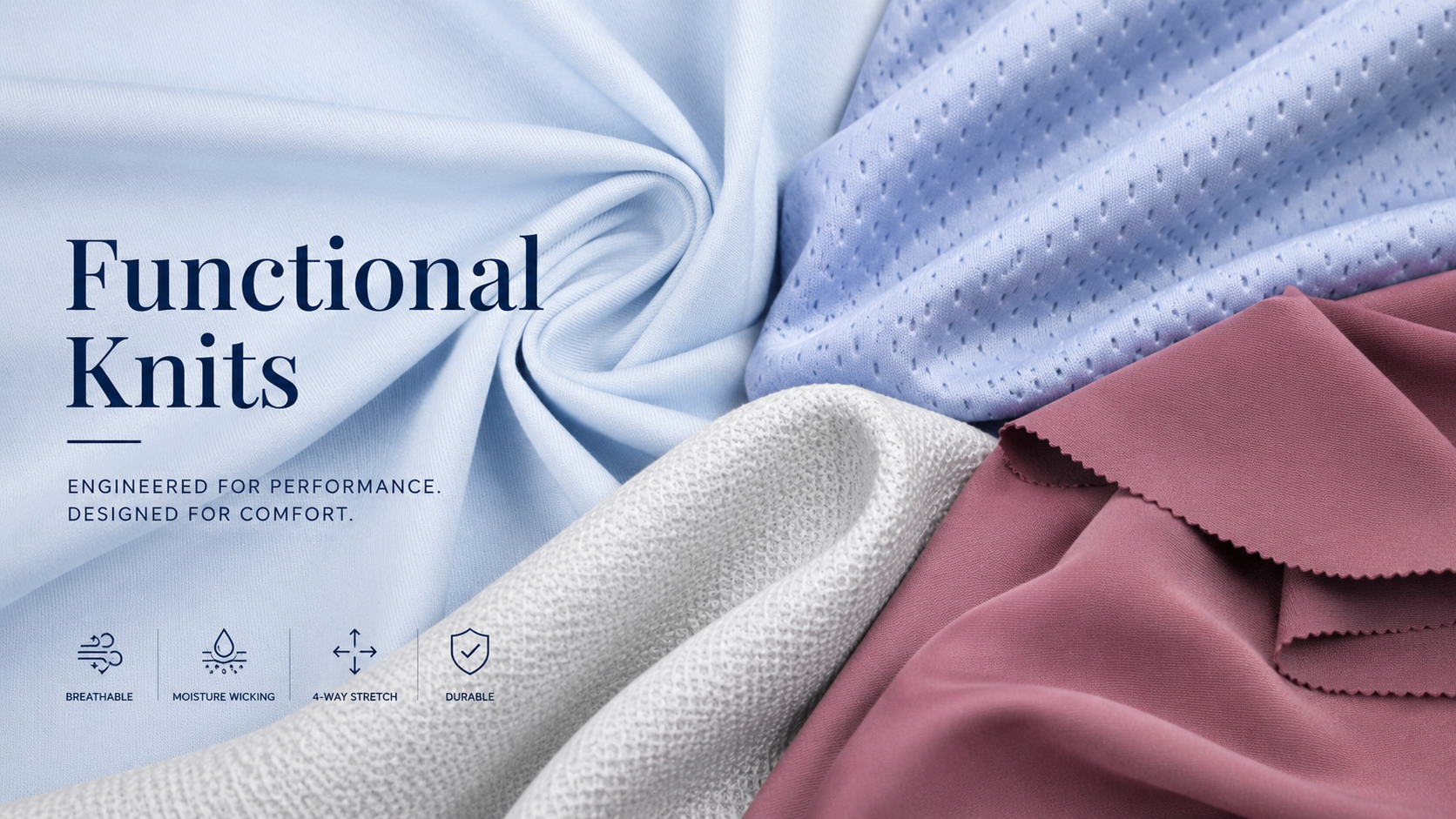
03.Functional Knits
Breathability, moisture control, and stretch
Functional Knitted Fabrics for Performance Apparel
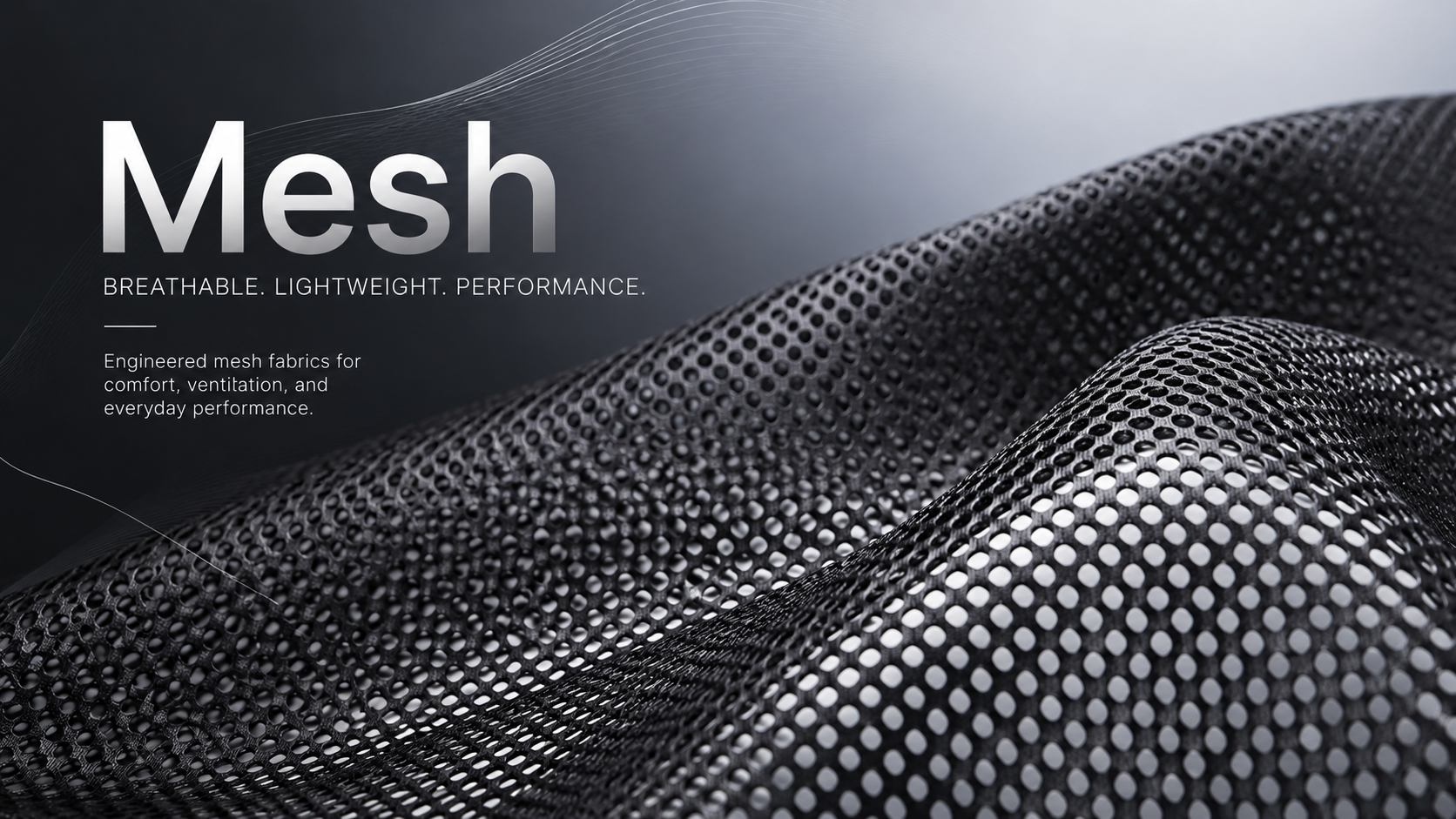
Mesh
Open-hole structures improve ventilation and weight reduction. Used for jerseys, sportswear, shoe materials, and breathable panel designs.
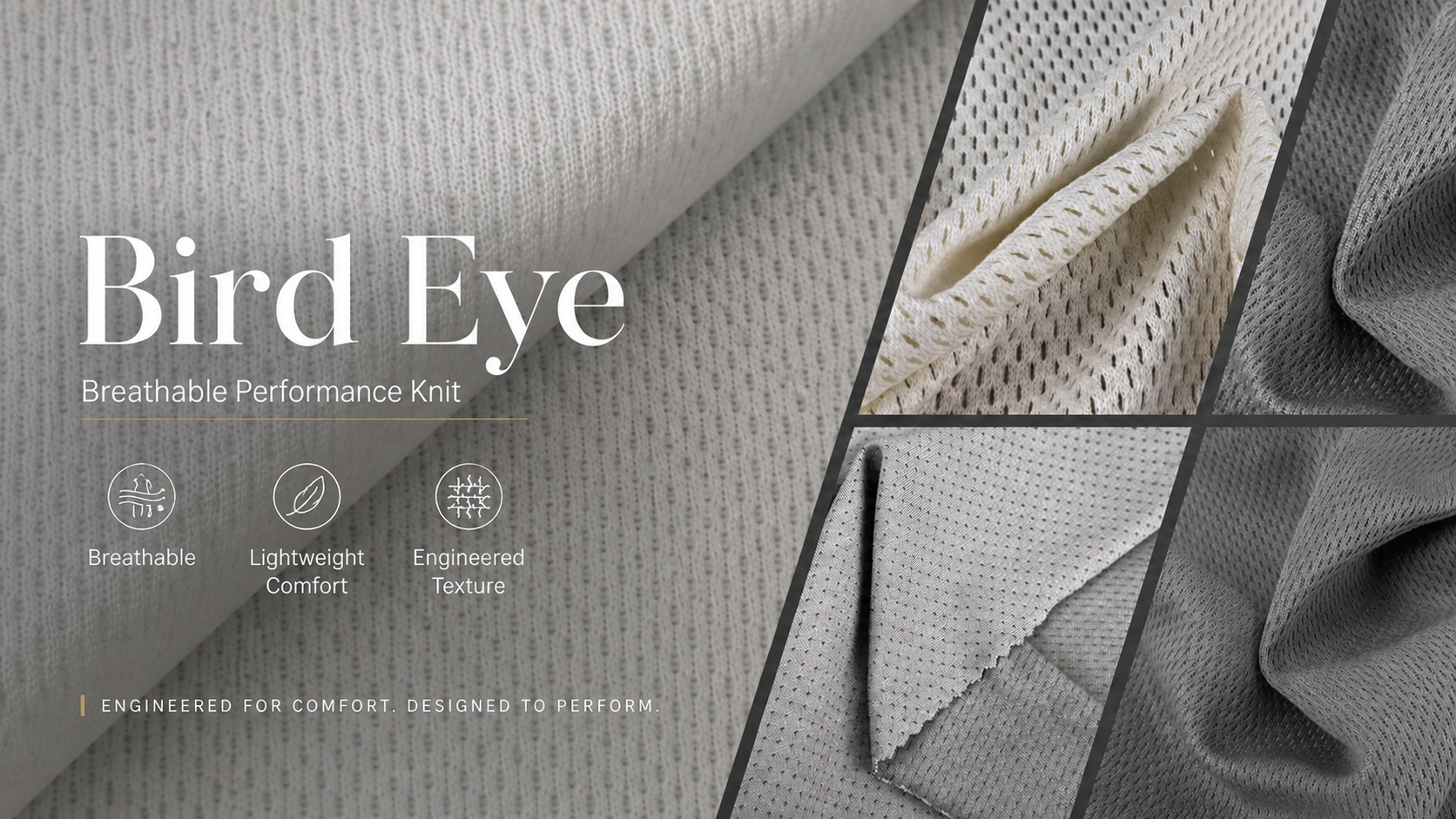
Bird Eye
Fine surface holes support moisture management and quick-dry comfort, making it suitable for polo shirts and functional apparel.
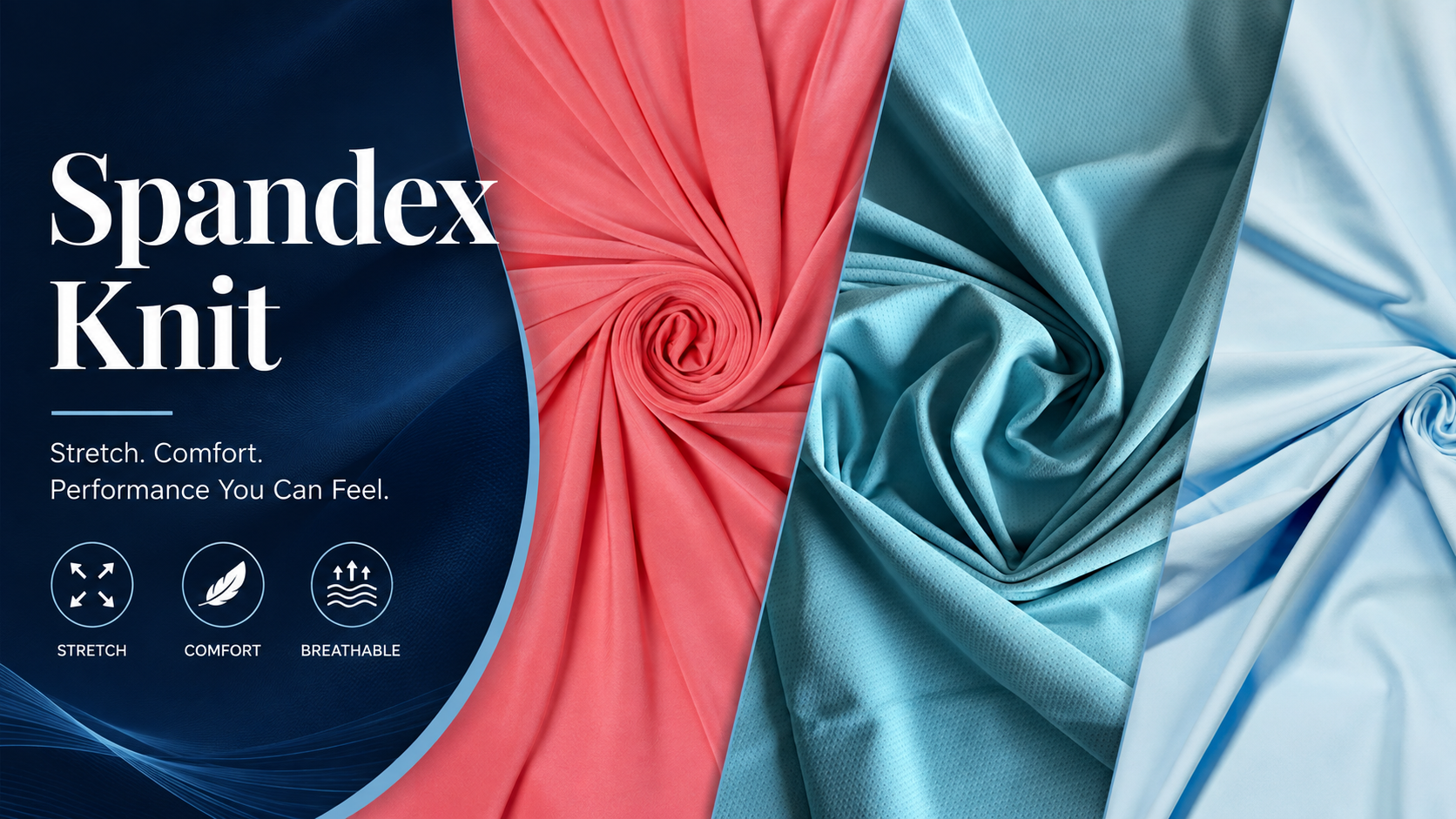
Spandex Knit
With Lycra or spandex, the fabric delivers high elasticity and recovery for yoga wear, compression garments, swimwear, and body-fit products.
Choosing the right functional knit helps brands connect fabric structure with comfort, durability, and target market performance.
Explore Our Knit Fabrics →Explore Our Knit Fabrics
Discuss Your Fabric Requirements →Discuss Your Fabric Requirements