A Practical Guide to Nonwoven Fabrics
Nonwoven fabric is a key material in modern textile manufacturing. Instead of being woven or knitted, fibers are arranged into a web and bonded by mechanical, thermal, or chemical methods.
For buyers, designers, and manufacturers, the bonding method helps decide the hand feel, strength, cost, and best end use.
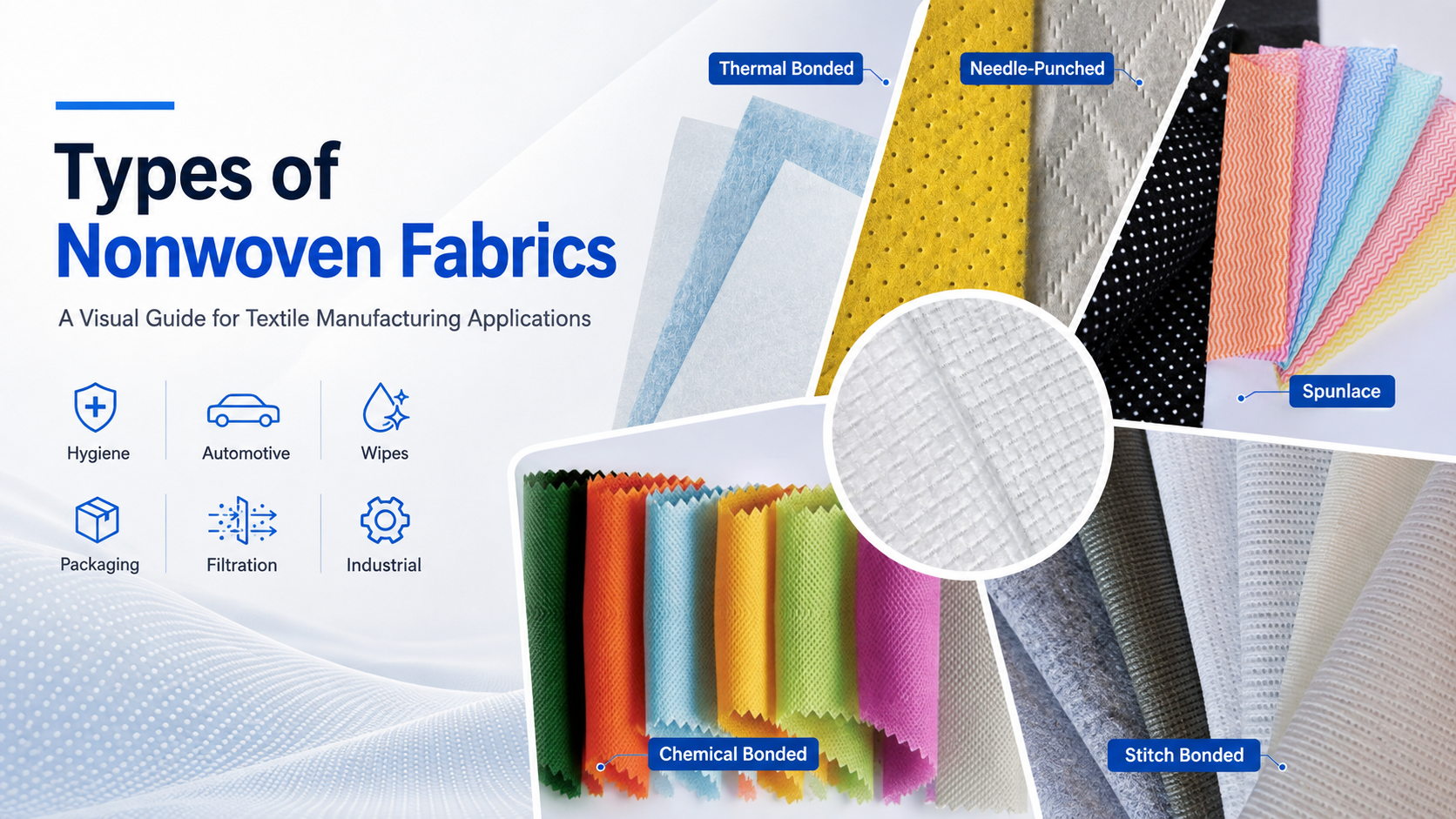
Key nonwoven fabric types include:
- Thermal Bonded Nonwoven
- Needle-Punched Nonwoven
- Spunlace Nonwoven
- Chemical Bonded Nonwoven
- Stitch Bonded Nonwoven
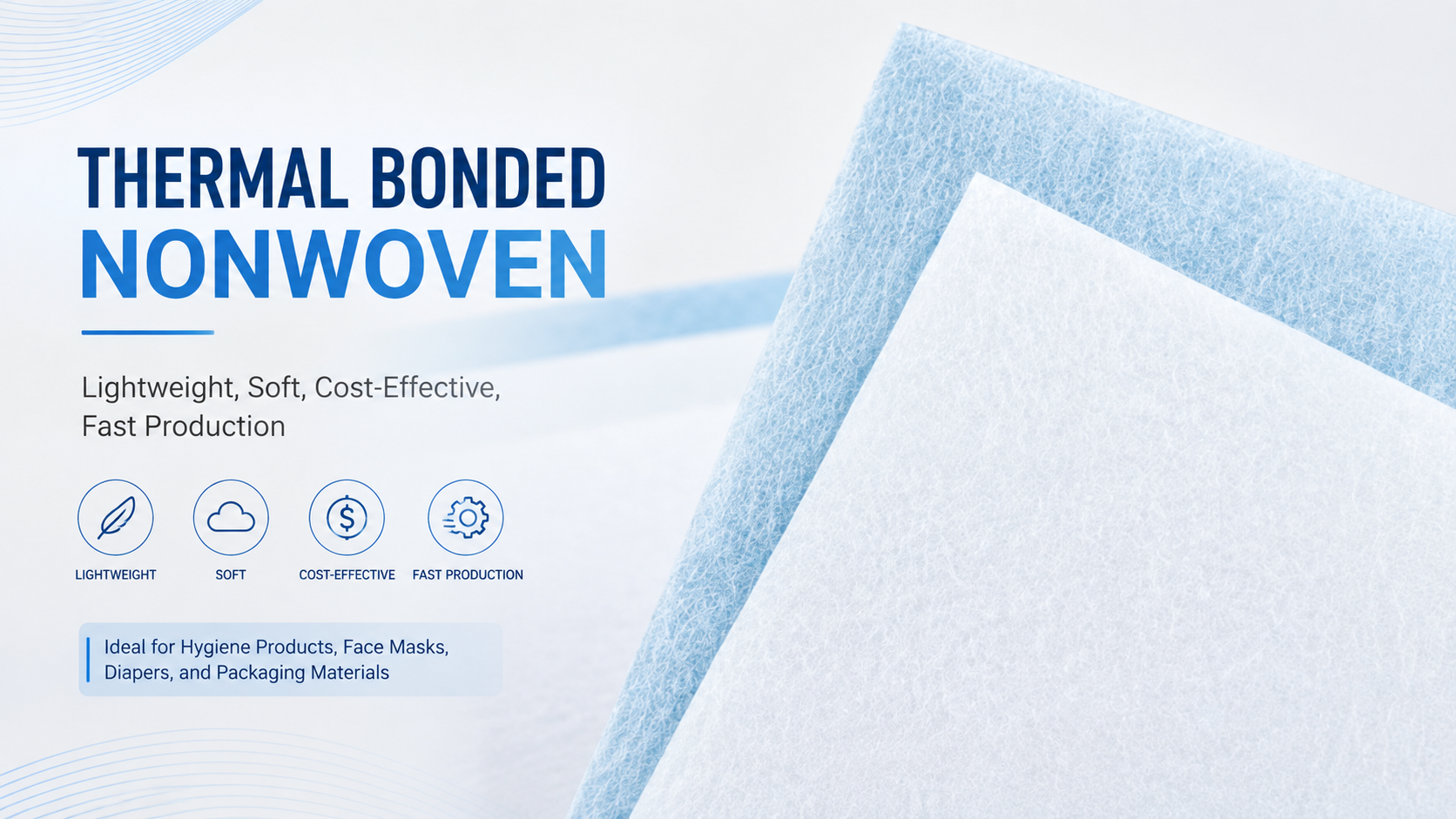
Thermal Bonded Nonwoven
Thermal bonded nonwoven uses heat, hot-melt fibers, or pressure to bond the web.
Why manufacturers use it
- Lightweight
- Soft hand feel
- Cost-efficient
- Fast production
Common applications
- Face masks
- Hygiene products
- Baby diapers
- Packaging materials
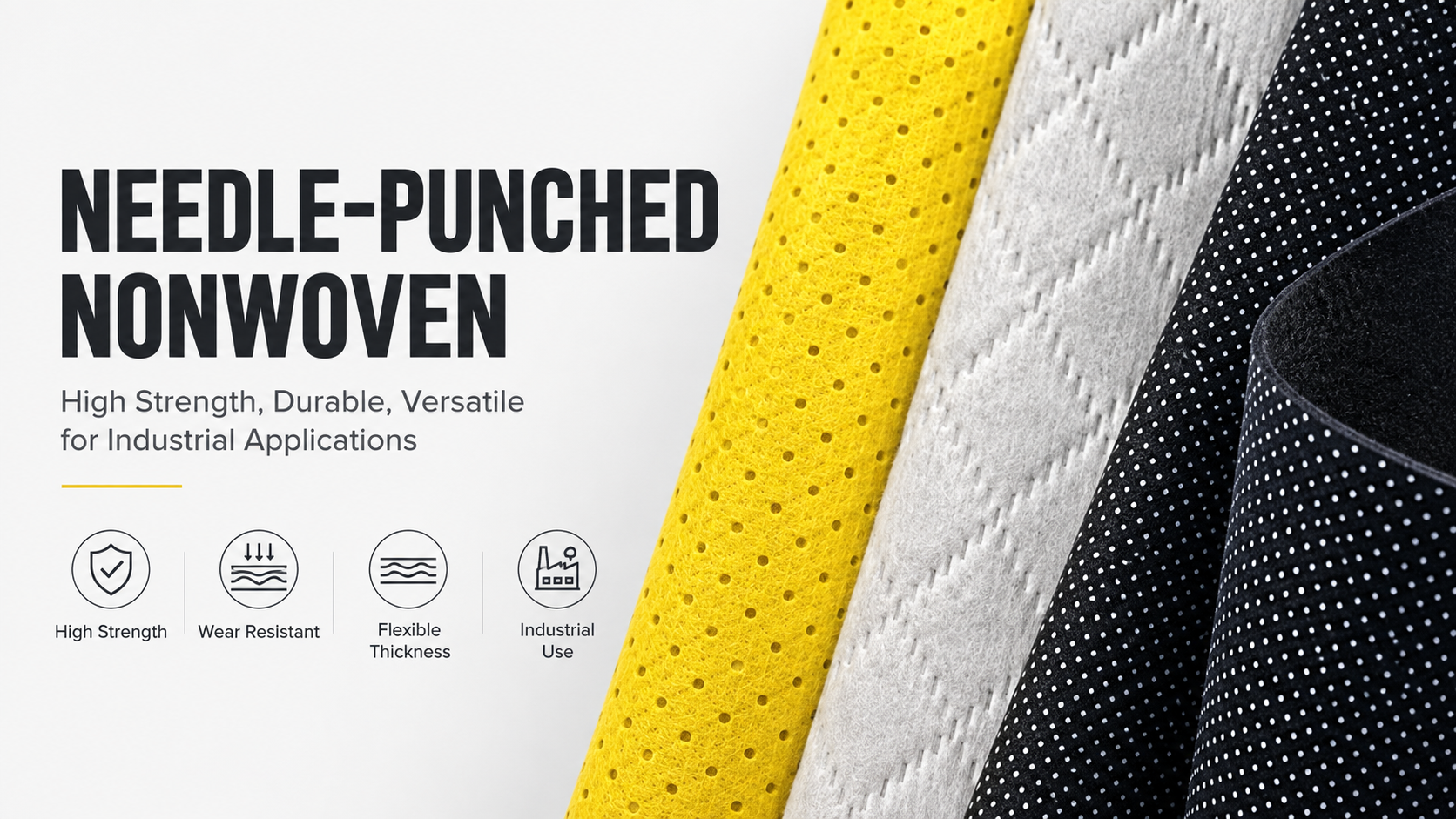
Needle-Punched Nonwoven
Needle-punched nonwoven uses barbed needles to entangle fibers into a stronger structure.
Why manufacturers use it
- High strength
- Abrasion resistant
- Customizable thickness
Common applications
- Automotive interiors
- Carpet backing
- Acoustic insulation
- Filtration media
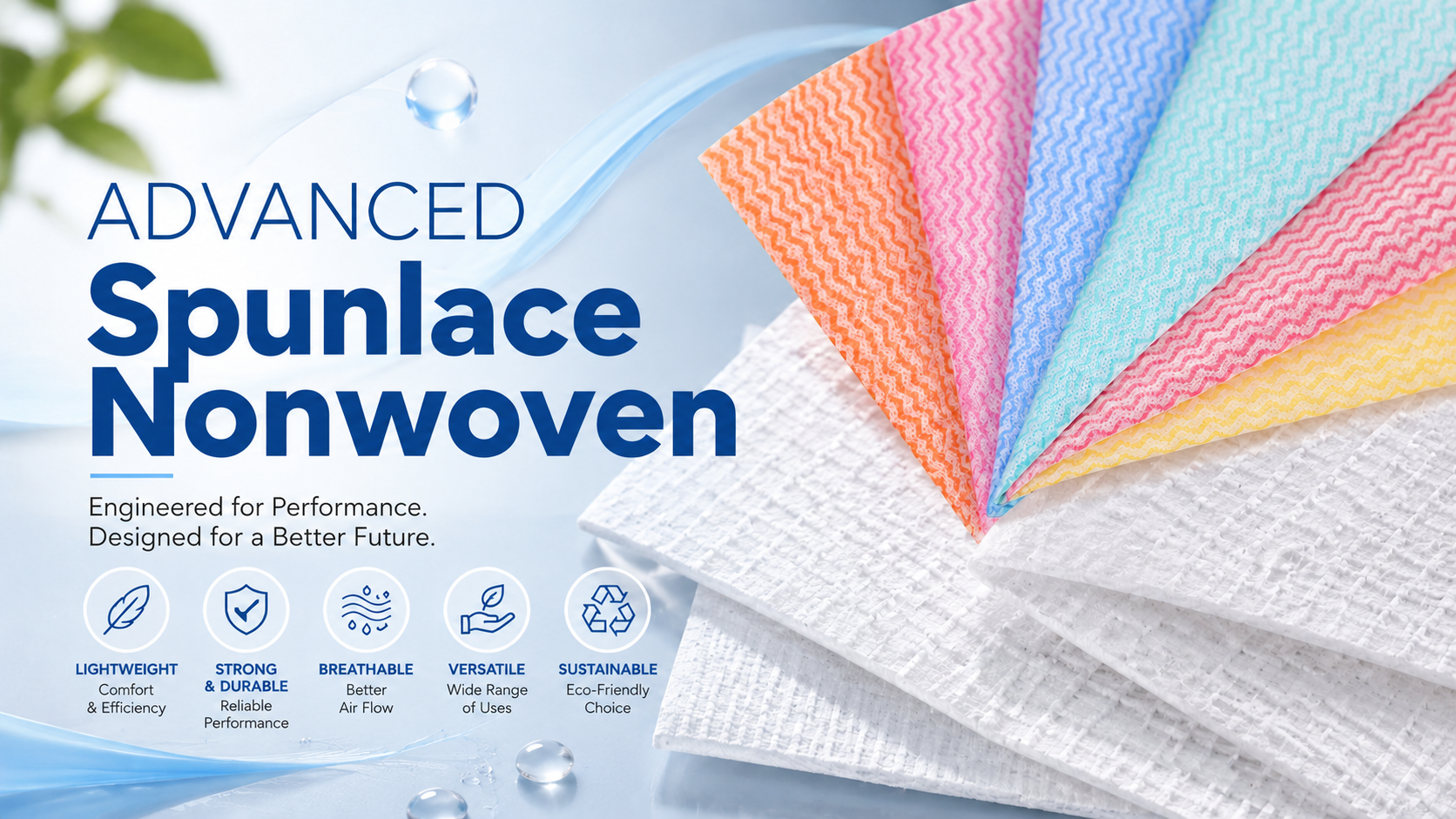
Spunlace Nonwoven
Spunlace nonwoven uses high-pressure water jets to entangle fibers and create a soft surface.
Why manufacturers use it
- Excellent softness
- Cloth-like hand feel
- Good absorbency
Common applications
- Wet wipes
- Facial mask sheets
- Medical wipes
- Cleaning cloths
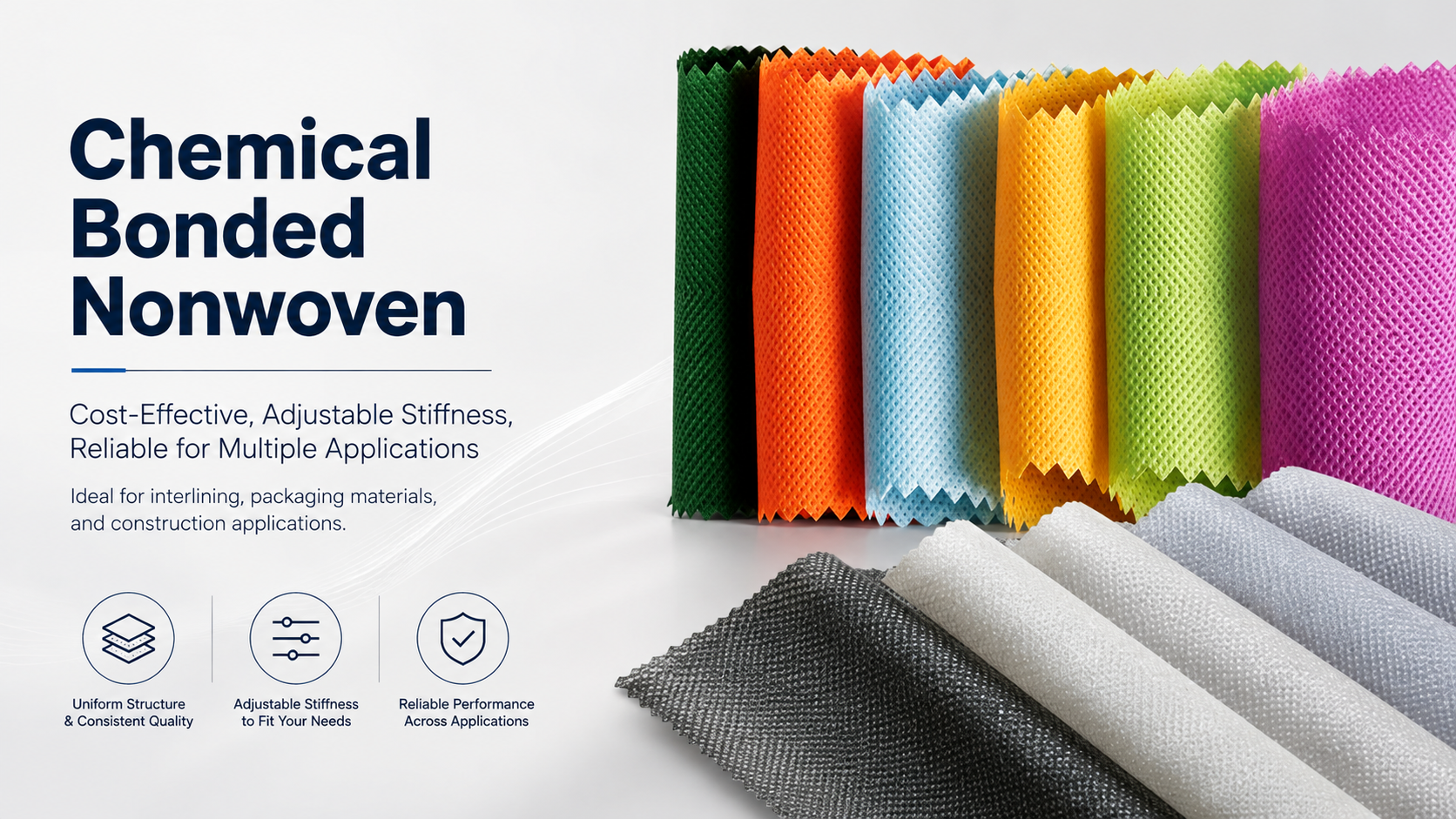
Chemical Bonded Nonwoven
Chemical bonded nonwoven uses resin or adhesive to fix fibers into a stable web.
Why manufacturers use it
- Economical cost
- Adjustable stiffness
- Functional support
Common applications
- Interlining
- Packaging materials
- Building materials
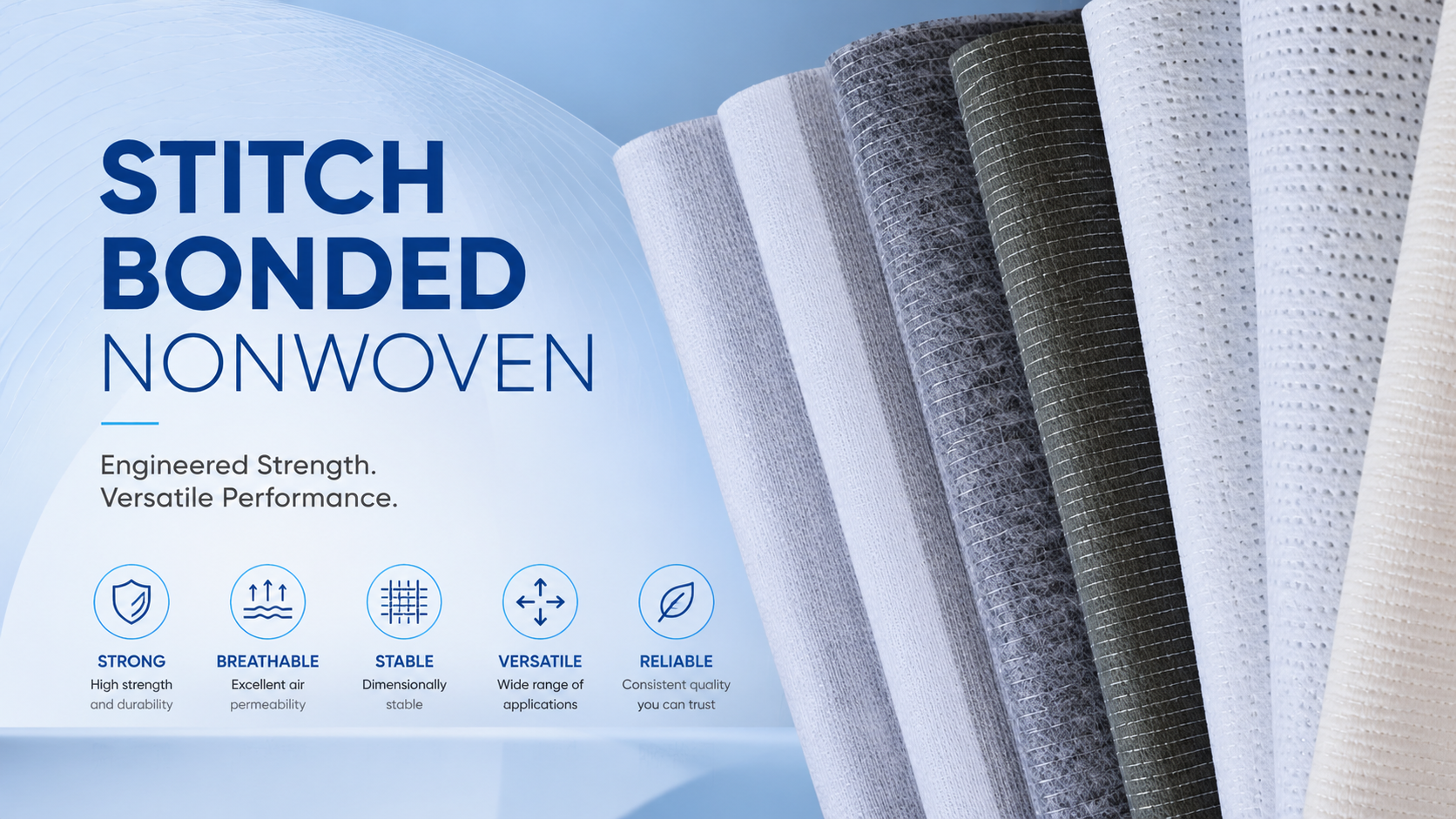
Stitch Bonded Nonwoven
Stitch bonded nonwoven uses stitching yarns to lock the fiber web in place.
Why manufacturers use it
- High strength
- Stable structure
- Heavy-duty performance
Common applications
- Industrial fabrics
- Civil engineering materials
- Geotextile applications