From fiber web formation to high-performance nonwoven fabrics
What Is Nonwoven Fabric?
Nonwoven fabric is made without traditional weaving or knitting. Instead, fibers are bonded directly through mechanical, thermal, chemical, or extrusion-based processes.
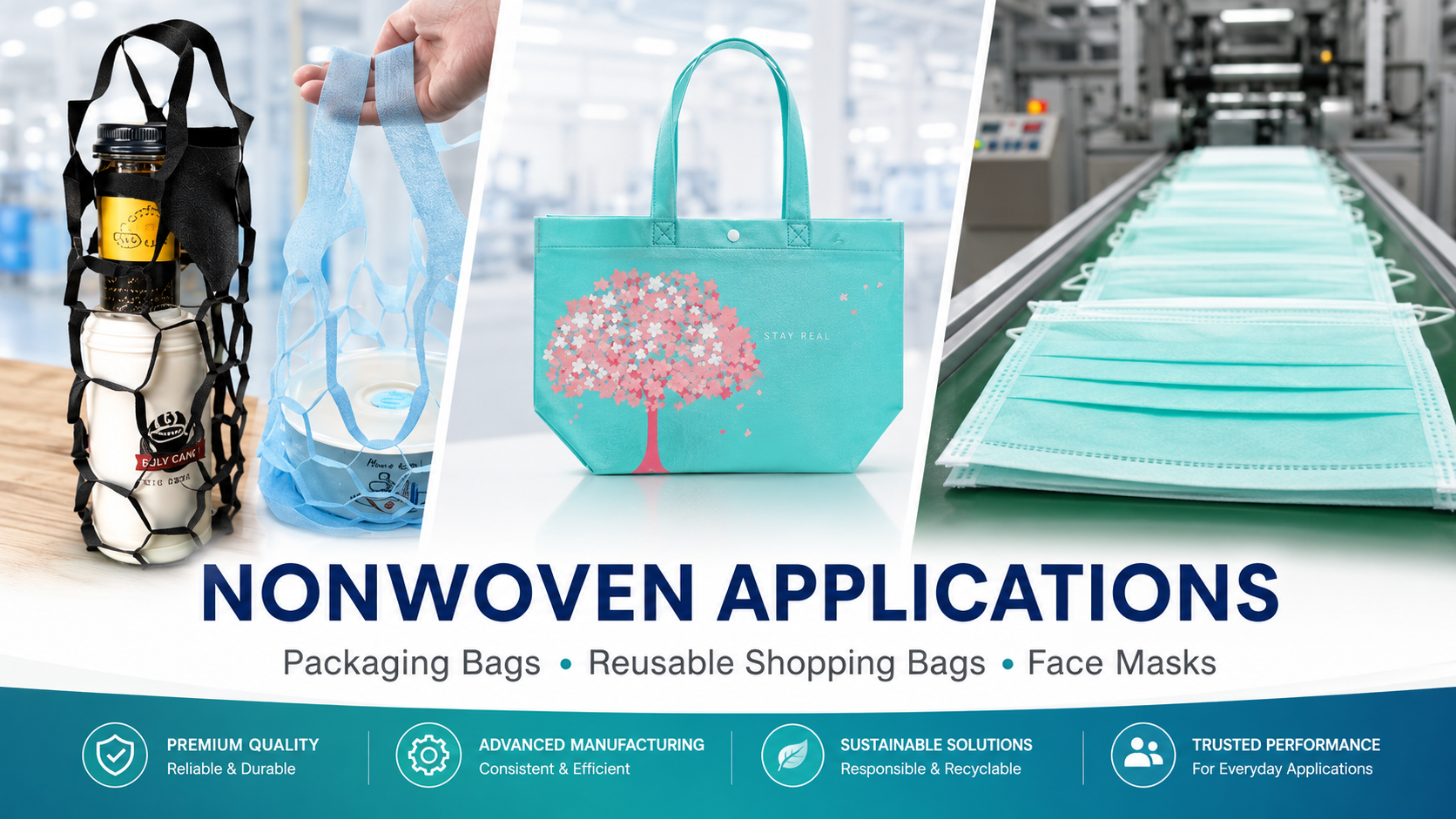
For manufacturers, this makes nonwovens a practical material platform: fast to produce, cost-efficient, breathable, and highly adaptable for hygiene, medical, packaging, filtration, agriculture, and daily-use textile applications.
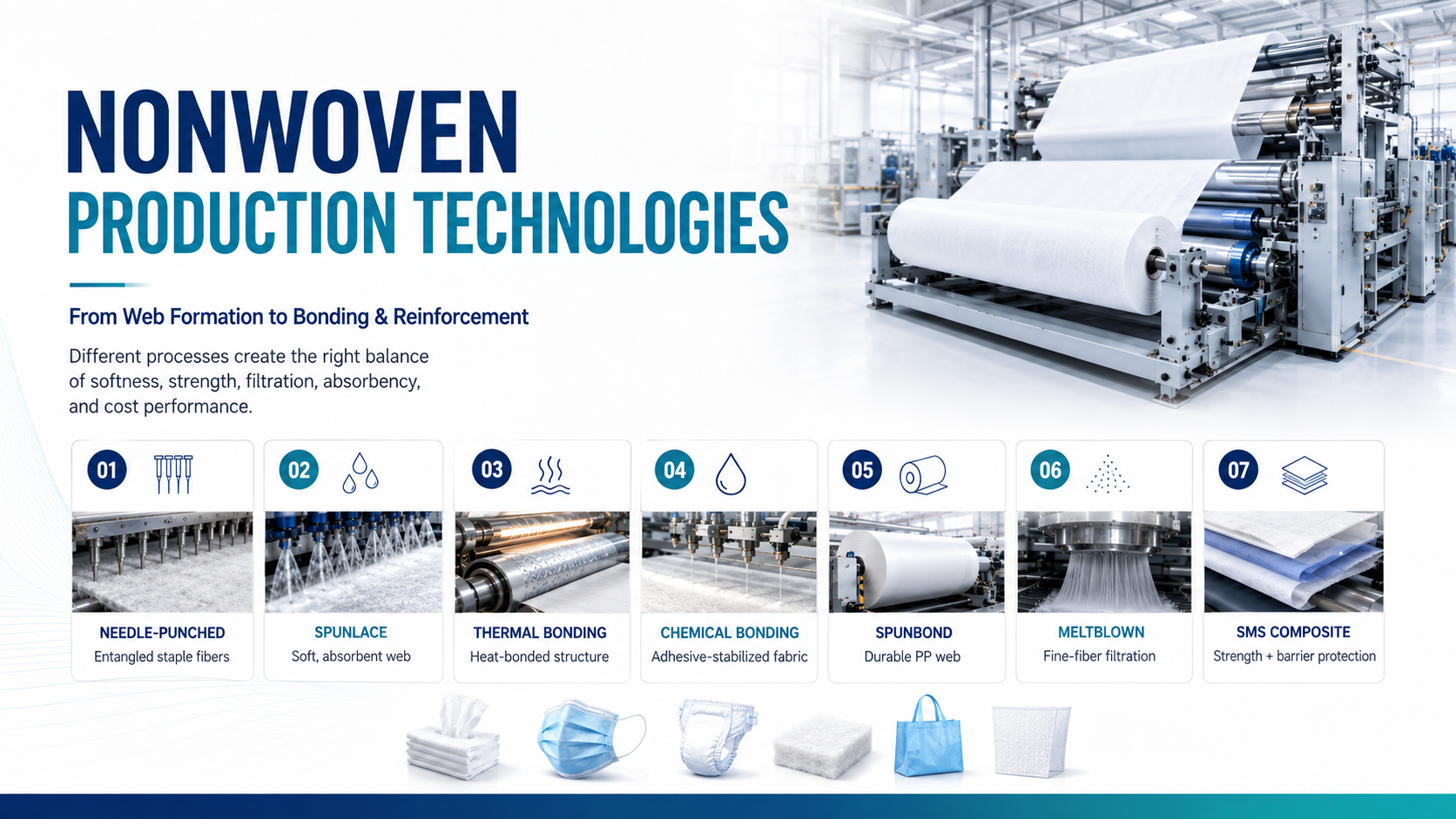
Common production routes include needle-punched, spunlace, thermal bonding, chemical bonding, spunbond, meltblown, and composite SMS nonwoven structures.
How Nonwoven Fabric Is Formed
Nonwoven production usually starts with web formation and then moves into bonding or reinforcement. Each technology creates a different balance of softness, strength, filtration, absorbency, and cost performance.
- Needle-punched nonwoven: metal needles entangle staple fibers for felt, carpets, and industrial filtration.
- Spunlace / hydroentanglement: high-pressure water jets create a soft, absorbent web for facial masks, wipes, and medical inner layers.
- Thermal bonding: heat or calender rollers melt bonding fibers, often used in diapers and sanitary product topsheets.
- Chemical bonding: adhesive is sprayed or dipped into the web, then dried for a fluffy and stable fabric structure.
- Spunbond: PP polymer is melted, spun, cooled, laid into a web, and bonded for durable shopping bags and agricultural covers.
- Meltblown: hot air draws polymer into microfibers, giving excellent filtration performance for medical mask filter layers.
- SMS composite: spunbond + meltblown + spunbond combines strength with barrier protection for functional nonwoven applications.
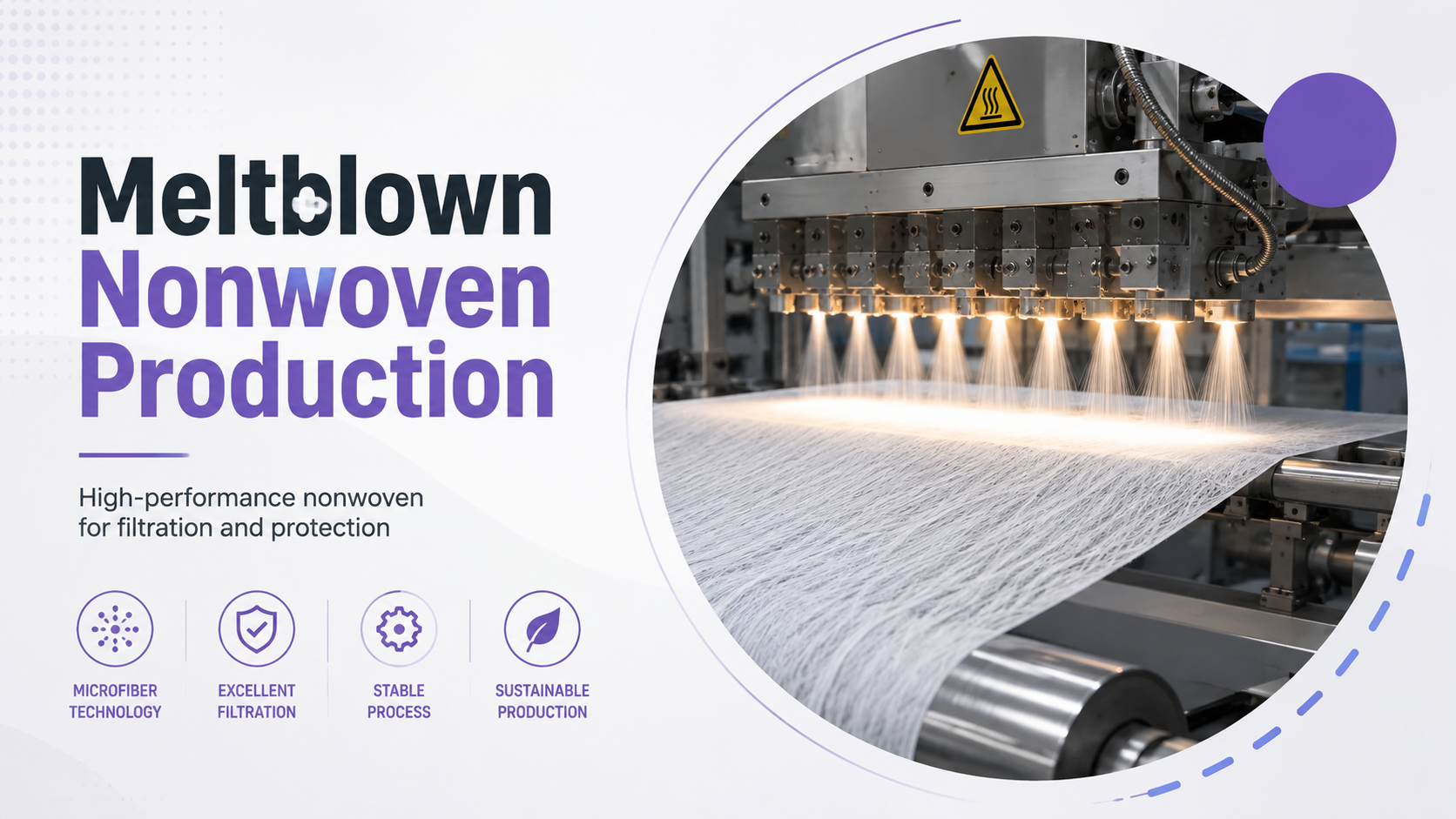
Meltblown Nonwoven Production Video
Watch the meltblown process in action to understand how heated polymer and high-speed air create ultra-fine fibers for filtration-grade nonwoven materials.
Source: Original video on YouTube
Third-party video shared for educational reference. Not produced by HITEK TEXTILE.