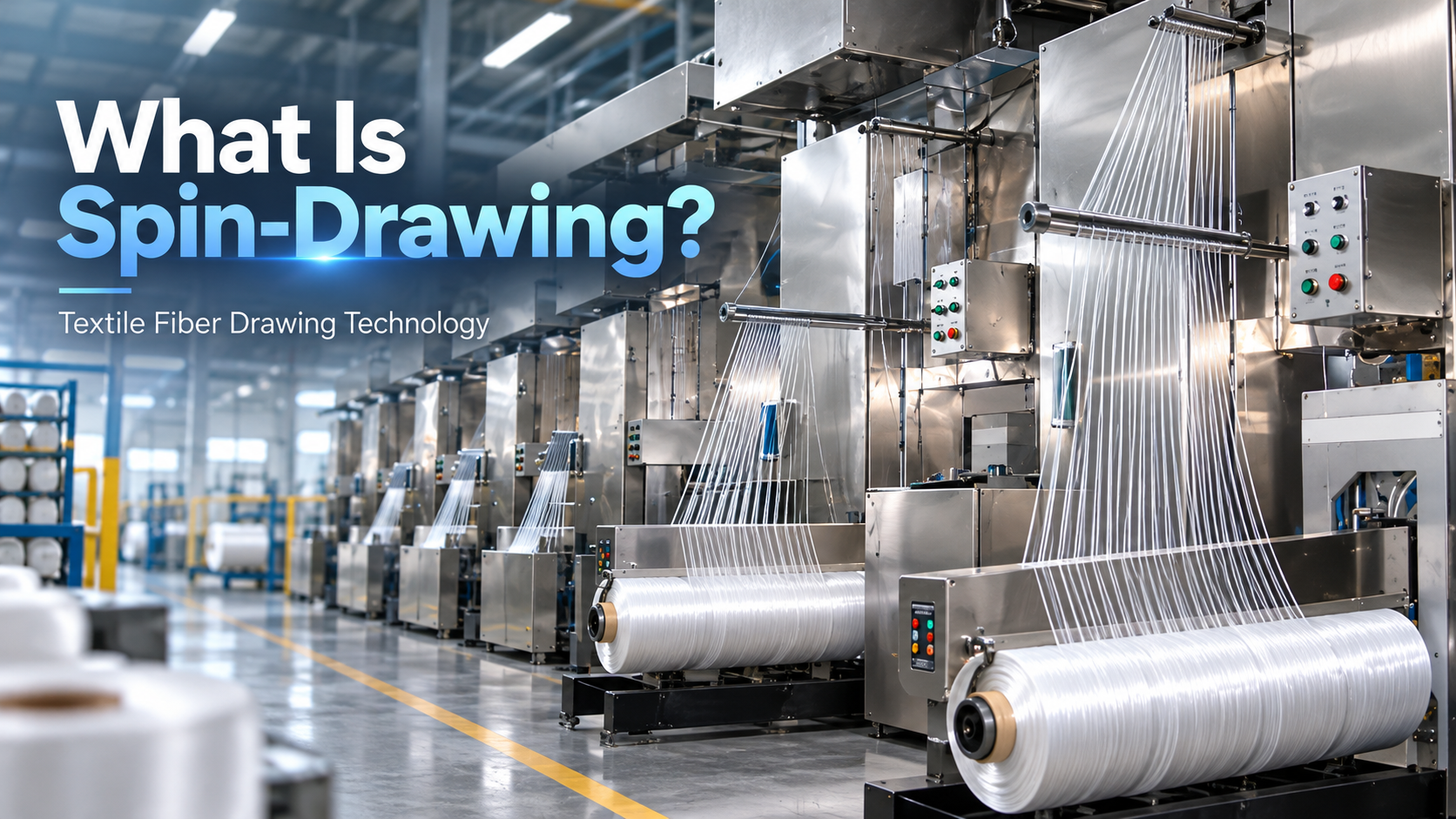
The spin drawing process combines filament spinning and controlled stretching to develop yarn structure and properties. This guide introduces melt extrusion, quenching, drawing and winding, and explains how Fully Drawn Yarn (FDY) and Partially Oriented Yarn (POY) relate to filament production.
What Is the Spin Drawing ?
Spin-drawing is a key process in synthetic fiber manufacturing, helping turn newly spun filaments into stronger, finer, and more consistent yarns.
- During melt spinning of polymers such as PET and PP, the extruded filaments are stretched using controlled godet-roll speeds. This promotes molecular orientation and crystallization.
- By combining spinning and drawing in a continuous process, manufacturers can improve yarn performance while streamlining production.
Why Spin-Drawing Matters
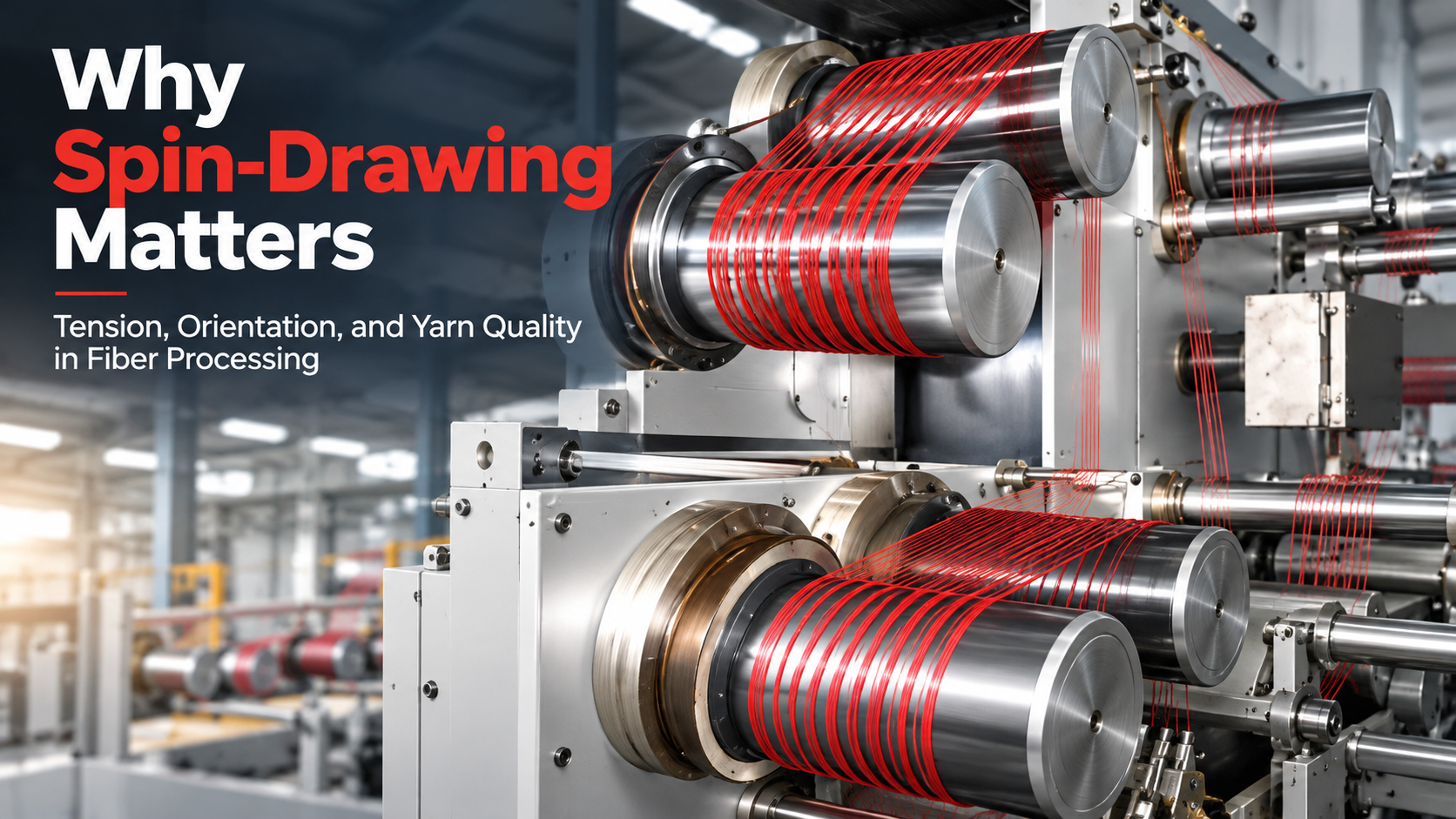
- DRAW RATIO & FINENESS
Controlled speed differences help determine filament diameter and yarn uniformity. - MOLECULAR ORIENTATION
Drawing aligns polymer chains and can increase crystallinity and tensile strength. - PROCESS CONTROL
Melt metering, quenching, heated godet rolls, finishing, and winding all affect quality. - OTHER DRAWING METHODS
Air drawing is common in spunbond nonwovens; electrospinning uses an electric field to form fine fibers.
Melt Spinning & Drawing Process
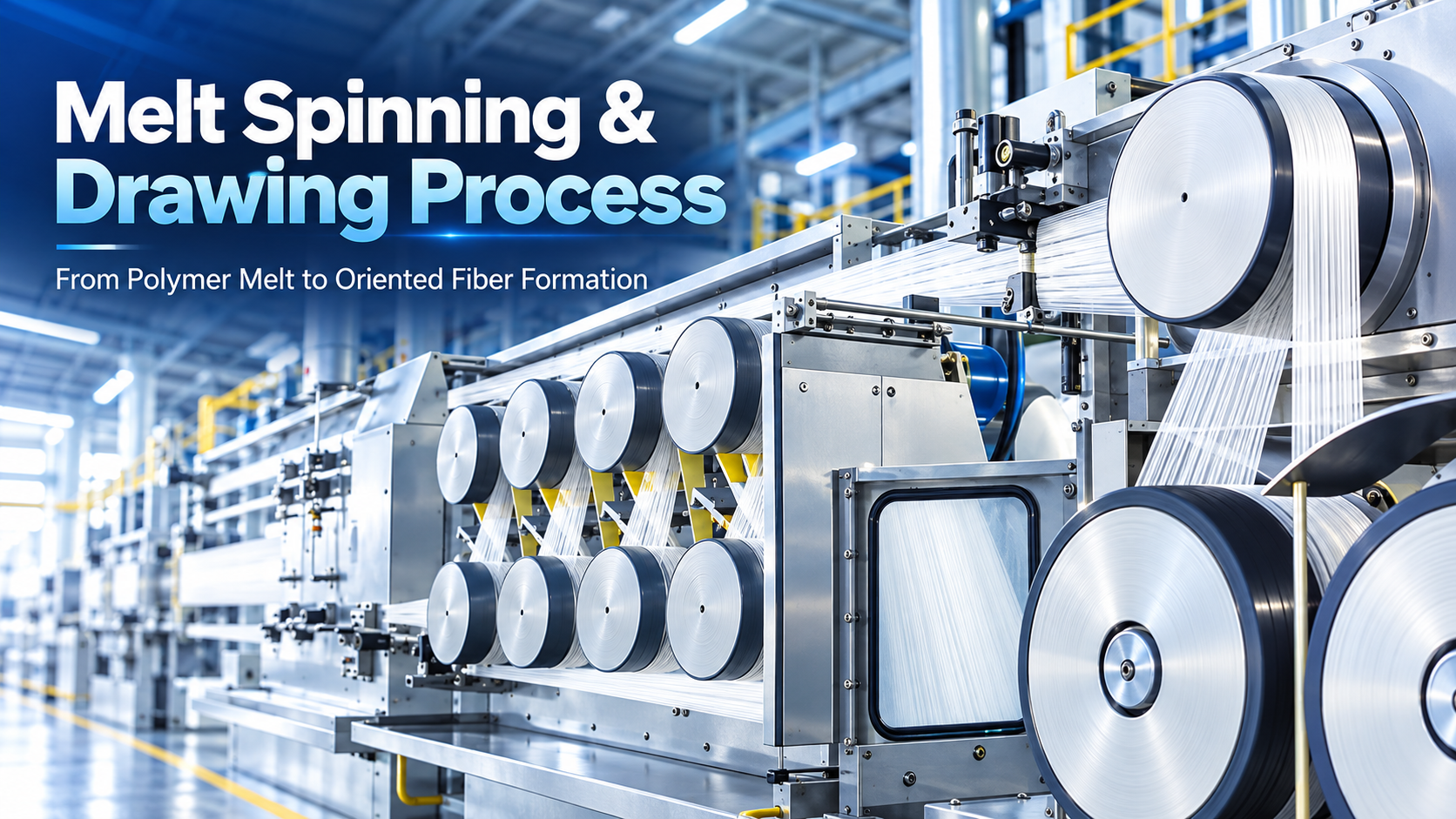
1 . MELT EXTRUSION
A metering pump feeds polymer melt through the spinneret to form filaments.
2 . QUENCHING
Temperature-controlled air cools and solidifies the emerging filaments.
3 . INITIAL DRAWING
Differential godet-roll speeds begin to orient and refine the fibers.
4 . HOT DRAWING
Heated air or rolls stretch filaments further to develop mechanical properties.
5 . WINDING
The finished yarn is wound into packages for subsequent processing.
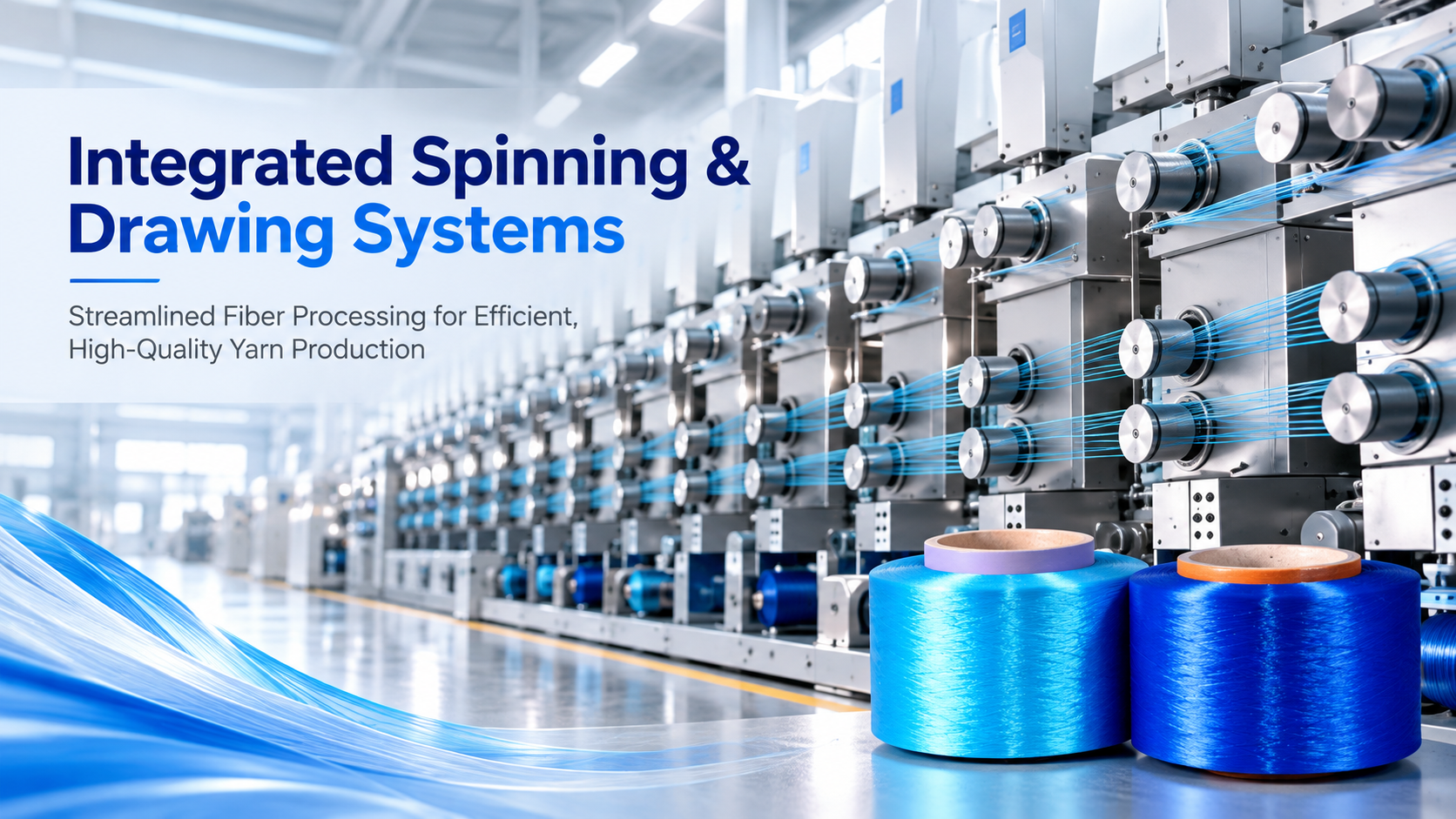
Integrated Spinning & Drawing Systems
Integrated spin-draw systems combine melt spinning and filament drawing in one streamlined manufacturing line. An extruder melts the polymer; a metering pump then feeds the filtered melt through a spinneret.
- Quench air solidifies the filaments. Godet rolls regulate pre-drawing and fineness, while heated rolls or hot air improve fiber properties before winding.
- The featured equipment example reports winding at 1,440 m/min and downstream drawing capability up to 20×, subject to process conditions.
- Applicable polymer examples in the source include PET, PBT, PLA, PBS, PA6, PA66, PA612, TPEE, TPU, PP, PEI, PPS, and LCP.
Integrated Spinning & Drawing Process Videos
Watch these videos to explore integrated spinning and drawing processes for filament production.
Sources:Original video on YouTube
Third-party videos shared for educational reference. Not produced by HITEK TEXTILE.
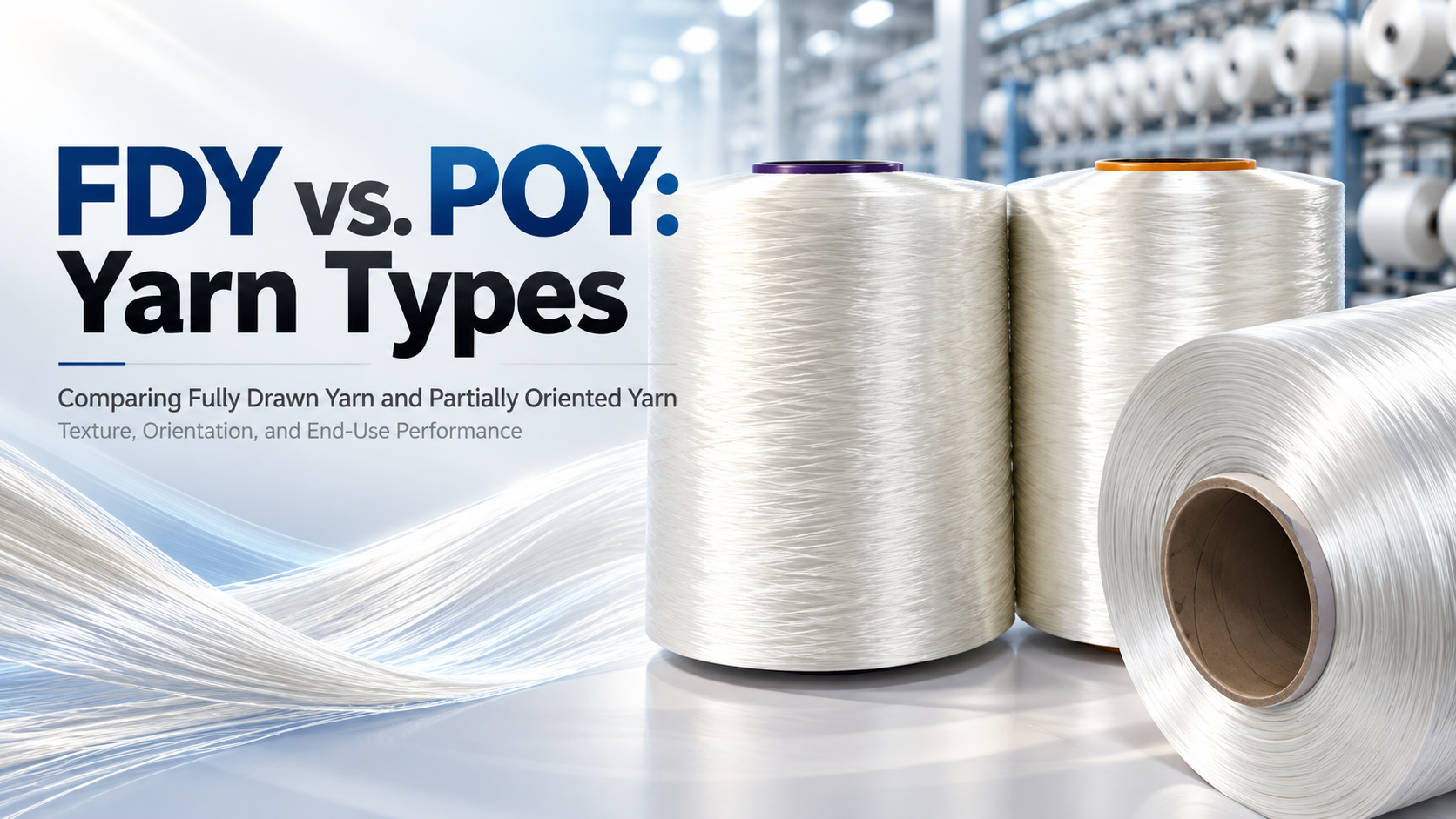
FDY vs. POY: Yarn Types
FDY | FULLY DRAWN YARN
- What it is: A one-step process integrates spinning and drawing to produce highly oriented filaments.
- Why it matters: FDY offers good strength, yarn uniformity, dimensional stability, and dyeing performance.
- Where it is used: Apparel fabrics, home textiles, and high-speed weaving
POY | PARTIALLY ORIENTED YARN
- What it is: A partially oriented filament yarn produced at relatively high spinning speeds (the source cites 3,000–4,000 m/min).
- Why it matters: POY retains elongation potential for later drawing and texturing.
- Where it is used: Feed yarn for downstream processes, especially draw-textured yarn (DTY) production.