

Why False Twisting Matters
Synthetic filament yarns are naturally smooth and straight. False-twist texturing adds crimp, creating softer and more flexible yarns for comfortable textile applications.
- Softer, fuller hand feel: Crimp increases bulk and gives fabrics a cotton- or wool-like touch.
- Better stretch and recovery: Textured filaments improve comfort and movement.
- Versatile fabric performance: Yarn structure supports distinctive textures and moisture management through suitable fabric design.
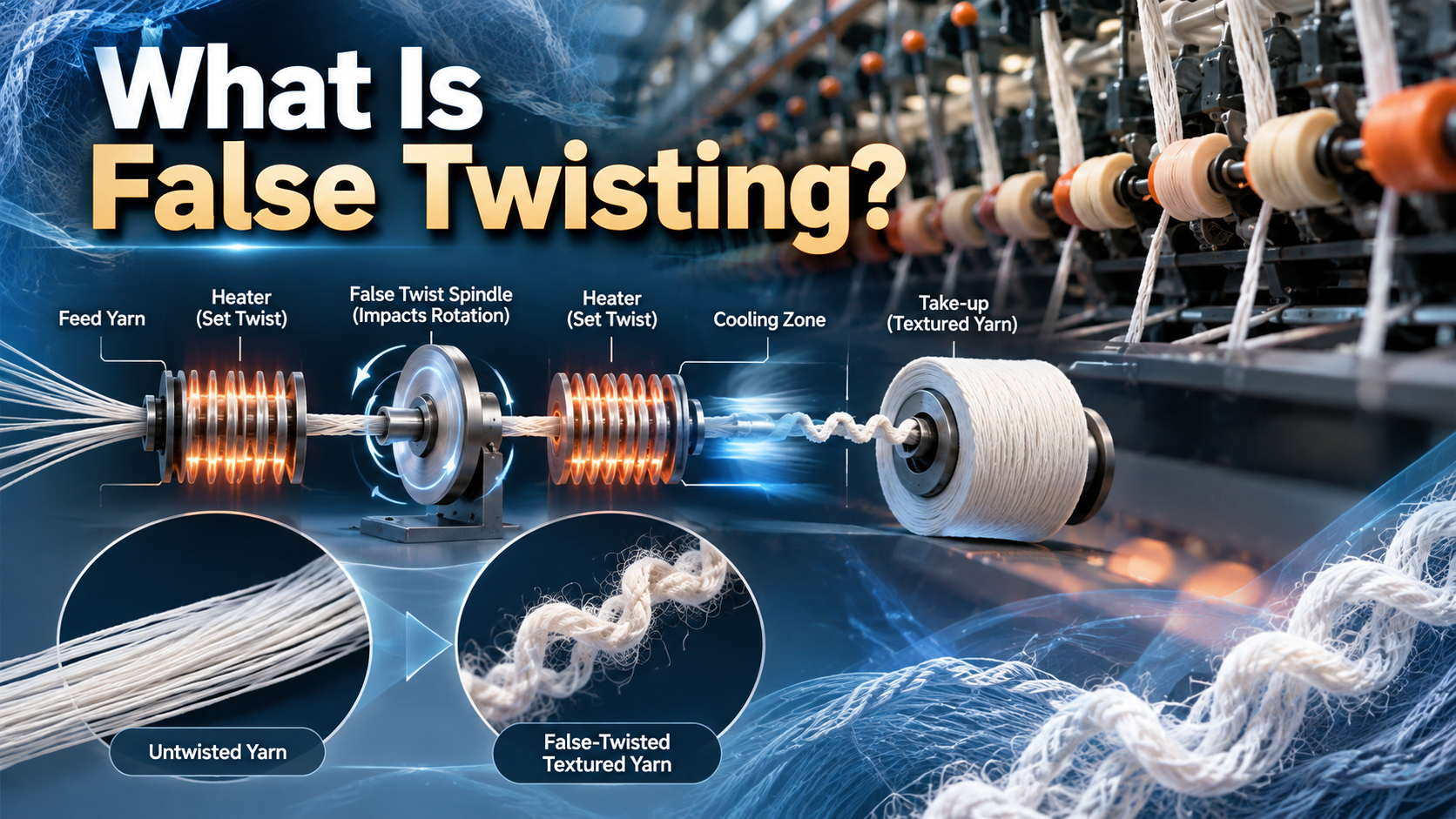
What Is False Twisting?
False twisting is a key yarn-texturing method used to transform smooth polyester or nylon filaments into bulky, crimped yarns, including Draw Textured Yarn (DTY).
How does false-twist texturing work?
Think of setting curls in hair: the filament is twisted, heated, cooled and then untwisted to retain its textured form.
- Twisting: A false-twist device temporarily twists the moving yarn.
- Heat setting: Controlled heat sets the twisted filament structure.
- Untwisting: Twist is released, while the yarn retains its crimp and bulk.

Yarn Twist Direction
- Yarn twist direction describes how fibers or plied strands spiral around the yarn axis. Two common directions are S-twist and Z-twist.
- S-twist: The visible diagonal follows the center stroke of the letter S.
- Z-twist: The visible diagonal follows the center stroke of the letter Z. Single yarns often use Z-twist; plied yarns may use S-twist.
- Twist sequences: A multi-stage ply construction can be described as Z–S–Z (ZSZ).
- Fabric impact: Combining yarn twist direction with weave or knit structure changes appearance, texture and hand feel.
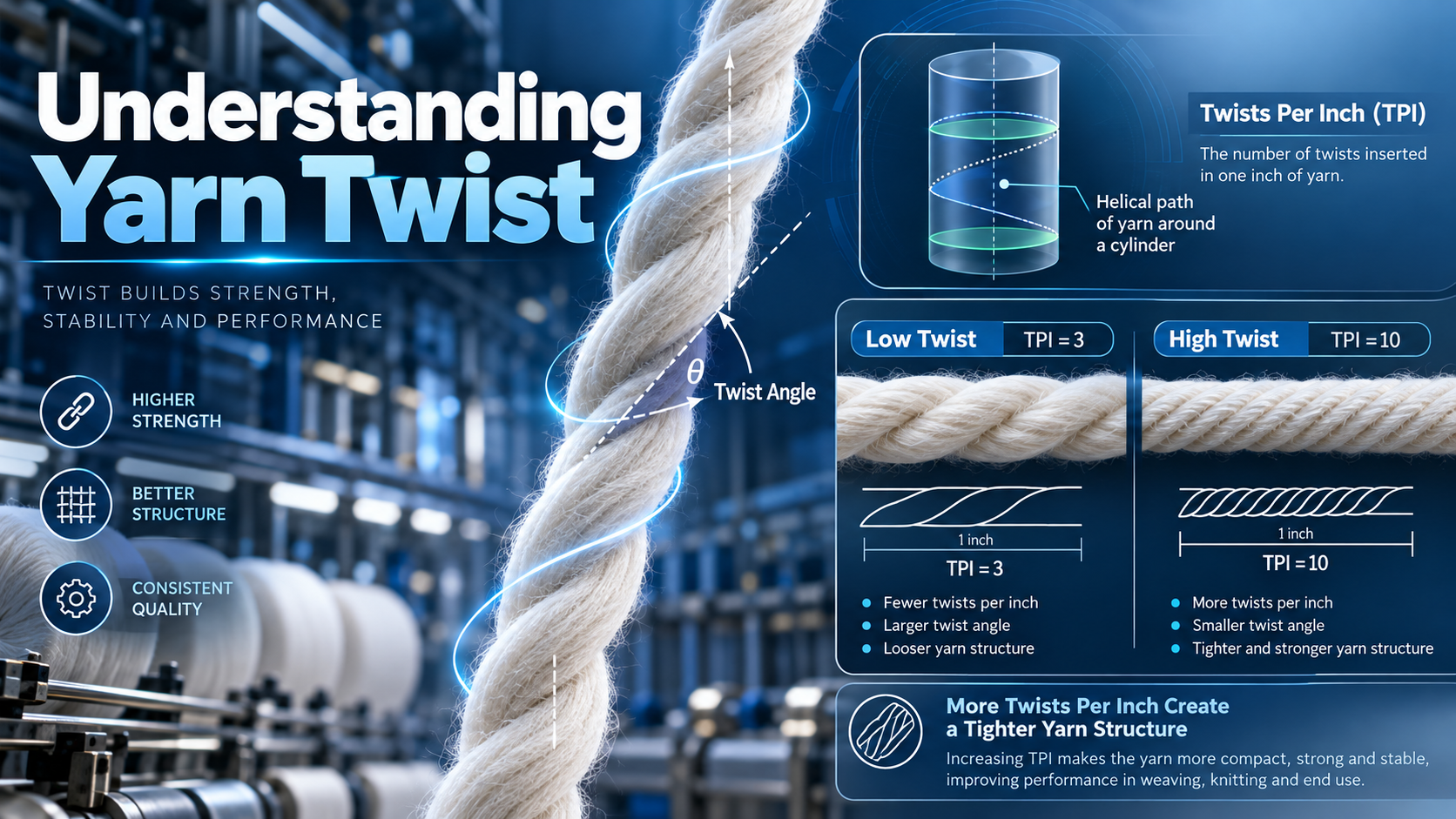
Understanding Yarn Twist
- Twist level measures how many complete turns a yarn contains per unit of length.
- One full rotation represents a 360° turn in the yarn.
- Twist level helps textile manufacturers specify and compare yarn construction.
*TPM (Twists per Meter): Number of turns in one meter of yarn.
*TPI (Twists per Inch): Number of turns in one inch of yarn.
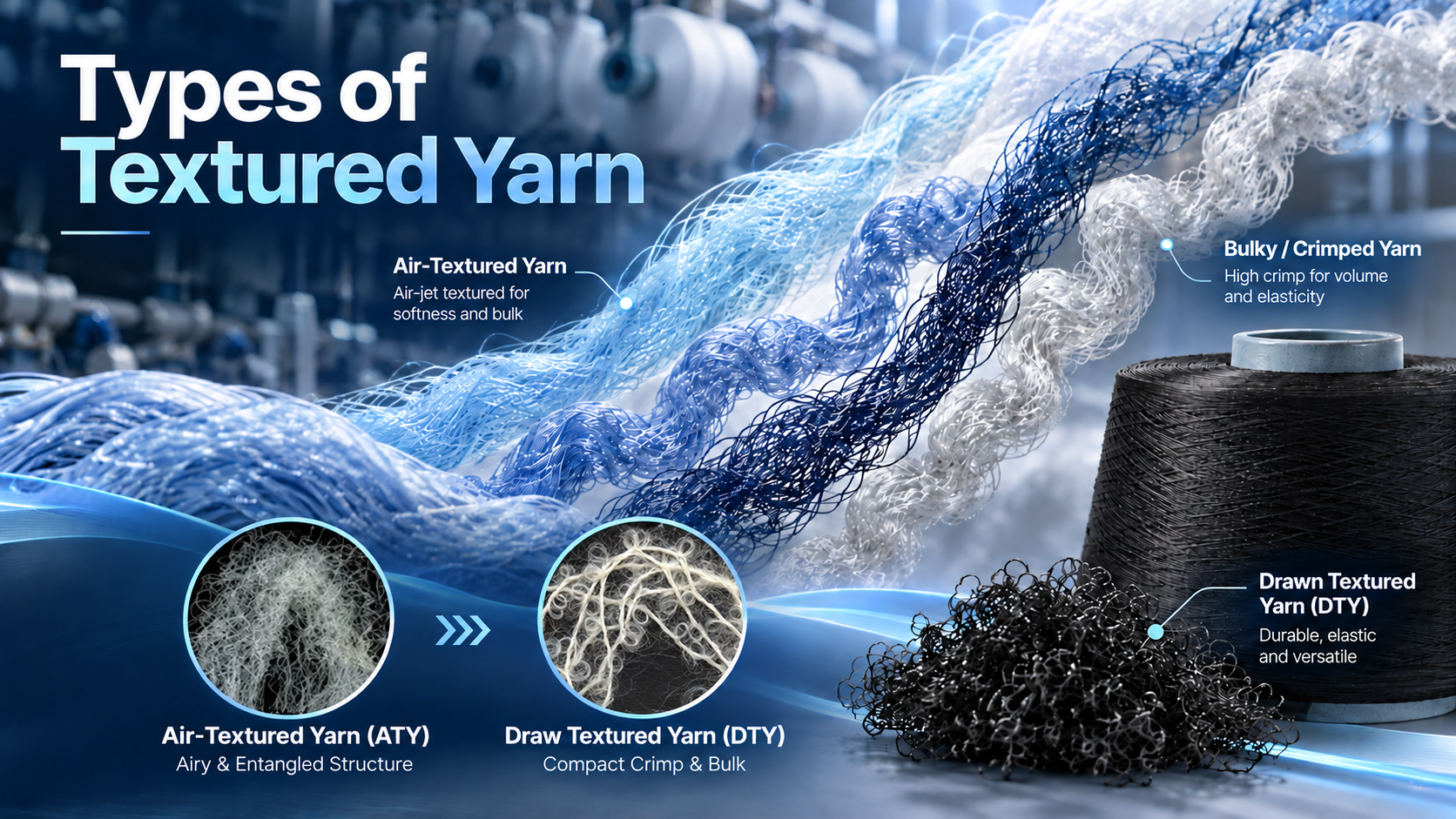
Types of Textured Yarn
- Draw Textured Yarn (DTY): Stretch and bulk through draw-texturing.
- Air-Textured Yarn (ATY): Spun-like texture through air-jet processing.
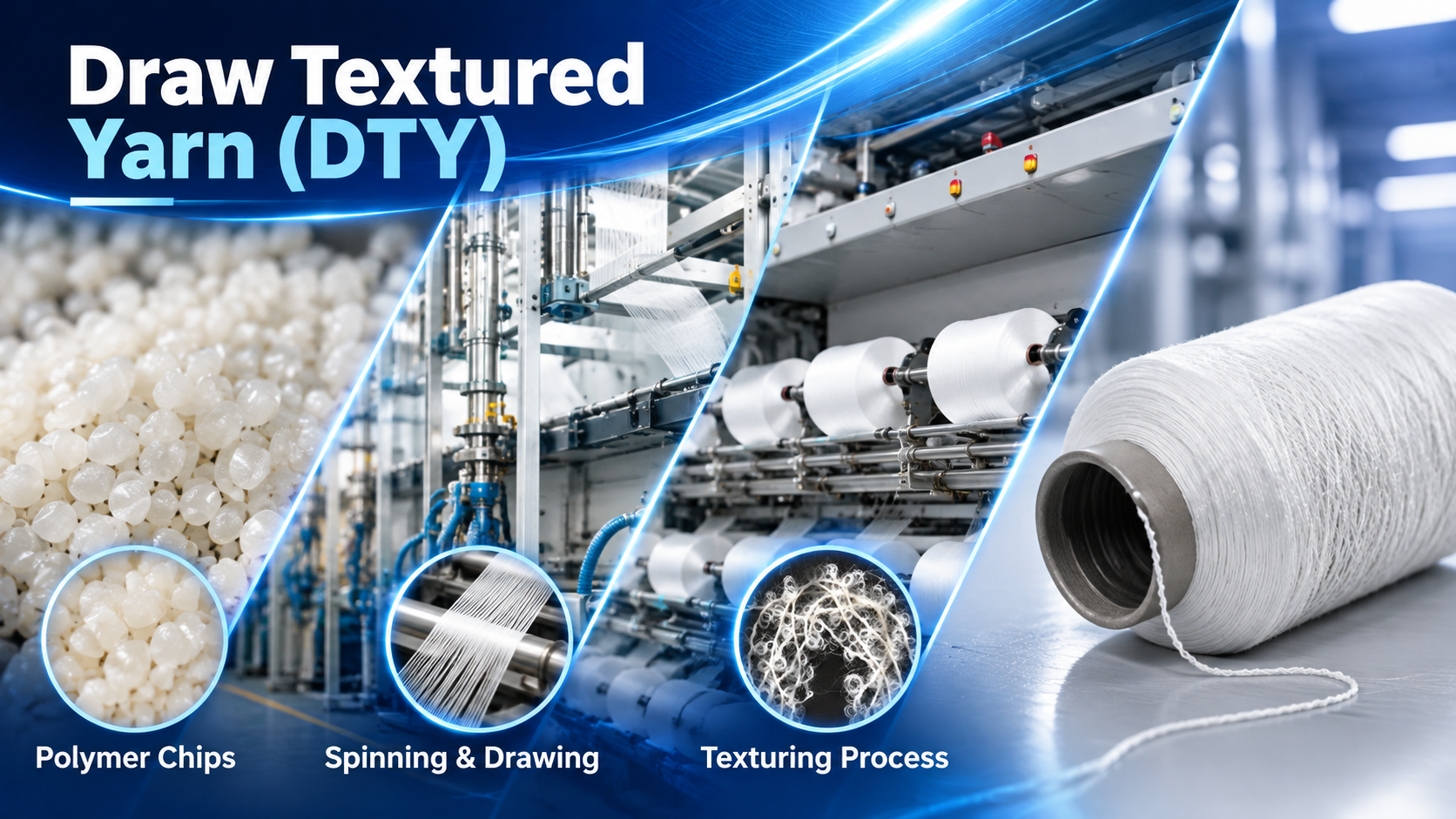
Draw Textured Yarn (DTY)
Watch the DTY production process to understand how Partially Oriented Yarn (POY) is drawn and false-twist textured to create synthetic yarns with crimp, softness, and elastic recovery.
Source: Original video on YouTube
Third-party video shared for educational reference. Not produced by HITEK TEXTILE.

Air-Textured Yarn (ATY) Production Video
Watch the ATY production process to understand how compressed-air jets create filament loops, producing bulky synthetic yarns with a soft, natural, spun-like texture suitable for apparel and home textiles.
Source: Original video on YouTube
Third-party video shared for educational reference. Not produced by HITEK TEXTILE.