
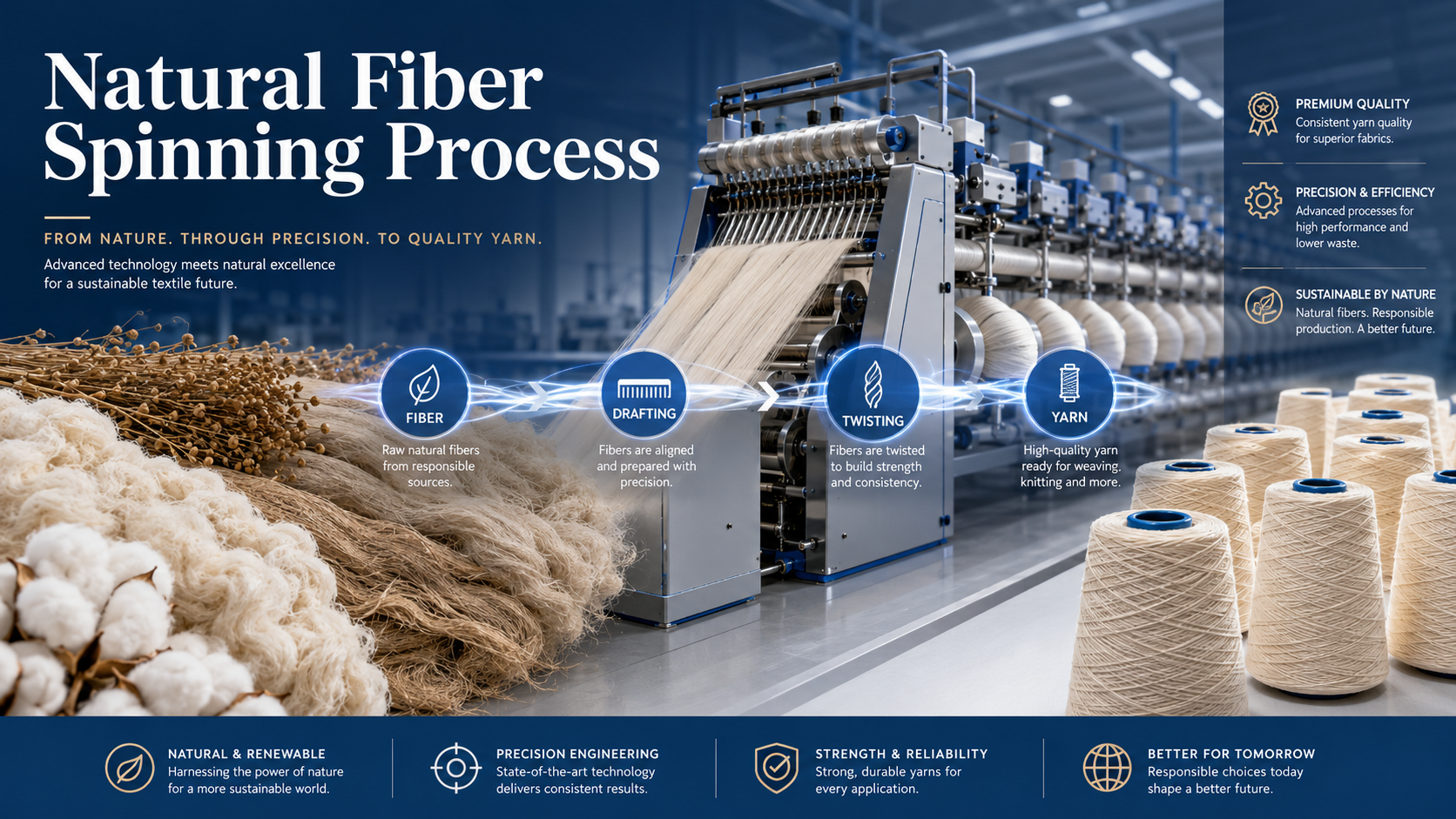
Staple Fiber Manufacturing Guide
From loose cotton, wool, linen, and other short fibers to yarns ready for weaving and knitting.
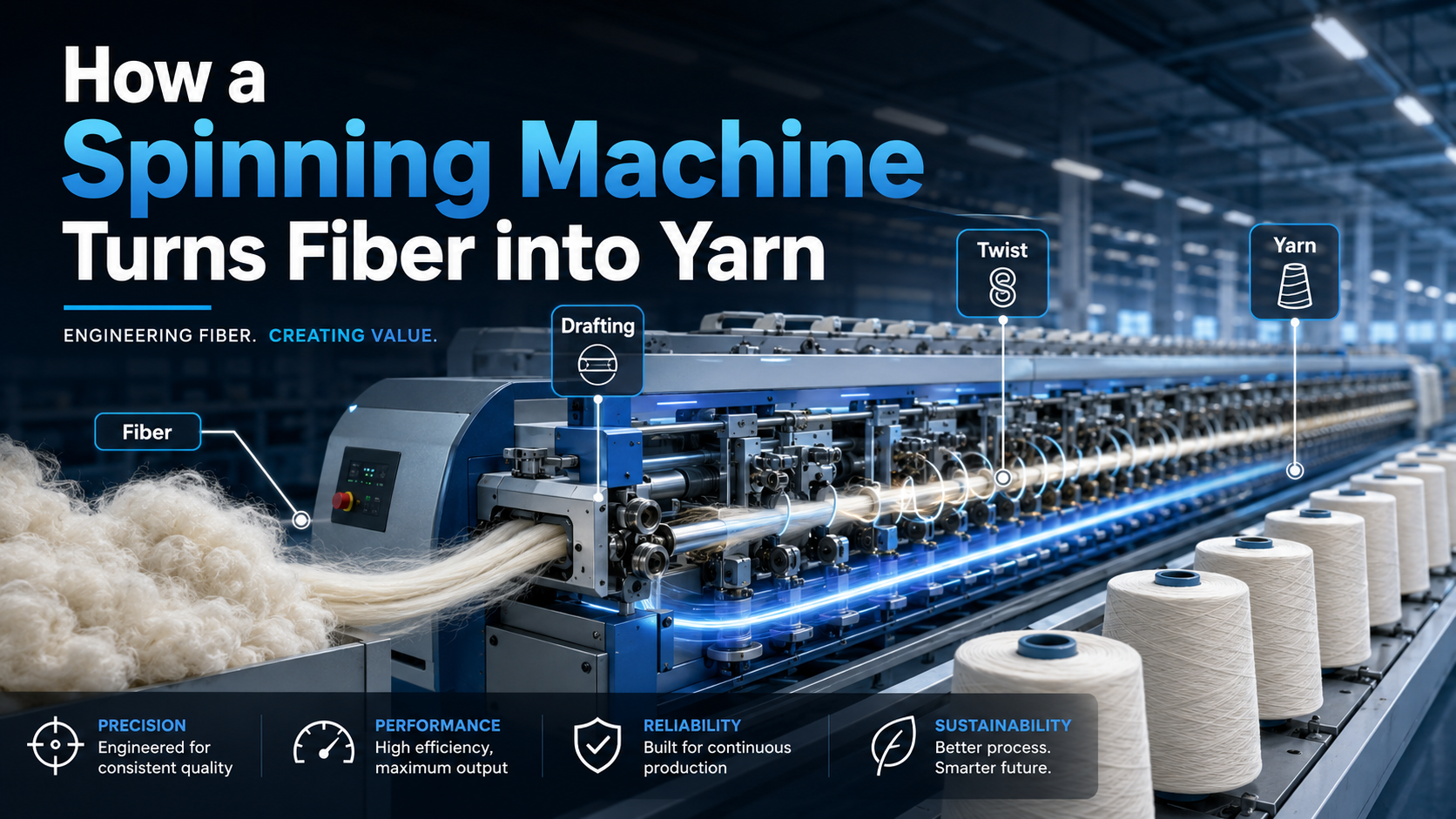
How a Spinning Machine Turns Fiber into Yarn
In staple-fiber spinning, loose fibers are controlled, aligned, and gradually transformed into continuous yarn. The core manufacturing process involves three essential steps: drafting, twisting, and winding.
Three Key Steps in Yarn Spinning
01. Drafting
The fiber strand is drawn longer and finer to achieve the target yarn count.
02. Twisting
Twist binds fibers together, improving yarn cohesion, strength, and stability.
03. Winding
The finished yarn is wound into a stable package for storage, transport, weaving, or knitting.
Business Takeaway
These three fundamental steps play a key role in yarn quality, production efficiency, and final fabric performance.
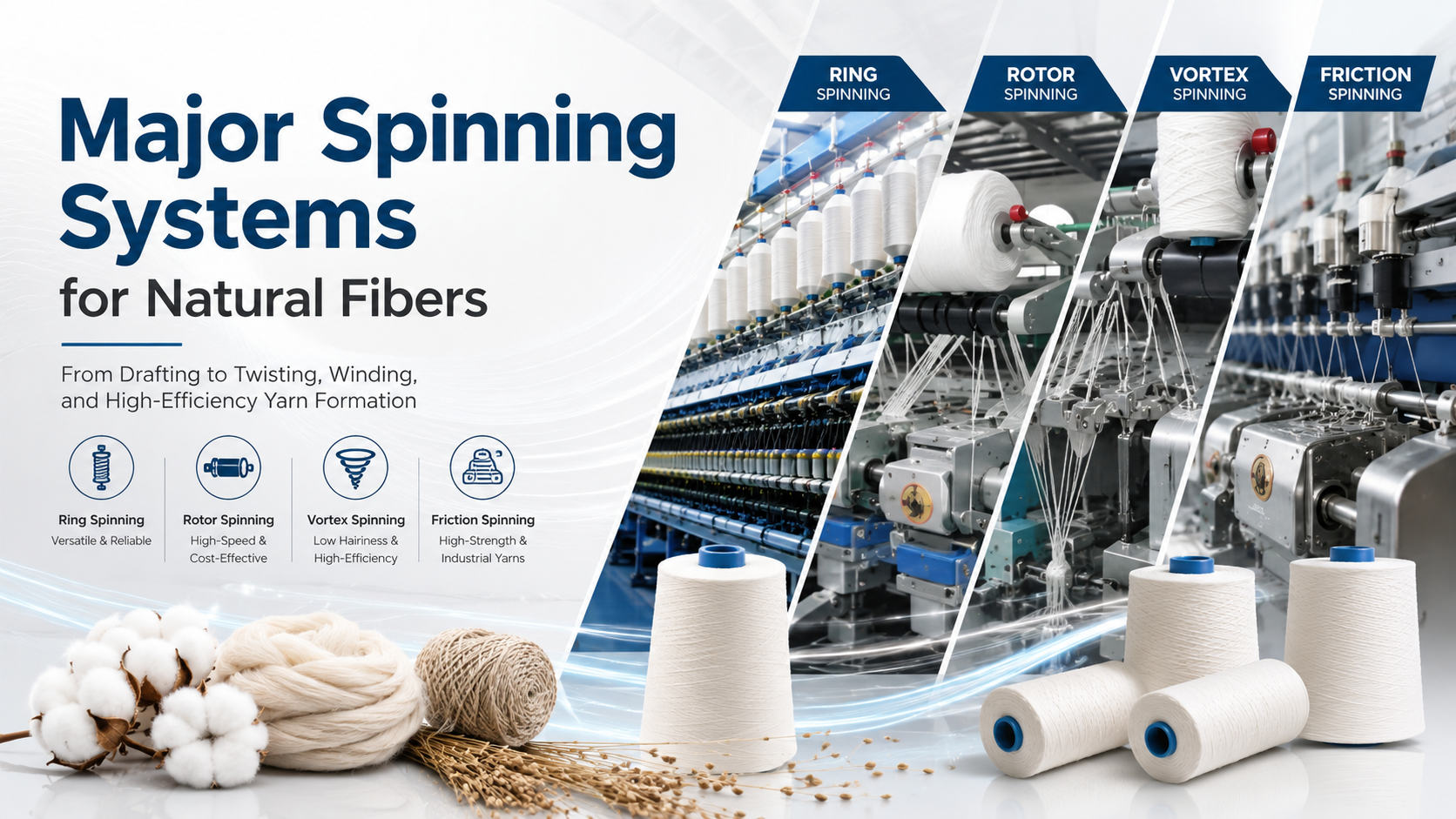
Major Spinning Systems for Natural Fibers
Different spinning technologies offer distinct advantages in yarn quality, production efficiency, and fabric applications. Four major systems are commonly used for natural and blended staple fibers.
01. Ring Spinning
A versatile spinning method for producing fine, strong, and high-quality yarns.
02. Rotor Spinning
A high-speed open-end system designed for efficient production and practical yarn structures.
03. Vortex Spinning
An air-based spinning system that produces low-hairiness yarns with a clean surface and dry hand feel.
04. Friction Spinning
A drum-based spinning method suited for bulky, coarse, and industrial yarns.
Business Takeaway
The ideal spinning system depends on fiber length, yarn count, fabric application, production cost, and desired hand feel.
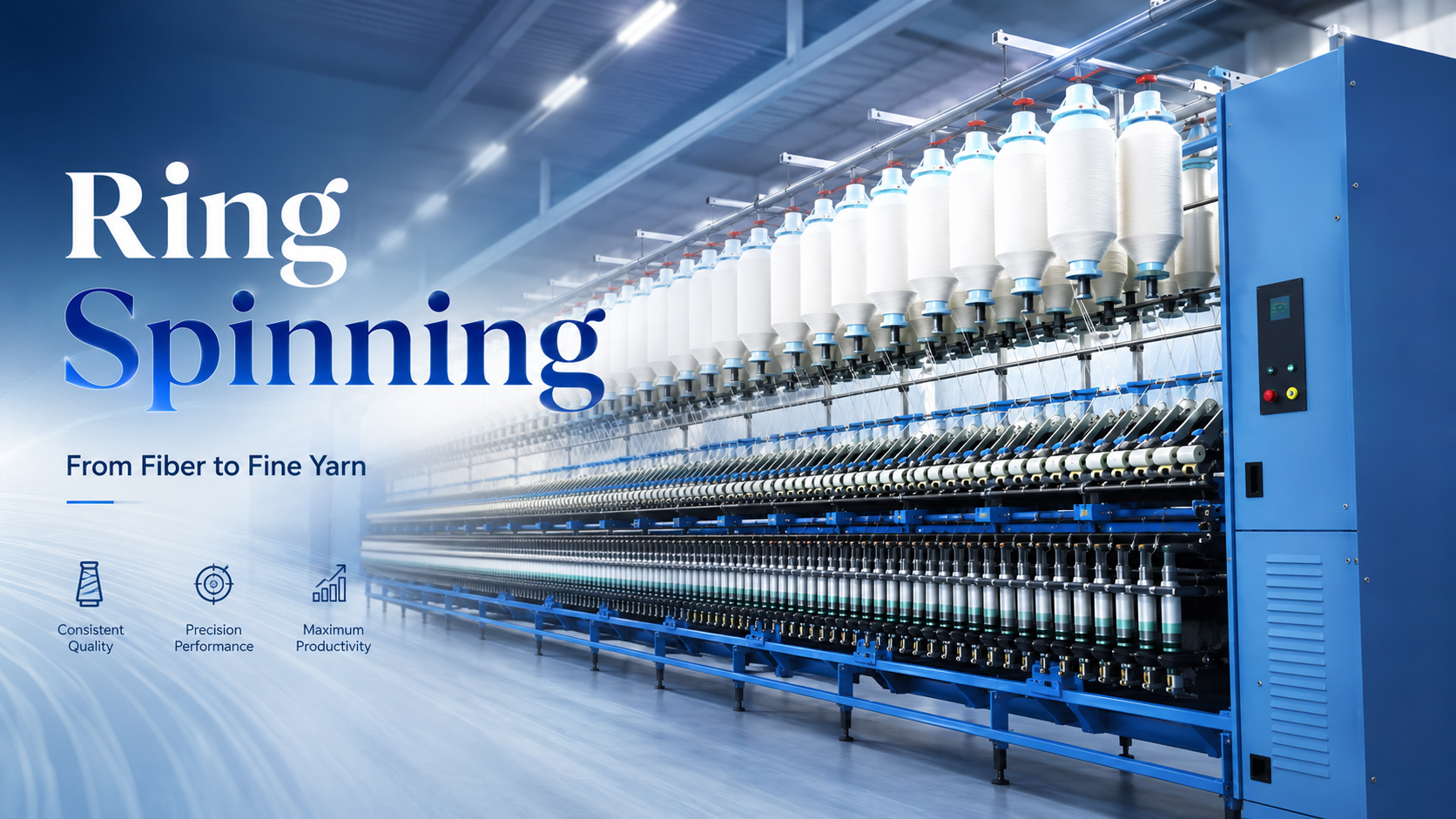
01. Ring Spinning
Best for Premium, Strong, and Soft Yarns
How It Works
Ring spinning is one of the most established spinning methods in the textile industry. After drafting, the fiber strand passes through a ring-and-traveler system, where twist is inserted as the yarn is wound onto a bobbin.
Key Features
High yarn strength and consistent quality
Fine, refined yarn appearance
Soft hand feel for comfortable fabrics
Broad compatibility with natural fibers and blends
Common Applications
Denim and woven fabrics
Knitwear and everyday apparel
Premium fashion textiles
Sewing threads
Business Takeaway
Choose ring spinning when a project requires reliable yarn quality, refined appearance, and durable fabric performance.
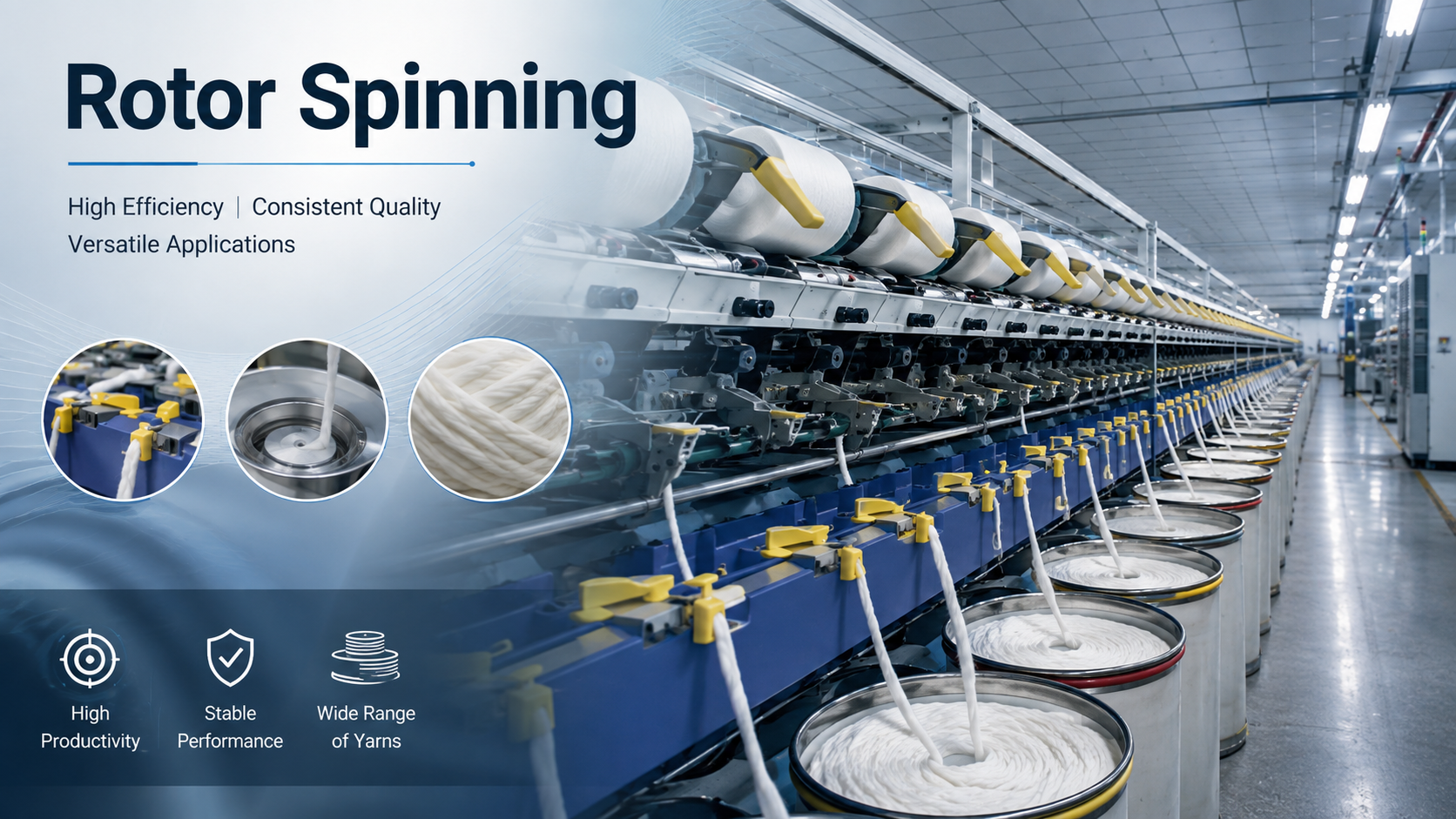
02. Rotor Spinning / Open-End Spinning
Best for High Productivity and Cost Efficiency
How It Works
Rotor spinning uses airflow to transport opened fibers into a high-speed rotor. The fibers collect inside the rotor, form a continuous yarn, and are drawn out for winding. This process eliminates the conventional roving stage.
Key Features
Higher production speed than conventional ring spinning
Shorter manufacturing process
Bulky yarn structure with practical durability
Cost-efficient production for suitable yarn counts
Common Applications
Denim and casualwear
Everyday knitted fabrics
Decorative textiles
Medium-to-coarse yarn applications
Business Takeaway
Choose rotor spinning when production efficiency, cost control, and consistent everyday fabric performance are priorities.
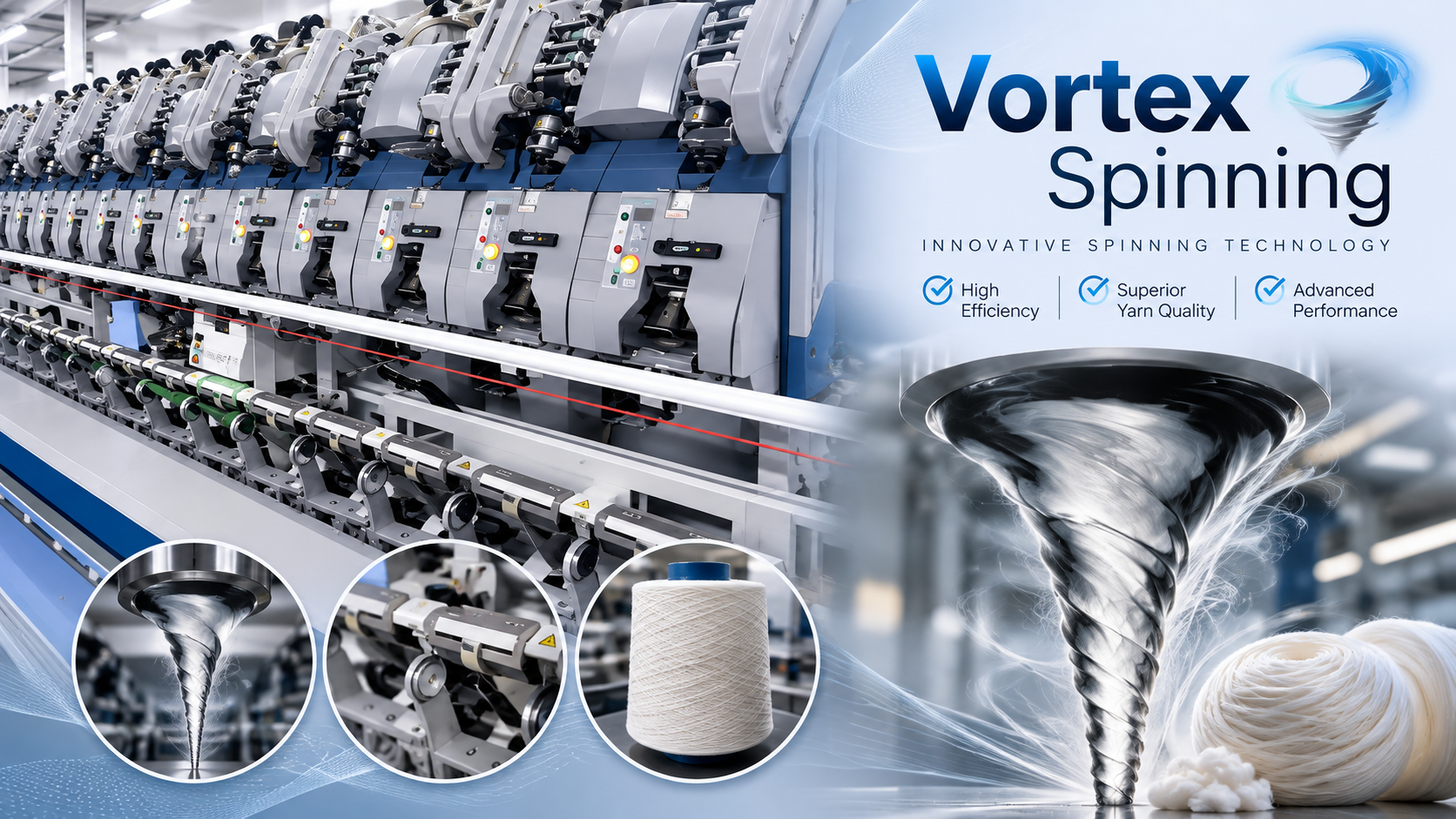
03. Vortex Spinning
Best for Low Hairiness and Clean Fabric Surfaces
How It Works
Vortex spinning uses high-speed airflow inside a specialized nozzle to wrap outer fibers around a central fiber bundle, forming yarn with a clean surface and distinctive dry hand feel.
Key Features
Very low yarn hairiness
Good resistance to pilling
Clean and smooth fabric appearance
High-speed and efficient production
Common Applications
Knitted apparel
Casualwear and everyday clothing
Easy-care fabrics
Cotton, polyester, viscose, and blended textiles
Business Takeaway
Choose vortex spinning for modern knitted fabrics that require a clean appearance, low hairiness, and easy-care performance.
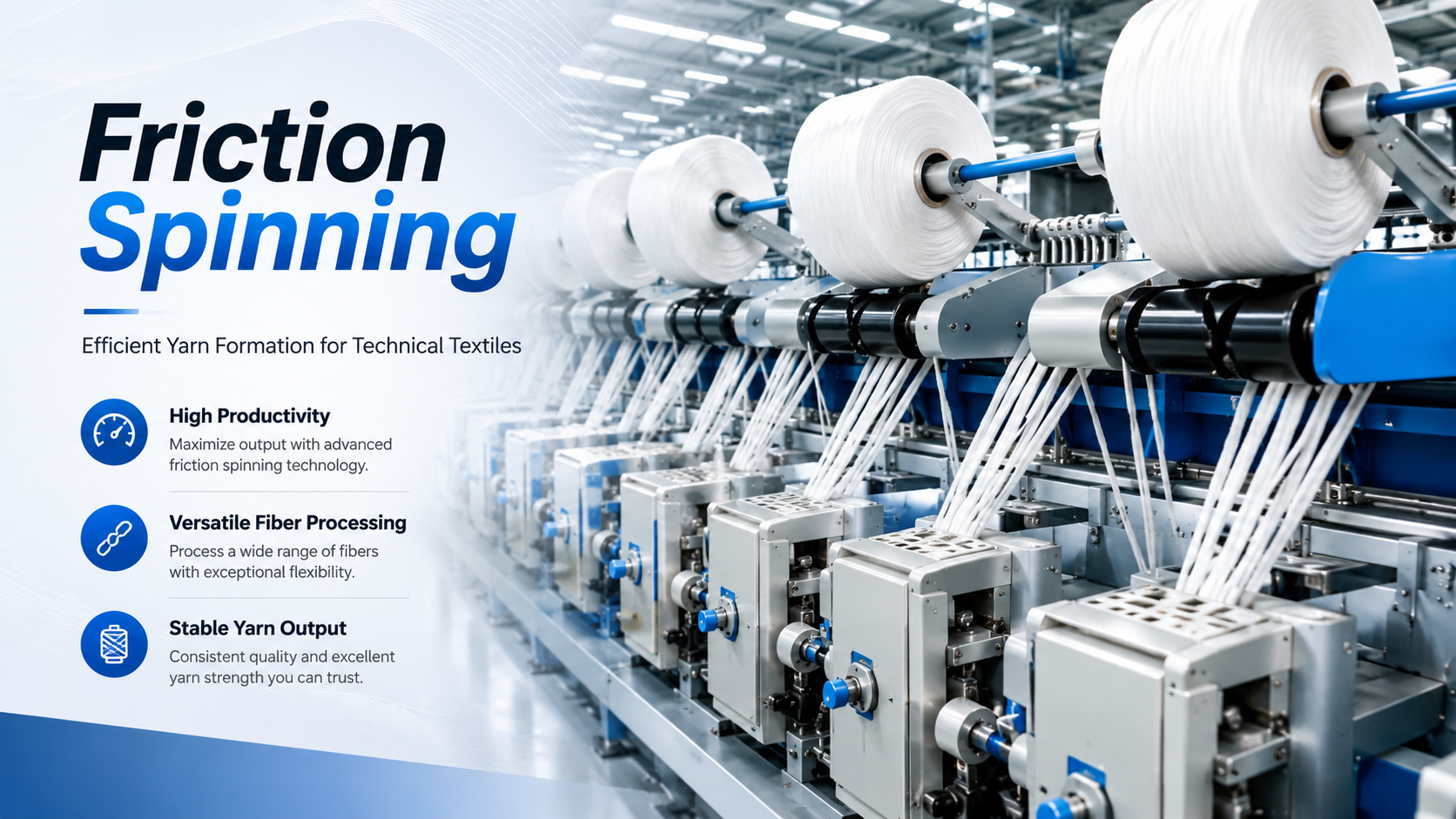
04. Friction Spinning
Best for Bulky and Industrial Yarns
How It Works
Friction spinning, commonly associated with DREF systems, uses rotating drums and surface friction to collect and twist opened fibers into yarn. It is particularly suitable for coarse yarn counts and specialized constructions.
Key Features
High production output for suitable yarn structures
Ability to produce bulky and coarse yarns
Supports specialized multi-component yarn constructions
Less suitable for fine yarns requiring high strength
Common Applications
Blankets and upholstery
Industrial filters
Technical textiles
Decorative and specialty fabrics
Business Takeaway
Choose friction spinning for industrial and specialty textile applications where yarn bulk, structure, and production efficiency are more important than fine yarn appearance.
Choosing the Right Spinning System
Each spinning method offers different advantages depending on the intended textile application.
Ring Spinning: Premium quality, strength, and versatility
Rotor Spinning: Productivity and cost efficiency
Vortex Spinning: Low hairiness and clean fabric surfaces
Friction Spinning: Bulky yarns and industrial applications
Understanding these differences helps textile manufacturers and brands select suitable yarn technologies for their product development needs.