① Dry Spinning
Dry spinning forms continuous filament yarn from a polymer solution. The dope is extruded into heated air; the solvent evaporates and the fiber solidifies. Common fibers include rayon, elastane (spandex), and acrylic.
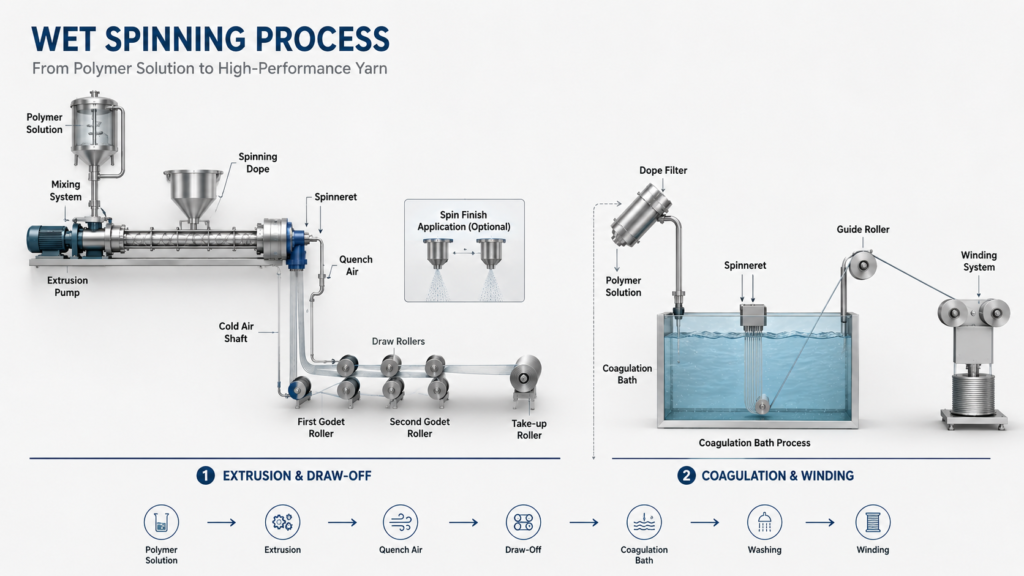
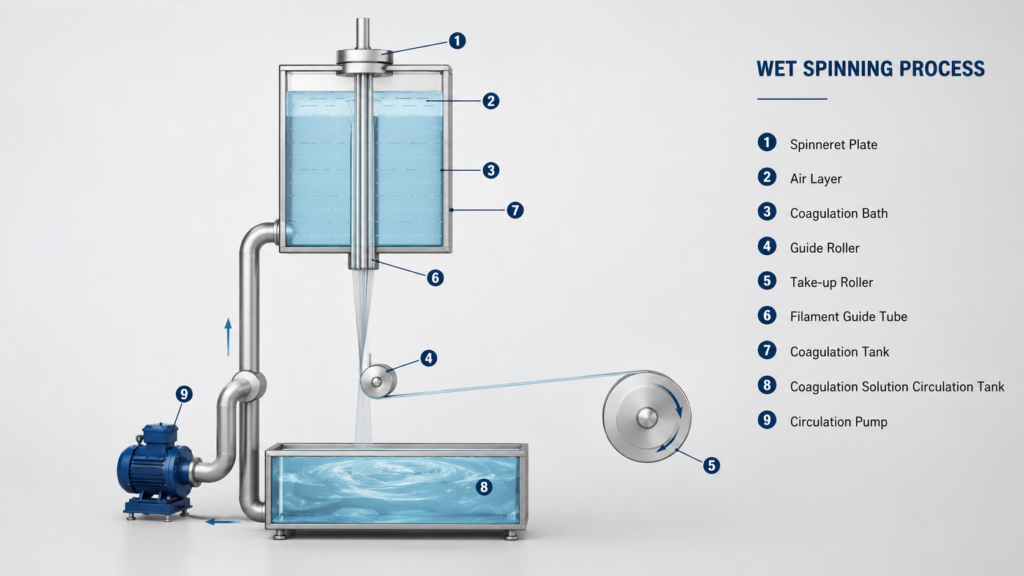
② Wet Spinning
Wet spinning is used when polymers must be dissolved before fiber formation. The spinning dope enters a coagulation bath, where it solidifies into continuous filaments. Key fibers include cellulose acetate, acrylic, modacrylic, elastane, and triacetate.
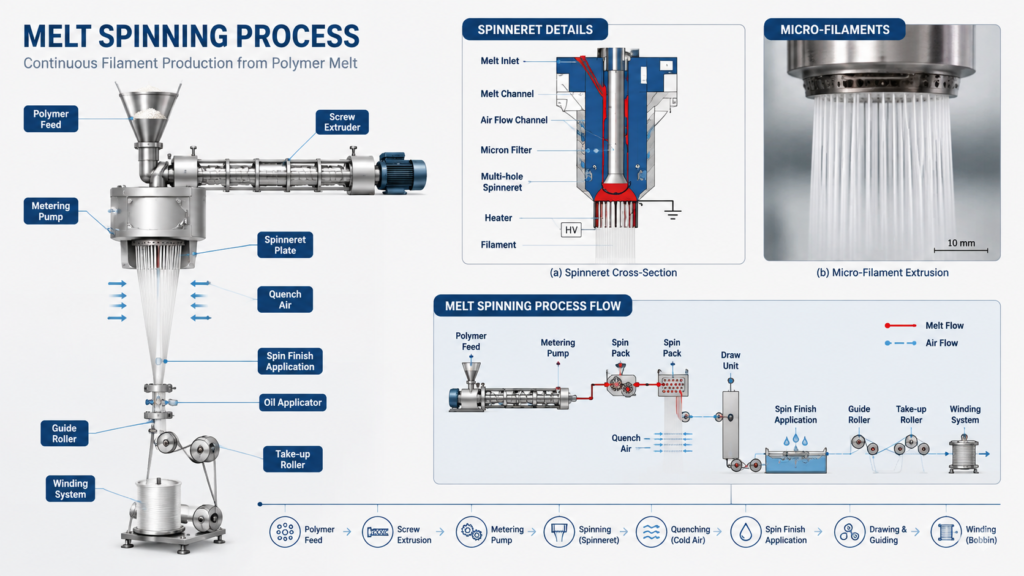
③ Melt Spinning
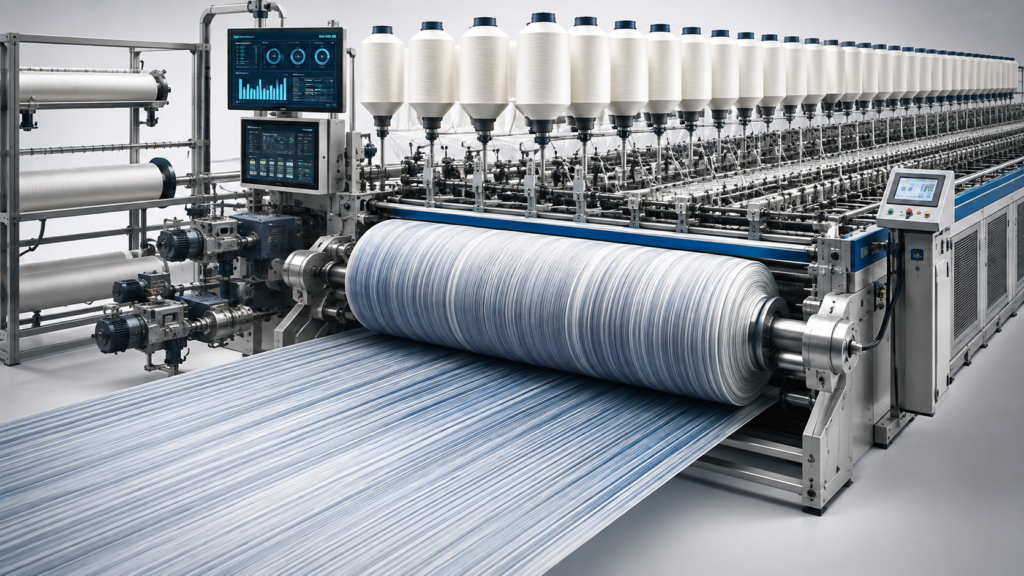
Melt spinning is a widely used process for manufacturing synthetic fibers such as polyester (PET), nylon, and polypropylene (PP). A thermoplastic polymer is heated into a molten state and precisely extruded through microscopic holes in a spinneret to form continuous filaments. The filaments are then cooled and solidified through a controlled quenching process.
With precise control of melt temperature, extrusion, spinneret design, cooling, drawing, and winding, manufacturers can achieve consistent fiber strength, uniformity, and performance.
Efficient and suitable for large-scale production, melt spinning technology is essential for producing filament yarn, functional fibers, and high-performance textile materials used across apparel, technical textiles, and industrial applications.
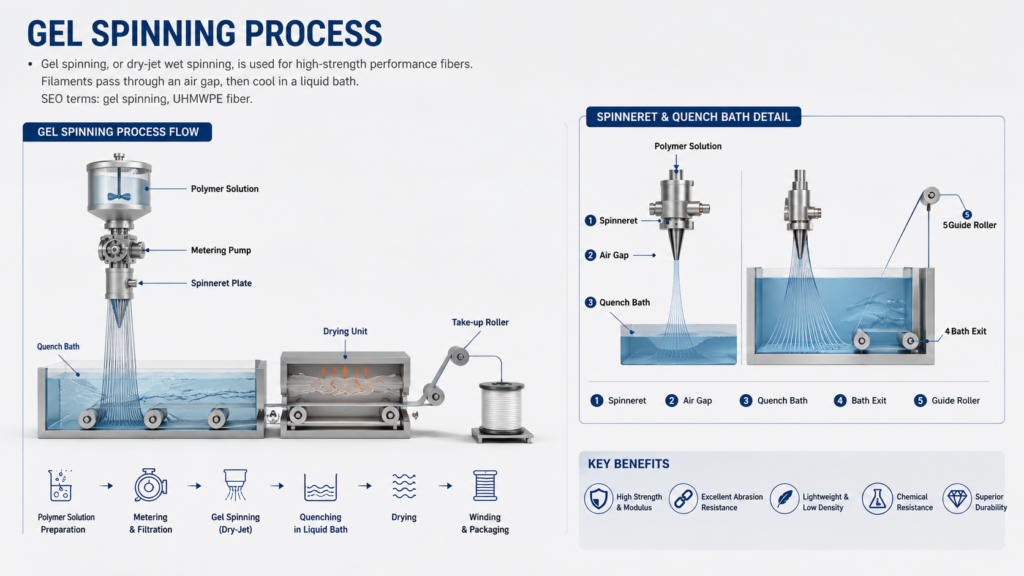
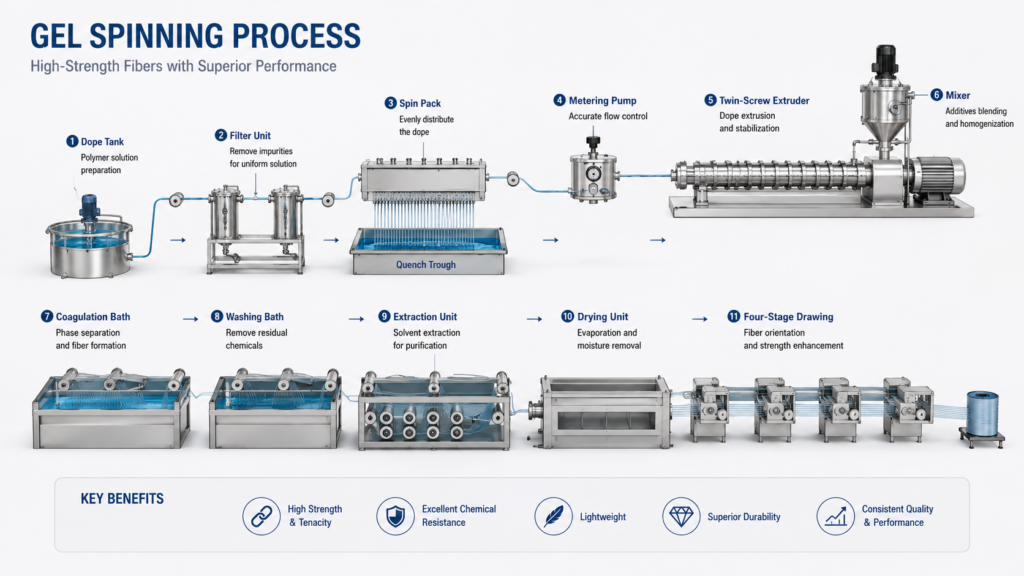
④ Gel Spinning
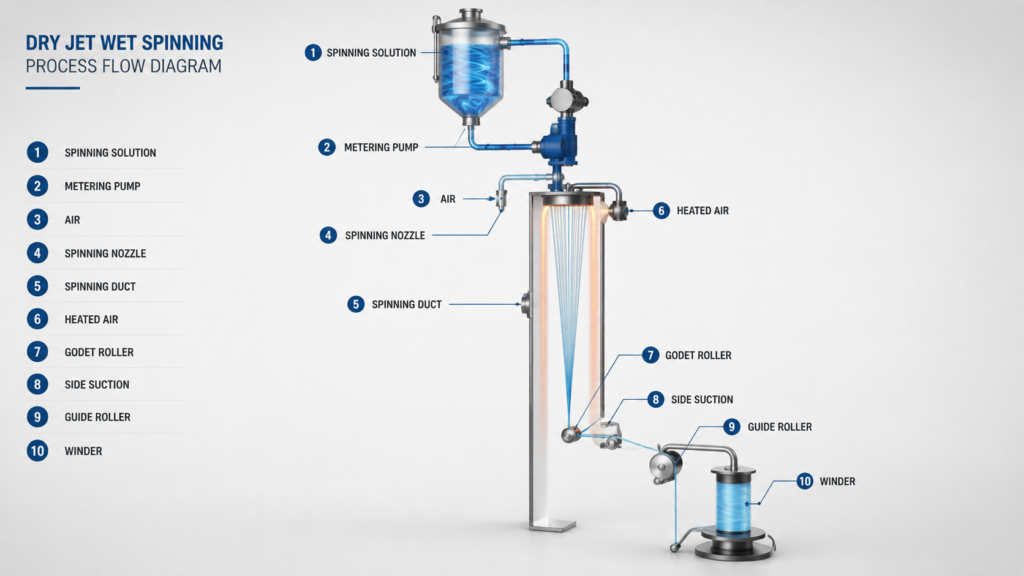
Gel spinning, or dry-jet wet spinning, is used for high-strength performance fibers. Filaments pass through an air gap, then cool in a liquid bath.