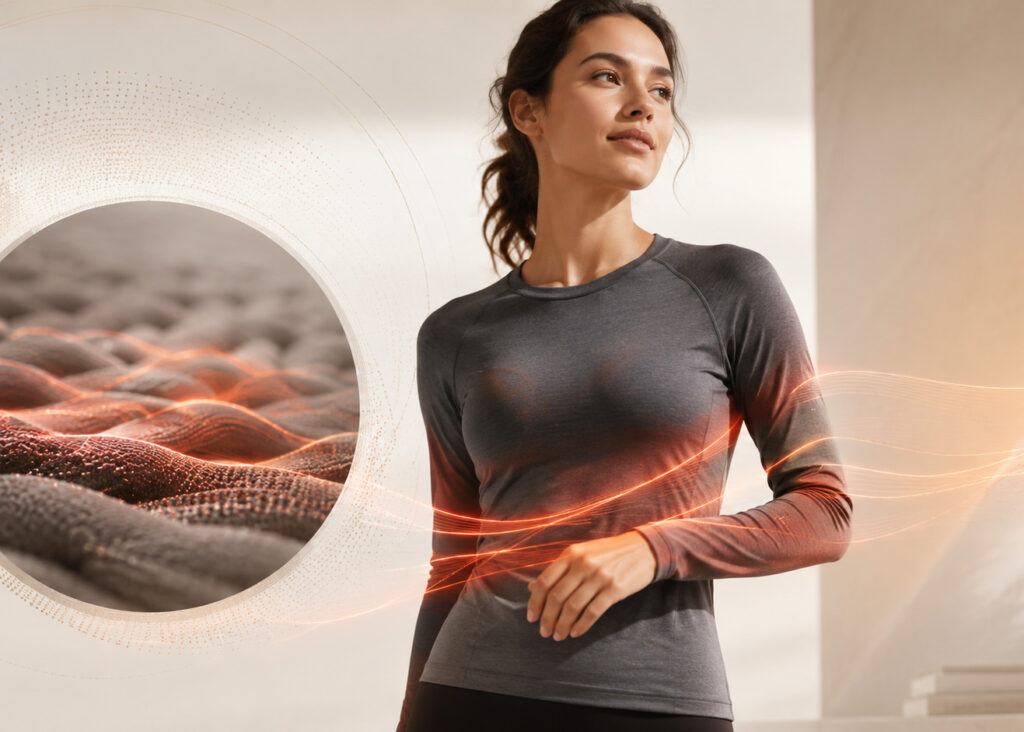
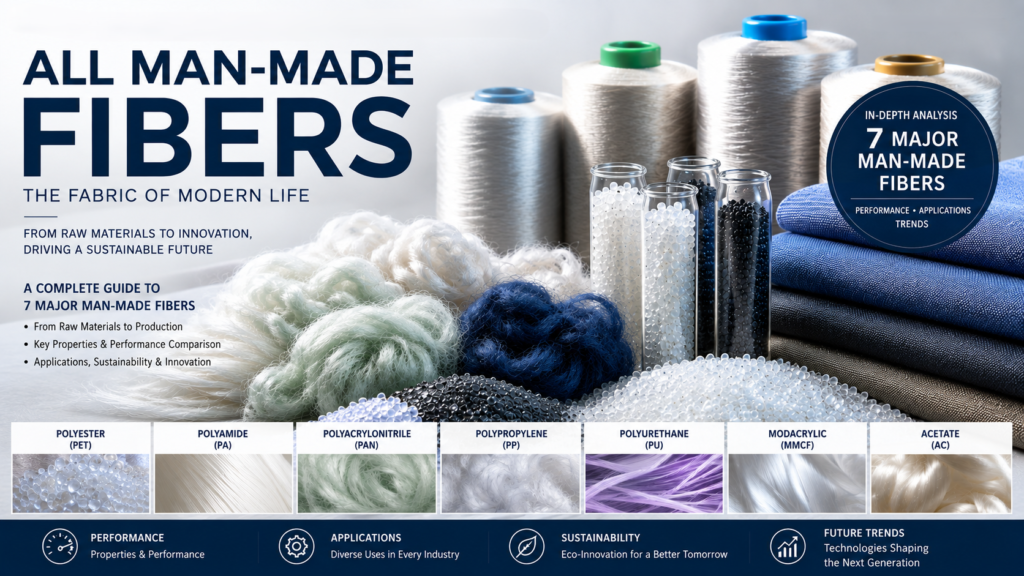
In textile manufacturing, man-made fibers are engineered from natural or synthetic polymers through chemical processing and spinning. From sourcing to dyeing and finishing, their performance depends on raw material, polymer structure, and production method.
Synthetic Fiber
Built from petrochemical, coal, or natural-gas-based feedstocks, synthetic fibers are the backbone of modern apparel, activewear, home textiles, and industrial fabrics.
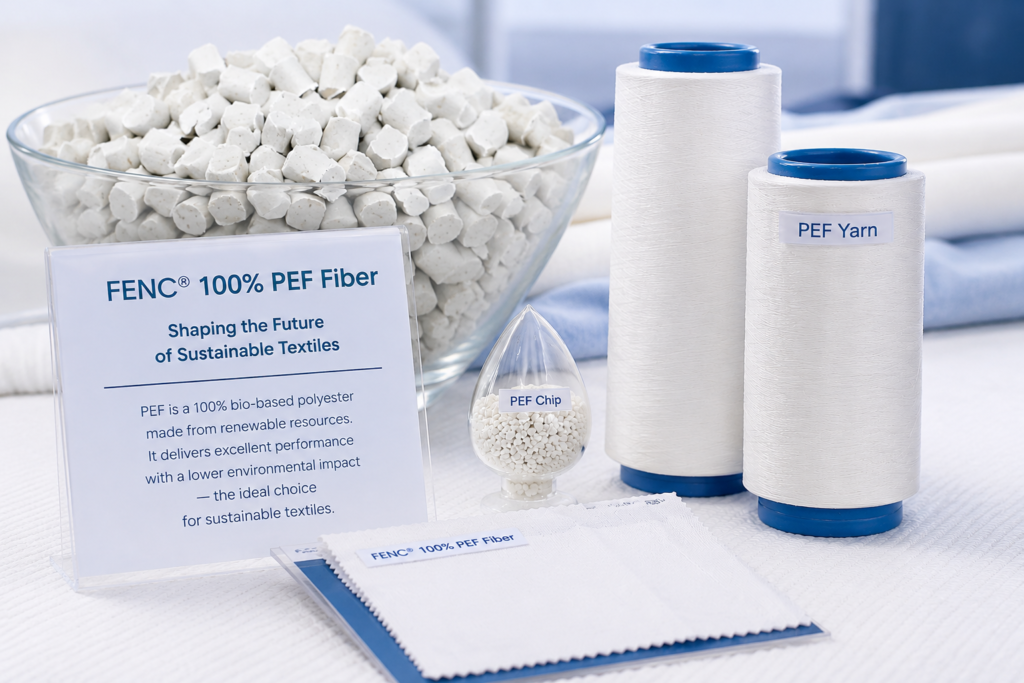
Polyester Fabric(PET Fiber)
Polyester is the performance workhorse of the textile industry. Made from PET, it offers high tensile strength, abrasion resistance, low shrinkage, quick-dry behavior, good lightfastness, and excellent dimensional stability.
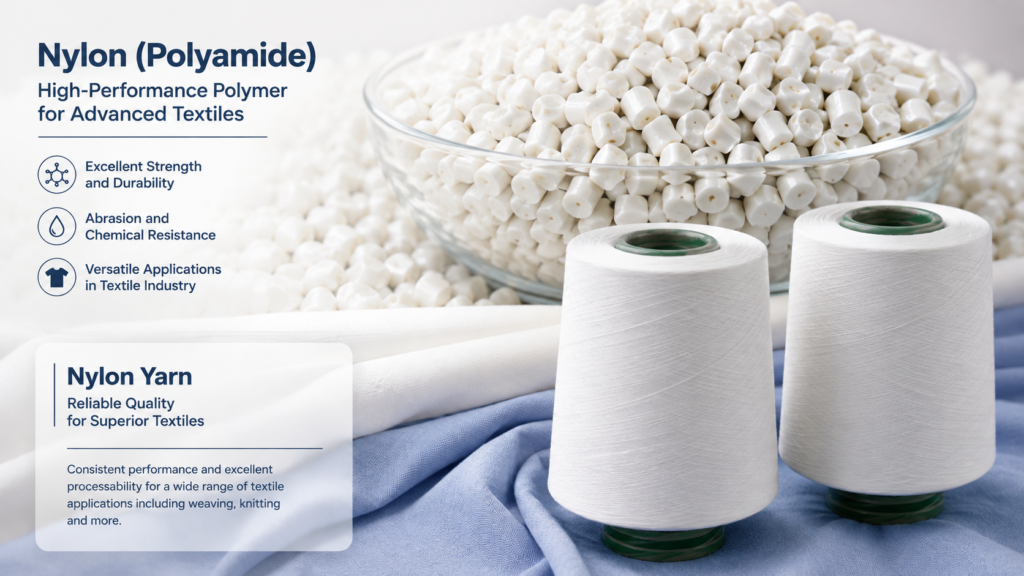
Nylon (Polyamide, PA)
Nylon was the first fully synthetic fiber and remains a premium choice where strength, flexibility, and abrasion resistance matter. Its lightweight hand and toughness make it valuable for apparel, outdoor gear, bags, ropes, and engineering textiles.
- High strength and wear resistance with excellent elastic recovery.
- Moisture regain can improve toughness but may affect dimensional stability.
- Useful in lightweight, water-resistant outdoor products.
- Limitations: heat sensitivity, static build-up, and yellowing under long sun exposure.
Common grades: PA6 for toughness and impact resistance; PA66 for higher rigidity, melt point, and durability. Recycled nylon supports circular textile strategies.
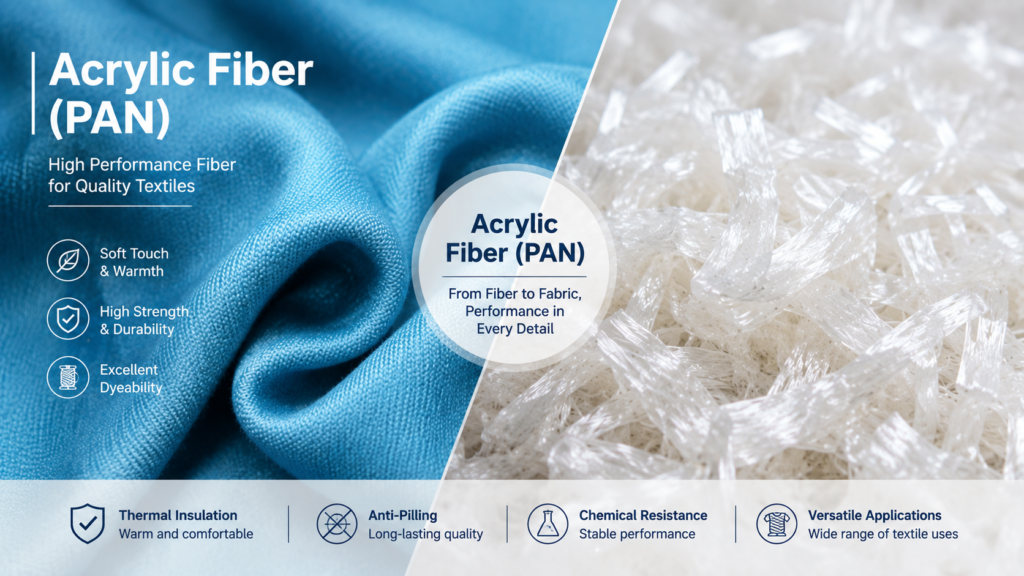
Acrylic Fiber (PAN)
Often called “artificial wool,” acrylic fiber delivers a warm, bulky, and soft hand while staying lightweight and easy to care for. It is a practical material for sweaters, knitwear, blankets, carpets, sportswear, and outdoor textiles.
- Comfort profile: wool-like touch, good loft, warmth, and elastic recovery.
- Weatherability: strong lightfastness and outdoor stability versus many natural fibers.
- Care advantages: resists shrinkage, wrinkling, moths, and mildew.
- Manufacturing watchouts: low moisture absorption, pilling tendency, and static electricity.
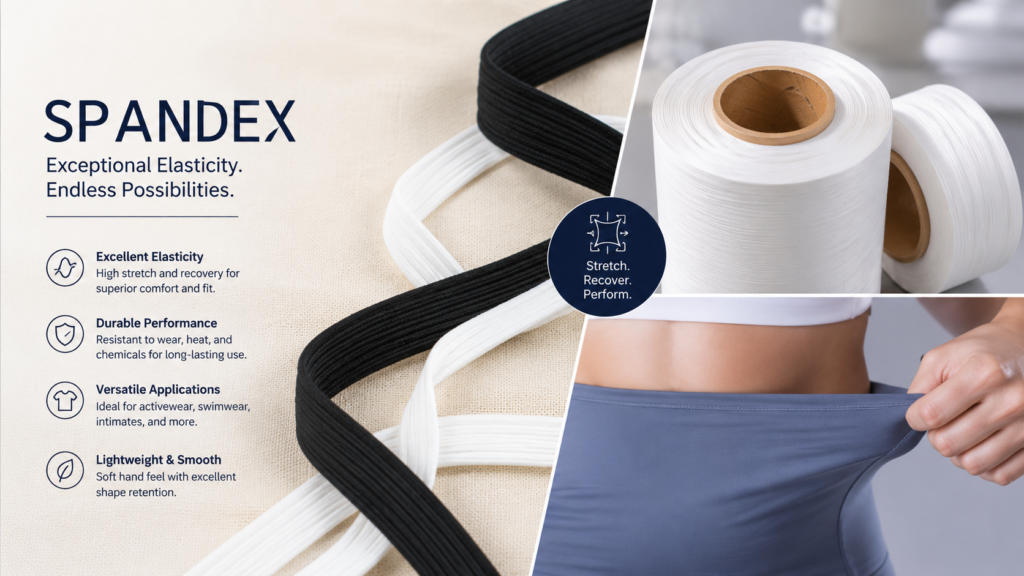
Spandex / Elastane
Stretch Fiber
Spandex (Elastane) is the stretch engine behind modern fit. It is rarely used alone; instead, small percentages are blended with cotton, polyester, nylon, or rayon to enhance stretch, recovery, comfort, and shape retention.
- Core benefit: High elongation with excellent recovery, helping fabrics and garments retain their shape.
- Comfort: Smooth, abrasion-resistant, wrinkle-resistant, and less prone to pilling.
- Care considerations: Chlorine, high heat, and prolonged exposure to strong sunlight can accelerate fiber degradation.
- Production insight: Dry spinning is the most common production method, while melt spinning can reduce the use of solvents and offers potential for further development.
Terminology varies by region: Spandex is commonly used in North America, Elastane in Europe, and Spandex/Elastane in Chinese-speaking markets. Lycra® and Dorlastan® are brand/trade names rather than generic fiber names.
Regenerated Fiber
Regenerated fibers transform natural cellulose, such as wood pulp or cotton linters, into new filaments through dissolution and spinning.
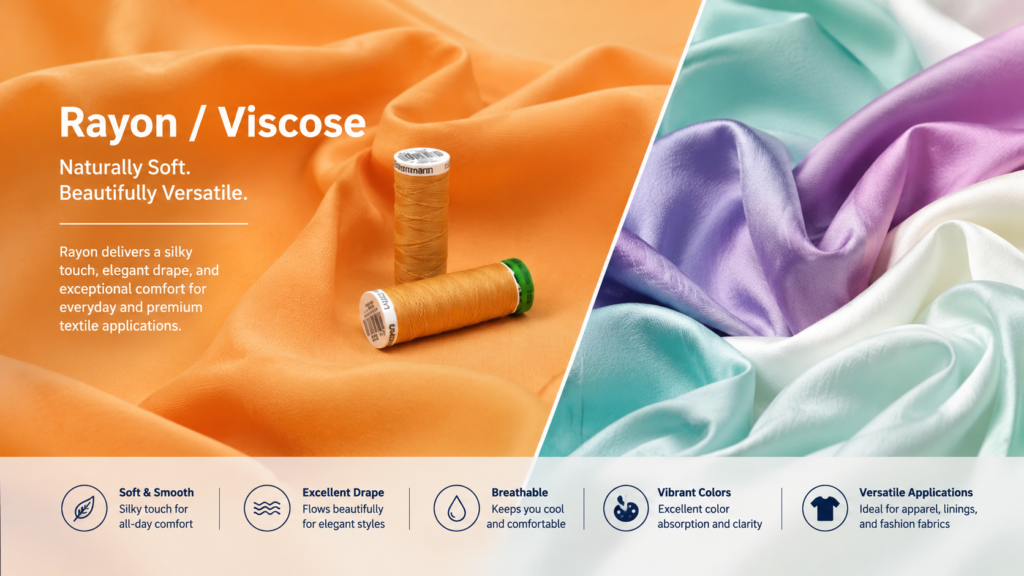
Rayon / Viscose
Rayon is a regenerated cellulose fiber made from wood pulp or plant cellulose. For fashion and warm-weather apparel, it is valued for a soft hand, breathable comfort, high moisture absorption, vivid dyeability, and silk-like drape.
- Product feel: cool, smooth, skin-friendly, and fluid in movement.
- Commercial use: blouses, dresses, linings, resortwear, scarves, and summer apparel.
- Sustainability angle: cellulosic raw material and potential biodegradability.
- Care note: prone to shrinkage and wrinkling; wet strength is lower, so gentle washing and low-temperature drying are recommended.
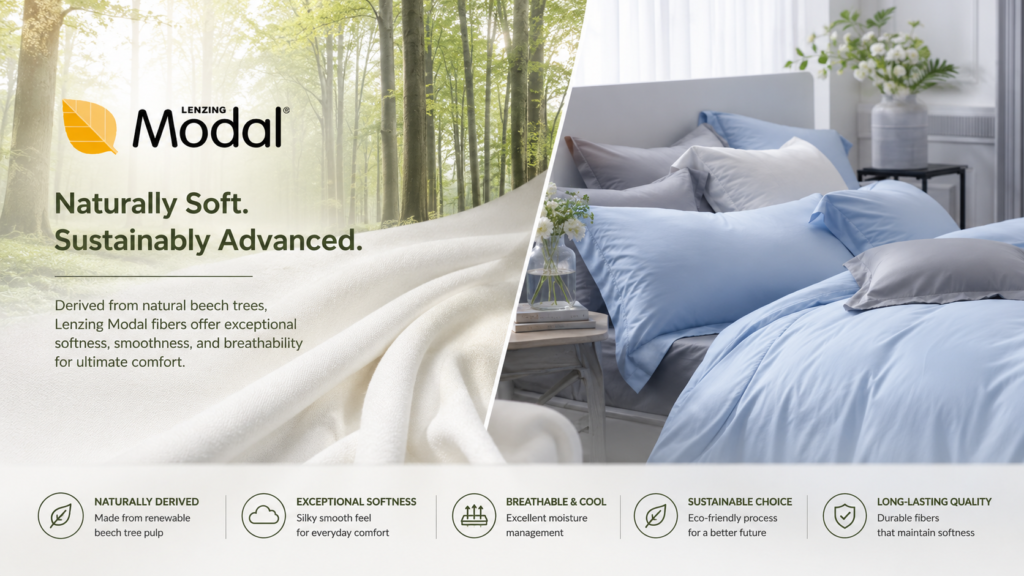
Modal Fiber
Modal is a premium cellulosic fiber derived from beech wood pulp. It is favored for underwear, loungewear, bed sheets, and high-end bedding because it feels silky, soft, breathable, and highly absorbent.
- Consumer benefit: exceptional softness and a smooth, skin-friendly touch.
- Performance: stronger moisture management than cotton and a dry, comfortable feel.
- Durability: good dimensional stability, wrinkle resistance, and less hardening after washing.
- Comparison: softer and often less prone to pilling than some other cellulosic blends.
Best product positioning: premium comfort, intimate apparel, home textiles, sustainable cellulosic fiber.
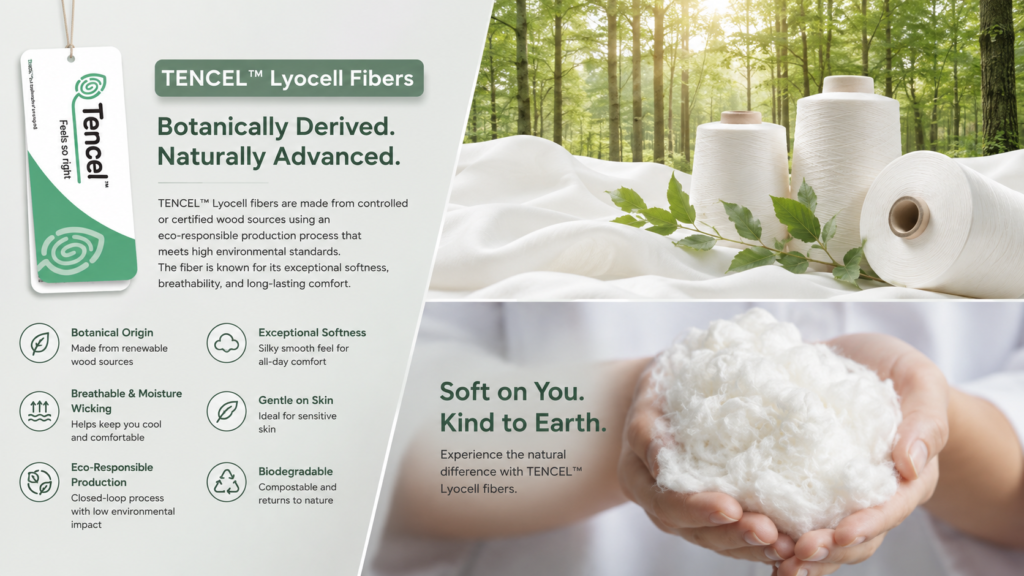
TENCEL™ Lyocell
TENCEL™ is a Lenzing brand for wood-pulp-based regenerated fibers, commonly including Lyocell and Modal. In bedding and apparel, Lyocell is known for a cool touch, excellent breathability, moisture management, strength, and elegant drape.
- Sustainability story: wood-based raw material, responsible process positioning, and biodegradability potential.
- Comfort story: smooth surface, cool hand, and good suitability for sensitive skin.
- Performance story: absorbs more moisture than cotton, helps maintain a dry sleep climate, and keeps dimensional stability.
- Care note: avoid high heat drying and rough surfaces that may cause snagging.
Semi-Synthetic Fiber
Semi-synthetic fibers are made by chemically modifying natural polymers, balancing natural origin with engineered performance.
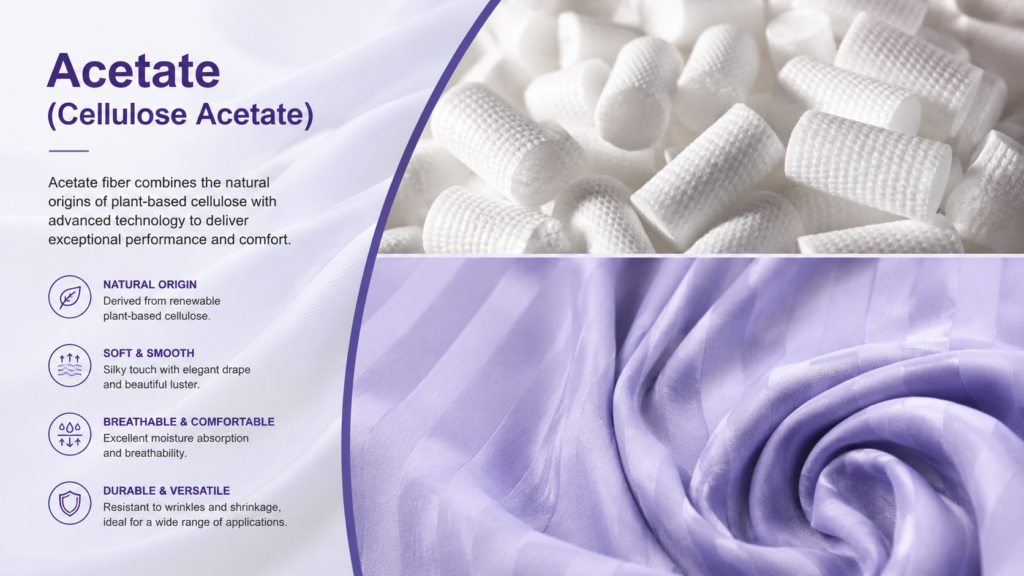
Acetate(Cellulose Acetate)
Acetate is a semi-synthetic fiber made from wood pulp or natural cotton cellulose. It is valued for bright color, a silky touch, comfort, breathability, resilience, and elegant luster.
- Textile applications: linings, silky apparel fabrics, fashion materials, and lightweight comfort products.
- Eyewear application: high-quality sheet material for colorful, stable, transparent frames.
- Advantages: stable dyeing, pleasant skin touch, good shape retention, and safer stability compared with celluloid.
- Material properties: thermoplastic behavior, light stability, and biodegradability potential.