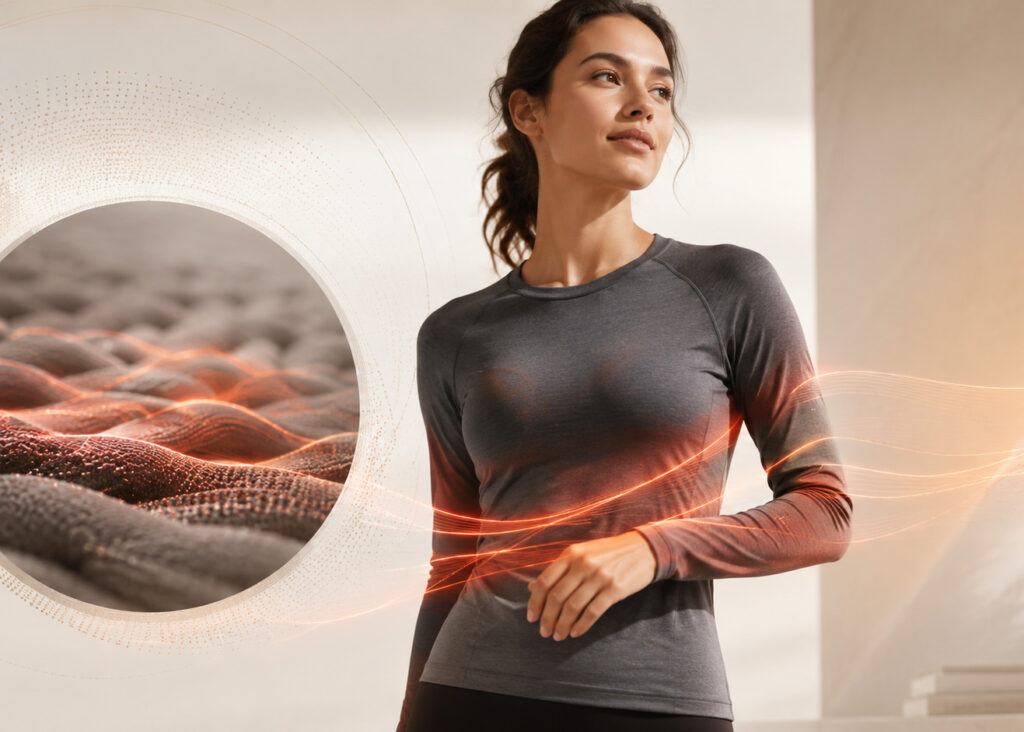

Most clothing is designed to provide coverage, warmth, stretch, or style. SiTEX® fabric is designed to do something more: use the body’s own radiant energy as part of a passive textile system. Rather than relying on an external power source, SiTEX® uses mineral-infused fibers intended to interact with far infrared energy naturally emitted by the human body.
Why can modern daily life place stress on the body?
Long periods of sitting, ongoing work stress, poor sleep, and low physical activity can gradually affect how people feel throughout the day. These factors tend to accumulate, which is why low-effort, wearable comfort solutions are attractive in modern lifestyles.
A typical workday may include eight hours of sitting, limited movement, disrupted sleep, and persistent mental stress. None of these conditions is necessarily dramatic on its own, but their effects can build over time.
The value of wearable textile technology is not that it replaces healthy habits or medical care. The value is that it can provide continuous support without requiring the wearer to change an existing routine.
What is SiTEX® fabric?
SiTEX® fabric is a functional textile made by integrating more than 20 natural minerals into the yarn during fiber production. The minerals are incorporated into the fiber structure rather than applied only as a surface coating.
According to the supplied SiTEX® description, the material is produced using a patented nanotechnology spinning process. The mineral components are intended to emit or interact with far infrared energy in the 4–16 μm wavelength range.
The concept behind SiTEX® is to make the functional component part of the yarn itself, rather than treating the finished fabric with a temporary surface finish.
How does far infrared energy work in SiTEX® fabric?
SiTEX® fabric is designed to interact with far infrared energy already emitted by the human body. The stated mechanism is passive reflection of part of the body’s own radiant heat back toward the skin rather than the addition of an external energy source.
The supplied material states that the human body emits far infrared energy, with peak emission around 9.3–9.4 μm. SiTEX® minerals are described as operating within a broader 4–16 μm far infrared range.
In practical terms, the fabric is intended to function simply by being worn. No battery, electrical device, topical treatment, or active operating step is required.
What benefits can reasonably be discussed for far infrared textiles?
Far infrared textiles are best described in supportive and comfort-oriented terms. The supplied material associates FIR exposure with local microcirculation, temperature maintenance, post-activity comfort, reduced muscle tension, and general physical comfort.
The claims should remain carefully framed.
Potential supportive applications include:
-
Supporting local microcirculation
-
Helping maintain skin warmth
-
Providing comfort during long periods of low activity
-
Supporting post-exercise recovery and muscle comfort
-
Contributing to a more comfortable wearing experience
These effects should not be presented as medical treatment.
Is SiTEX® fabric a medical treatment?
SiTEX® fabric should not be presented as a cure, disease treatment, or replacement for professional medical care. The technology is positioned as a passive textile solution intended to support comfort and circulation-related wellness rather than diagnose or treat disease.
That distinction is important for responsible product communication.
The supplied positioning specifically avoids claims that far infrared fabric can:
-
Cure medical conditions
-
Replace medication or clinical treatment
-
Reliably prevent illness
-
Directly fight viruses or bacteria as a health treatment
A more appropriate description is that SiTEX® offers non-invasive, drug-free, passive comfort support through wearable textile technology.
Why is passive wearable technology suitable for modern lifestyles?
The main advantage of passive wearable technology is convenience. SiTEX® fabric does not require a device, charging, a separate routine, or additional user effort because the functional material is integrated directly into something the wearer already uses: clothing or textile products.
This makes the technology particularly relevant to people who:
-
Work long hours at a desk
-
Spend extended periods with limited movement
-
Travel frequently
-
Exercise and want post-activity comfort
-
Prefer wearable wellness products that do not interrupt daily routines
The central idea is consistency rather than intensity.
A textile worn for several hours can provide a low-effort functional experience in the background of normal daily activity.
How is SiTEX® different from a surface-treated functional fabric?
SiTEX® is described as having its mineral components integrated into the fiber core during spinning rather than applied only as a coating on the finished fabric. This construction is intended to make the functional material structurally part of the yarn.
This distinction matters in textile manufacturing.
Surface finishes may gradually change through repeated washing, abrasion, or wear. By contrast, a fiber-integrated approach is designed so that the functional mineral material remains part of the yarn structure.
The supplied SiTEX® material also states that the technology uses Taiwan-patented far infrared fiber technology and that far infrared reflectivity has been independently measured at up to 95%.
What makes SiTEX® relevant from a textile manufacturing perspective?
SiTEX® combines conventional textile engineering with functional mineral technology. Its value lies in integrating performance into the fiber stage, allowing the material to be developed into wearable products without relying on separate electronic components or removable treatments.
From a manufacturing perspective, the concept brings together:
|
Textile Element |
SiTEX® Positioning |
|
Functional component |
More than 20 natural minerals |
|
Integration method |
Incorporated during fiber spinning |
|
Energy source |
Body-generated radiant heat |
|
Technology type |
Passive far infrared textile |
|
External power |
Not required |
|
Functional positioning |
Comfort and circulation support |
|
Durability concept |
Mineral material integrated into yarn |
|
Reported FIR performance |
Up to 95% reflectivity |
This fiber-level integration allows SiTEX technology to be considered for multiple textile product categories while maintaining the familiar feel and usability of conventional fabrics.